
In this guide
- 01Four functions decide which lock a door gets
- 02Door by door: which function goes where
- 03Front and back doors: keyed entry plus a deadbolt
- 04Bedroom and bathroom doors: the privacy lock
- 05Hall, closet and pantry doors: passage and dummy
- 06Patio and sliding doors: latches, pins and bars
- 07Mortise, rim, multipoint and euro profile hardware
- 08Keypad and smart locks, and where high-security fits
- 09What the grade label on the box means
- 10Double cylinder deadbolts and getting out in an emergency
- 11If you rent: what Texas law lists for door security devices
- 12How to work out what each door needs before you buy
- 13Frequently asked questions about door lock types
- 14Not sure which function a door needs? Call us in Austin
Four hardware functions decide which lock a swing door gets. Keyed entry goes on exterior doors. Privacy locks, which Schlage and Kwikset call Bed & Bath, go on bedrooms and bathrooms. Passage hardware, called Hall & Closet, goes on doors that never lock. Dummy hardware, called non-turning or Pull Only, goes where a door only needs a pull.
This guide walks the house door by door. Then it covers deadbolts, patio doors, hardware with unfamiliar names, lock grades, exit doors and the rules Texas sets for rentals. It is written for residential doors in homes served by 512 Locksmith in Austin, and the function names come from the manufacturers’ own pages.
Four functions decide which lock a door gets
Lock hardware is sorted by what it does, not by its shape. Keyed entry locks with a key from outside. Privacy locks from the inside only. Passage never locks. Dummy does not turn at all. Knob or lever is a separate choice on top of the function, so a lever can serve any of the four.
Here is how Schlage and Kwikset define them. Schlage recommends keyed entry knobs and levers for exterior doors. Its privacy hardware has a locking function for rooms where you want privacy, like a bedroom or bathroom. Hall and closet hardware is non-locking, for doors where locking is not needed. Non-turning hardware works as a decorative pull, and Schlage’s examples are interior French doors and pantries.
Kwikset uses the same four ideas. Its Pull Only function is for doors where only a pull is required and the handle does not turn. See Schlage’s guide to hardware for each room and Kwikset’s four lever functions for the manufacturers’ own wording.
How the cylinder inside a lock works is a different question. How locks work covers it, so this guide stays on doors and functions.
Pick the lock's job first. Pick the shape second.
Door by door: which function goes where
A house has a handful of door jobs, and each one maps to a function. Exterior doors get keyed entry. Bedrooms and bathrooms get privacy. Hall and closet doors get passage. A door that only needs a pull gets dummy hardware. The table lays out each door, its function and its hardware, using the manufacturers’ own names.
Function names come from Schlage and Kwikset. Sliding glass doors use different devices, which the Texas Property Code names.
| Door | Function | Hardware |
|---|---|---|
| Front and other exterior doors | Keyed Entry (a separate deadbolt can be added) | Keyed knob, lever or handleset, with a key outside and a turn button or thumbturn inside |
| Bedroom | Bed & Bath (privacy) | Push or turn button inside, emergency release on the outside |
| Bathroom | Bed & Bath (privacy) | Push or turn button inside, emergency release on the outside |
| Hall and closet | Hall & Closet (passage) | Non-locking knob or lever |
| Pantry or French door pull | Non-turning (dummy, Pull Only) | Fixed knob or lever used as a pull |
| Sliding glass door | Not a swing-door function | Handle latch, pin lock or security bar (Texas Code terms) |
Front and back doors: keyed entry plus a deadbolt
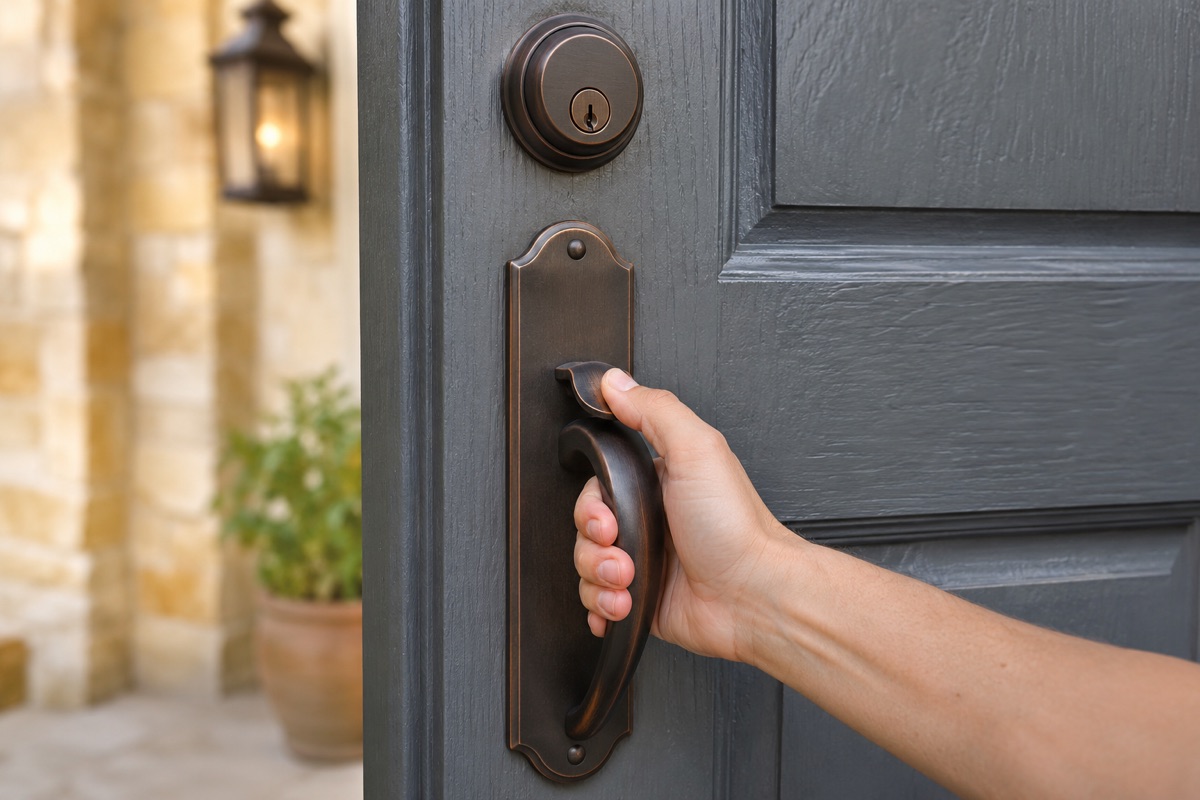
Front and back doors take a keyed entry function. It locks from outside with a key and from inside with a turn button or thumbturn. Schlage and Kwikset both describe keyed entry this way, and Schlage recommends keyed entry hardware for exterior doors. A separate deadbolt can be added to the same door.
A handleset is a pull handle on the outside with a thumb piece you press to open the latch, set with a separate deadbolt. Schlage’s front door handle guide says a front entry handle does not include a deadbolt. It also says you can choose a single cylinder or a double cylinder deadbolt. Schlage lists a non-locking passage handle as an option too, paired with a deadbolt on an exterior door.
The deadbolt is its own job, so we keep it short here. Our deadbolt lock services page lists what we install. Deadbolt vs knob lock compares the two, and deadbolt vs deadlatch explains the latch question.
Bedroom and bathroom doors: the privacy lock
A privacy lock locks from the inside with a push or turn button and has no key cylinder on the outside. On the Schlage locks this guide cites, turning the inside handle unlocks the button, and a small hole on the outside takes a pin tool for emergency release. It keeps people from walking in. It is not a deadbolt.
Schlage’s residential pages say the button unlocks when the handle is rotated from the inside. Schlage’s commercial cut sheet for a privacy function goes a step further: rotating the inside lever retracts the latch and releases the button. From the outside, Schlage’s knobs page describes a small hole for an emergency pin, and the pin tool is included with the hardware. Kwikset’s page names an emergency key instead. Schlage’s pages say to press the pin in one place and to insert and turn it in another, so read your lock’s own instruction sheet.
Push the lock button in and try the outside lever, then press the inside lever and watch the latch.
The drawing is a slice of an interior door with a lever on each side and a lock button in the inside lever. With the button pushed in, the outside lever is held and the latch stays out. In the drawing, the inside lever draws the latch back whether the button is in or out. The drawing leaves out one step. Schlage’s residential pages say the button unlocks when the inside handle is rotated. Here the button stays where the slider puts it. It is a simplified drawing, not every privacy lock works identically, and the exact action is on your own lock’s instruction sheet.
Hall, closet and pantry doors: passage and dummy
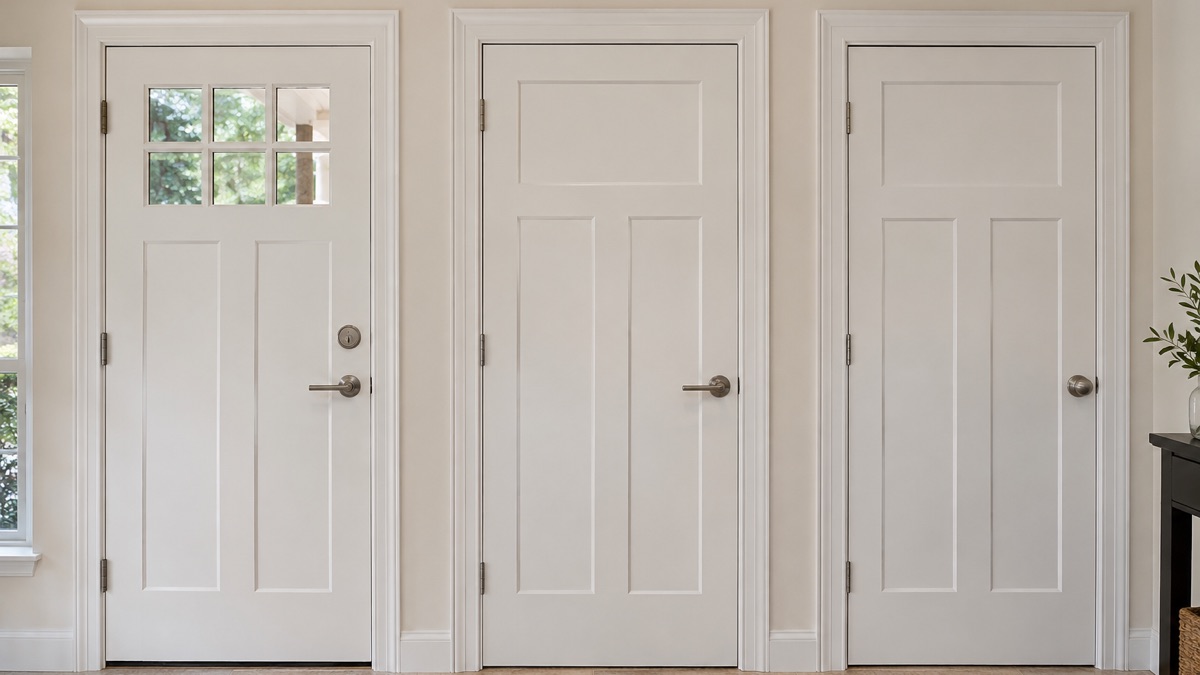
Passage hardware never locks. Its knob or lever latches the door and turns freely from both sides. Dummy hardware does not turn at all and works as a pull. Use passage where a door should close but never lock, such as a hall or closet, and dummy where a door needs only a handle.
To tell them apart at the door, turn the handle. If it turns and pulls the latch back, it is passage. If it is fixed, it is dummy. Schlage calls dummy hardware non-turning or inactive, and it describes inactive handlesets as decorative pulls that are not a working lock.
Neither type adds privacy, and neither locks the door. A door that must lock needs a different function from the table above.
Patio and sliding doors: latches, pins and bars
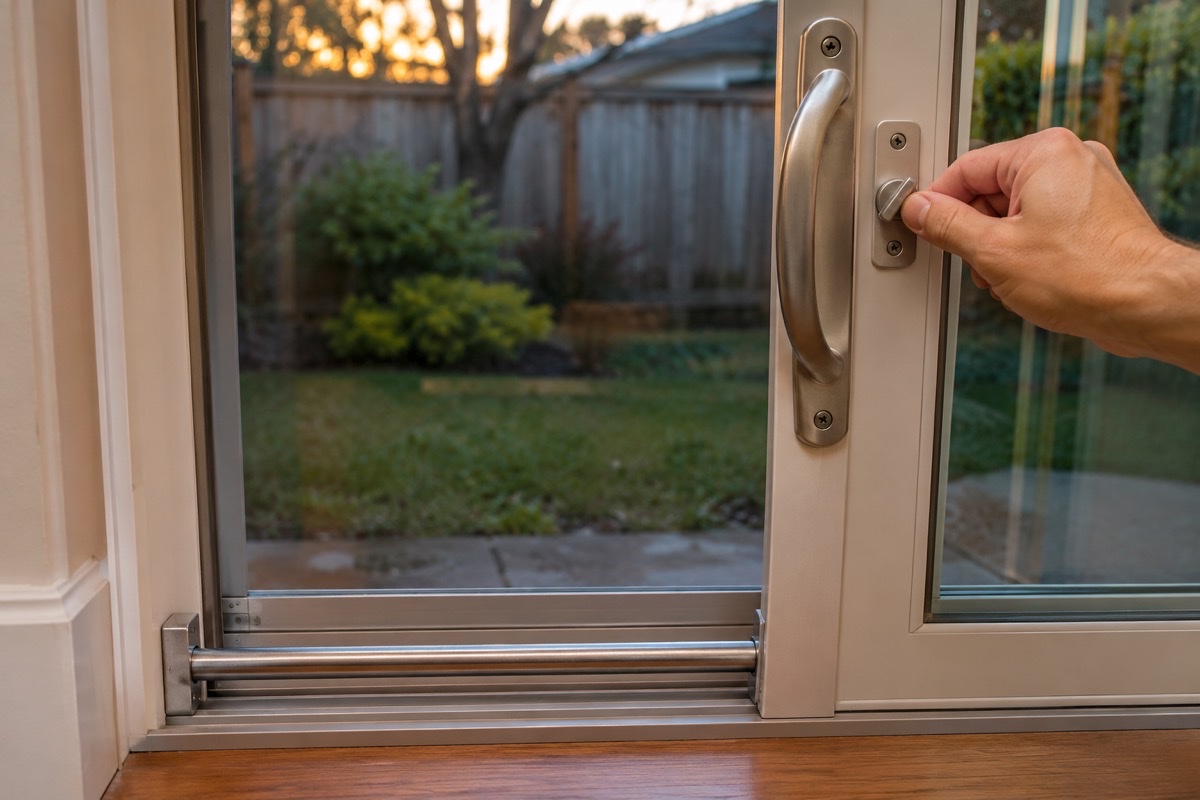
A sliding glass door uses different devices from a swing door: a handle latch, a pin lock or a security bar. The Texas Property Code defines all three. A handle latch sits near the handle. A pin lock goes in on the interior side, opposite the handle. A security bar lies across or at the bottom of the fixed panel.
Those are the Code’s definitions, written for rental housing and not as a product guide. In the Code, the handle latch can work with or without a key, and each device is meant to stop the door from opening, or, for the pin, from opening or lifting.
A door from the house into an attached garage is a swing door. Schlage lists one keypad deadbolt model as ideal for garage entry doors, and the Texas rental rules count a door between a living area and a garage as an exterior door. Our residential door services page covers the door side of the work. Finish and material are separate choices, and locks for the Texas climate covers them.
Mortise, rim, multipoint and euro profile hardware
Four more hardware names sit beyond knobs, levers and deadbolts. A mortise lock has one long rectangular body set in a pocket cut into the door edge. A rim lock is a box mounted on the door surface. A multipoint lock engages points along the frame. A euro profile is a single-piece cylinder design.
Emtek says a professional is typically needed to prep a door for a mortise lock, so it is not a simple swap. Our mortise lock services page covers it. Yale describes a rim lock as a surface-mounted box holding a deadbolt-type lock and a latch. Yale’s four-point lock page describes lifting the handle to engage rods at the top and bottom of the door into the frame, then turning the key to engage a throw bolt.
Yale describes the euro profile as a cylinder design predominately used in Europe that joins both sides of the lock with a single piece of metal. See our profile cylinder lock services page.
Keypad and smart locks, and where high-security fits
A keypad or smart lock changes how a door opens, not what job the door has. Schlage says its keypad deadbolt lets you lock and unlock your door without using a key. You enter a user code outside, and the model Schlage lists also carries a key cylinder.
Schlage lists that model as ideal for front and back doors and garage entry doors, and the inside works with a thumbturn. For electronic against mechanical, read smart lock vs traditional lock, and see our smart lock services page.
High-security cylinders are a separate topic. Our profile cylinder lock page covers what we offer there.
A new way to open the door does not change the door's job.
What the grade label on the box means
Products certified to the ANSI/BHMA standards are designated Grade 1, Grade 2 or Grade 3, and the grades show progressive levels of performance, with Grade 1 the highest. Residential hardware with the BHMA Certified Secure Home label is rated A, B or C for security, durability and finish. The two scales are separate.
Allegion’s explainer on BHMA grading says Grade 1 is designed for heavy-duty applications and mostly includes commercial hardware. Grade 2 and Grade 3 products must also pass standards tests, with less stringent requirements. The Secure Home label rates a product C, B or A in each of its three categories.
BHMA’s Secure Home page does not match the letters to Grade numbers, so this guide does not either. This guide also does not say which grade a home needs. Read the label on the box, then ask the questions in the box titled Questions to ask any locksmith, further down this guide.
Double cylinder deadbolts and getting out in an emergency
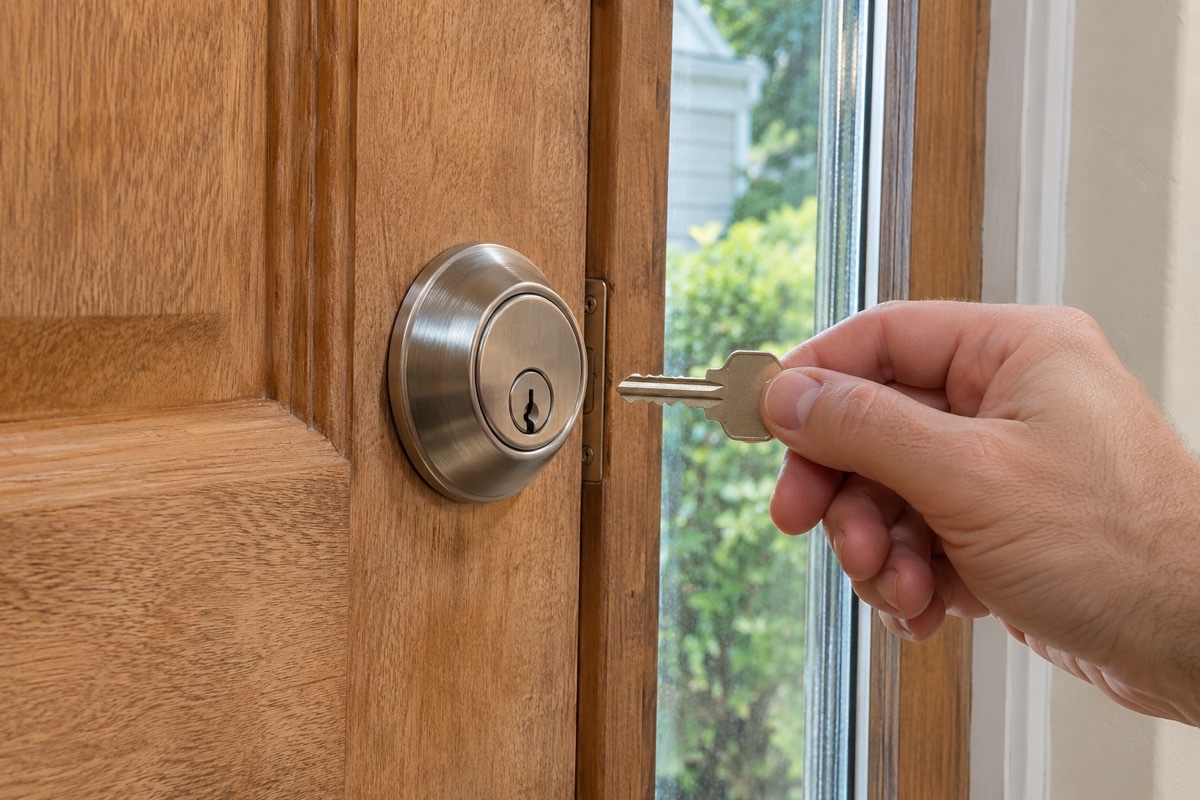
A double cylinder deadbolt has a keyed cylinder on both sides, so it needs a key to open from inside as well as outside. Schlage’s own commercial catalog cautions that double cylinder locks on doors used for egress are a life safety hazard and are not recommended. Check the code your city has adopted before fitting one.
Kwikset calls a double cylinder deadbolt a good option for doors with glass or windows. The same design means a key must be near the door for anyone inside who needs to leave.
The caution is Schlage’s own wording, and it comes from a commercial-grade catalog, not from Schlage’s residential line. See Schlage’s caution on double cylinder locks (commercial catalog PDF). The City of Austin’s building technical codes page lists the editions the city has adopted. This guide does not say whether a double cylinder is allowed on your door. Check the adopted text first, and ask the people who enforce it if you are unsure.
If you rent: what Texas law lists for door security devices
Texas Property Code Chapter 92, Subchapter D covers security devices a landlord provides for a rented home. It lists devices by door type, such as a doorknob lock or keyed dead bolt for exterior doors, and it defines each device. Read the text itself, because exceptions apply, and ask your landlord or a lawyer about your situation. This is not legal advice.
In plain words, the subchapter names a latch on each exterior window, a doorknob lock or keyed dead bolt on each exterior door, a pin lock and a handle latch or security bar on each exterior sliding glass door, and a keyless bolting device and door viewer on each exterior door. It also says required devices are installed at the landlord’s expense, and the rules turn on details such as whether a tenant is in possession.
For these rules, the Code treats a door between a living area and a garage as an exterior door, and it leaves out sliding glass doors and screen doors from that term. Each device has its own definition, so check the definition against the hardware on your door. Read Texas Property Code Chapter 92 directly, and do not rely on a summary, including this one.
How to work out what each door needs before you buy
Start with each door’s job, then match it to a function. Ask what the door is for, what is on it now, whether it must lock and from which side, and whether it is an exit, rented or next to glass. Then check the grade label and measure. The six steps below run in that order.
Work out what a door needs
Name the door's job
Is it an entry, a bedroom, a bathroom, a closet, a pantry or a patio door?
Note what is on it now
Look at both sides. A keyhole, a button, a thumbturn or nothing tells you the current function.
Match the job to a function
Keyed entry, privacy, passage or dummy. A deadbolt is a separate addition.
Check exits, rentals and glass
Ask whether the door is an exit, whether you rent and whether glass sits near the lock.
Check the grade label
Look for the BHMA grade or the Secure Home label on the box, and read what it says.
Measure before you buy
Backset, bores and thickness decide the fit. Our measuring guide covers each one.
Step 6 is the whole subject of how to measure for a replacement door lock. If the door itself needs work, see our door installation page. If the key or cylinder is the issue and the hardware is fine, our lock rekeying page explains that route. To talk a door through, call (512) 777-0021 and have photos of both sides ready.
Frequently asked questions about door lock types
The five answers below cover the questions readers ask about lock types, from the four functions to double cylinder deadbolts. Each answer stands on its own, and the sections above give the detail and name the sources behind each one.
What are the main types of door locks?
Four hardware functions sort swing-door locks: keyed entry for exterior doors, privacy (Bed & Bath) for bedrooms and bathrooms, passage (Hall & Closet) for doors that never lock, and dummy (non-turning, Pull Only) for doors that only need a pull. Deadbolts, mortise, rim, multipoint and keypad hardware add other choices on top of those four.
Which lock goes on a bedroom or bathroom door?
A bedroom or bathroom door takes a privacy lock, which Schlage and Kwikset call Bed & Bath. It locks with a push or turn button on the inside, has no key cylinder outside and keeps people from walking in. Schlage notes it is not as secure as a deadbolt, so treat it as a privacy lock, not a security lock.
Can a privacy lock be opened from the outside?
Yes, on the privacy locks Schlage describes. A small hole on the outside lever or knob takes an emergency pin tool that ships with the hardware. Schlage’s pages say to press the pin in one place and insert and turn it in another, so follow the instruction sheet that came with your lock. Kwikset’s page names an emergency key instead.
What is the difference between a passage lock and a dummy knob?
A passage knob or lever latches the door and turns freely from both sides, so it never locks. A dummy knob or lever does not turn at all and works only as a pull, with no latch and no lock. Schlage gives interior French doors and pantries as examples for dummy hardware. Neither type locks the door.
What does a double cylinder deadbolt do, and why does the exit matter?
A double cylinder deadbolt has a keyed cylinder on both sides, so it needs a key to open from inside as well as outside. Schlage’s commercial deadbolt catalog cautions that double cylinder locks on doors used for egress are a life safety hazard and are not recommended. Check the code your city has adopted before fitting one.
Not sure which function a door needs? Call us in Austin
If you cannot tell which function a door needs, describe the door or send photos of both sides and the edge, and 512 Locksmith will tell you what fits. Whether the answer is a privacy lock for a bedroom, a passage knob for a closet or a deadbolt for the back door, the function comes first and the shape second.
We serve homes in Austin. Texas DPS license B07298601. Serving Austin since 2012. See our residential locksmith services or call (512) 777-0021.