

In this guide
- 01Check what kind of lock you have and gather three tools
- 02The four measurements and where each one sits
- 03Backset: edge of the door to the center of the big hole
- 04Cross bore and edge bore: the two holes the lock lives in
- 05Door thickness: the range that limits your choices
- 06Faceplate, latch and strike: look at the edge and the frame
- 07Handing: when the lever direction matters
- 08A measuring routine you can follow in order
- 09When the numbers do not match your door
- 10Mortise locks and doors with old or extra holes
- 11When a fit problem means a locksmith visit
- 12Frequently asked questions about measuring a door lock
- 13Measured and still not sure? Call us in Austin
To buy a replacement door lock that fits the first time, measure four things on the old door: the backset, the cross bore, the edge bore and the door thickness. Then look at the latch faceplate and, if you are buying a lever, check the handing. On many models the backset is 2-3/8 or 2-3/4 in, the cross bore is 2-1/8 in, the edge bore is 1 in and the door is 1-3/8 to 1-3/4 in thick. The lock’s own sheet wins when it disagrees. Some Austin homes have doors that were swapped or re-drilled after past work, so measure the door in front of you instead of assuming.
Check what kind of lock you have and gather three tools
Most house deadbolts and knob sets are bored locks. They sit in two drilled holes: a big one in the face of the door and a small one in the edge. A tape measure, a pencil and a ruler with 1/16 in marks are all you need. A mortise lock sits in a chiselled pocket and is a different prep.
Look at the edge of the door before you pick up a tape. If you see one round hole with a latch in it, you have a bored lock. If you see a long, narrow plate set into the edge, you may have a mortise lock, and the last sections of this guide cover it.
A bored lock is the common case on house front doors, back doors and interior doors, so most of this guide is written for it. Gather the tools, clear the area around the door and, if the door has a storm door or a screen in front of it, open it fully so you can reach the edge.
Two upstream questions come before any measuring. If you are not sure the lock needs replacing at all, nine signs it is time to replace your door locks walks through them. If the lock is stuck or worn and you want to know why, start with what to do if you have a broken door lock. Once you know you are replacing it, deadbolt vs knob lock helps you choose the type to buy after you have your numbers.
The four measurements and where each one sits
Four numbers decide the fit: backset, cross bore, edge bore and door thickness. The table shows where to measure each one, the common size on many models and what a mismatch means. Check the strike hole depth in the door frame as a fifth look-and-check item. The sizes are common, not universal, so the new lock’s own sheet always wins.
Schlage lays out the same checks in its door prep checklist. Read down the table once before you measure, then write each number on paper as you go.
The last column is the one to remember. A mismatch is not always a dead end, but it is always a reason to stop and read the lock’s sheet before you buy. Buying first and measuring later is how a new lock ends up back in its box.
The five checks on the door and frame. Sizes come from Schlage and Kwikset prep sheets and are common, not universal.
| Measurement | Where to measure | Common size on many models | If it does not match |
|---|---|---|---|
| Backset | Door edge to the center of the cross bore | 2-3/8 or 2-3/4 in | An adjustable latch covers both. Any other number means a different lock or door work. |
| Cross bore | Across the big hole in the door face | 2-1/8 in, and some locks also take 1-1/2 in | Too large and the lock will not fit properly. Too small can be enlarged with a hole saw. |
| Edge bore | Across the small hole in the door edge | 1 in | Needs door work. |
| Door thickness | Across the door edge at lock height | 1-3/8 to 1-3/4 in | Check the model's range. A thicker door needs a special model or a thick door kit. |
| Strike hole depth | The hole in the door frame | About an inch or more, per the lock's sheet | The frame needs work. |
Backset: edge of the door to the center of the big hole
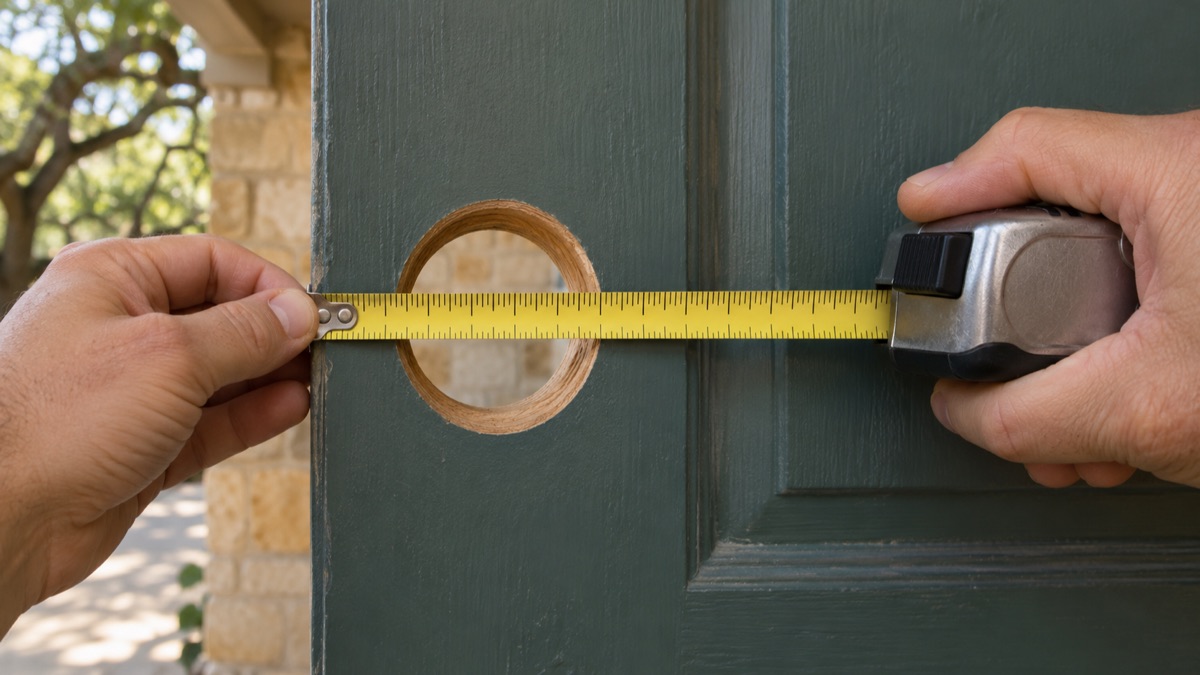
Backset is the distance from the edge of the door to the center of the cross bore, the big hole in the face. The two standard sizes are 2-3/8 in (60 mm) and 2-3/4 in (70 mm). Measure to the center of the hole, not its near rim, then compare the number with the choices printed on the box.
Backset is the easiest number to misread, and it is the first thing a lock’s prep sheet asks you to check. Two locks that look the same can have different latches inside. That is why the number matters more than the look of the hardware.
The easy mistake is reading to the near edge of the hole. That number comes out about half a hole short and looks like a size nobody sells. Find the middle of the hole by eye or lay a ruler across it, then read from the door edge to that middle.
Measure to the center of the hole, not the edge of it.
A 2-3/8 in backset puts the lock closer to the door edge, and a 2-3/4 in backset puts it about three eighths of an inch farther in. On Schlage B-series deadbolts you twist the faceplate to extend the latch for 2-3/4 in, and the 2-3/8 in setting needs no change. If your number is neither size, a standard lock will not fit properly.
Slide the backset in the drawing below and watch where the latch lands. Hover or tap the drawing, then drag the slider.
Cross bore and edge bore: the two holes the lock lives in
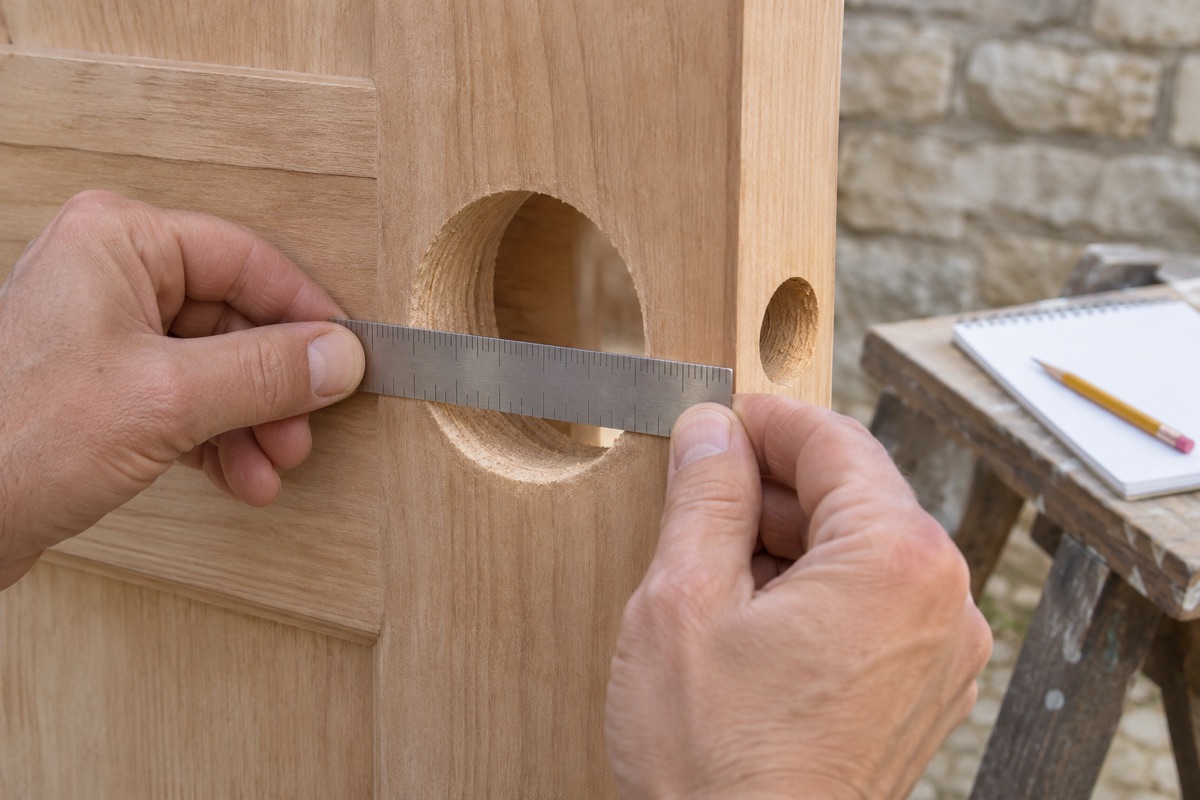
The big hole in the door face, the cross bore, is 2-1/8 in across on many models, and some locks also take 1-1/2 in. The small hole in the door edge, the edge bore, is 1 in. Measure straight across each hole at its widest point, not around it.
Use the ruler for this part, not the tape. Lay the steel edge across the hole so it passes through the middle, and read the gap from one side of the hole to the other. Do it twice at a slight turn, because a hand-drilled hole is not always perfectly round.
Kwikset lists the same four checks in its deadbolt guide (PDF): face hole, backset, edge hole and door thickness. It notes that a door with a 1-1/2 in hole may need additional door preparation. Treat that as a signal to read the sheet for your exact model before you buy.
If you find a hole in the face that is larger than the lock calls for, do not guess that the lock will cover it. Schlage’s prep sheet says a hole that is too large means the lock will not fit properly. Write the number down and read on to the section on mismatches.
Door thickness: the range that limits your choices
Many standard residential locks fit doors 1-3/8 to 1-3/4 in thick. Measure the door edge at the height of the lock, then read the thickness range on the new lock’s own sheet, because some models go wider. A thicker door usually needs a special model or a thick door kit.
Kwikset’s guide says to contact customer service if the door is thicker than 1-3/4 in, because a thick door kit may be needed. The same idea applies to other brands, so a thick door is a reason to read the model’s sheet first.
Measure across the edge of the door, from one face to the other, in the same spot where the latch will sit. Do not measure near the hinges or the top rail, where paint, trim or a stile can add a little. Run the tape or a caliper if you have one, and read it twice. If the door sits right at the top of the range, read the sheet closely. If it sits just outside, do not squeeze it. A lock outside its range will not fit properly, and the sheet will tell you whether a kit or a different model solves it.
Smart locks come with their own prep sheet, and the same four numbers still apply. If you are planning one, our smart lock installation page explains what we handle. Finish matters too, and locks for the Texas climate covers sun and heat on hardware.
Faceplate, latch and strike: look at the edge and the frame
Look at the door edge. If the old plate sits in a chiselled recess, note whether its corners are round or square. If it is a round collar that taps into the hole, it is a drive-in. Plate width and shape vary by model, so match what is there, then check the strike hole in the frame.
Many adjustable latches ship with all three plate shapes, so you can pick the one that matches your edge cut. If a deadlatch or deadbolt function is the open question, deadbolt vs deadlatch explains it, so skip that part here.
On the frame side, look at the strike hole. Schlage’s sheet calls for at least 1-1/4 in of depth for one of its deadbolts, Kwikset says a minimum of 1 in, and on many deadbolts the bolt extends about 1 in. Read your lock’s sheet for the exact figure. Wood doors can change with the seasons, so Schlage also asks owners to confirm that alignment holds across seasons.
Handing: when the lever direction matters
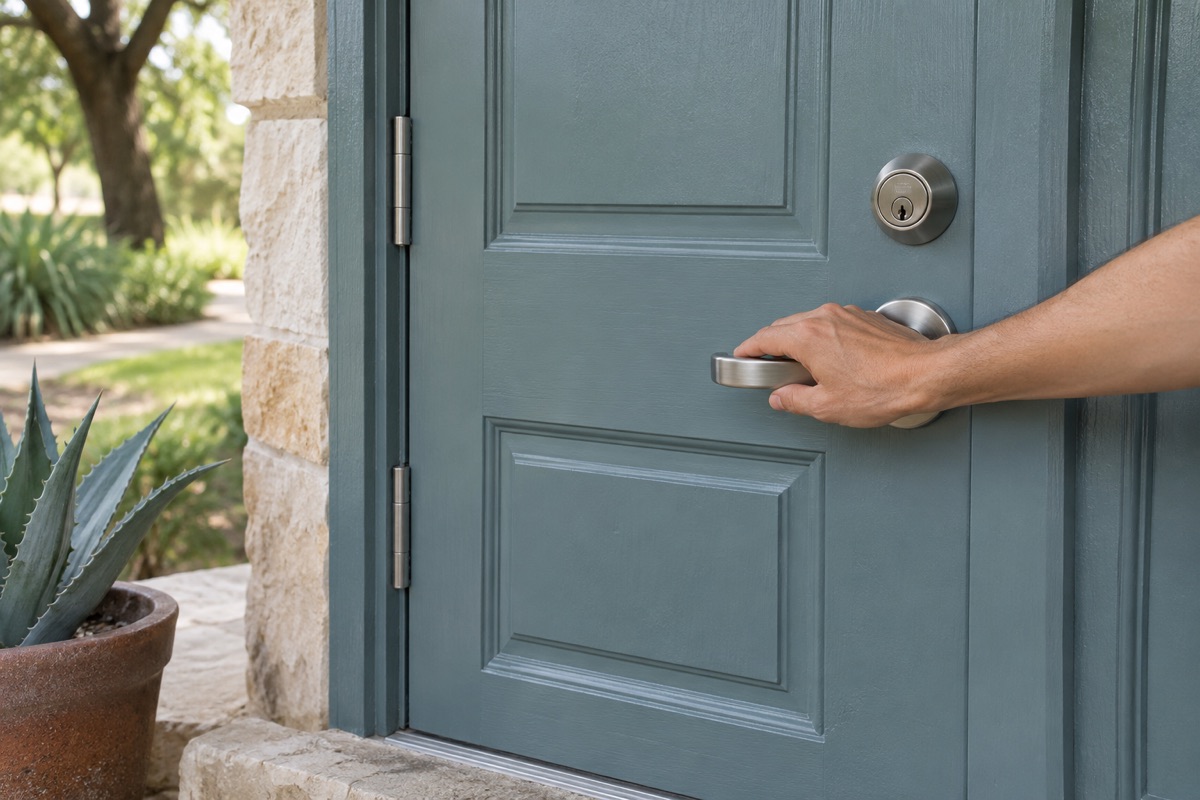
Stand outside the door, on the side it opens away from. Hinges on the left mean a left-hand lever. Hinges on the right mean a right-hand lever. Handing mostly matters for curved levers, while knobs and straight levers usually skip it. It is not about your own left or right hand.
Both Schlage and Emtek make the same point: handing for locks is not the same as carpentry handing, and it has nothing to do with which hand you write with. Schlage says the end of a properly installed lever should point toward the hinge side. See Schlage on lever handing for the pictures.
Passage, privacy and keyed levers can often be flipped. A curved lever may not be able to flip, so check this before you buy.
A measuring routine you can follow in order
Work in this order so nothing is missed: look at the door edge, measure the backset, measure both holes, measure the thickness, check the faceplate and the strike, then check the handing. Write each number down before you shop, and take the page with you to the store.
Measure in this order
Look at the door edge
Find the latch, the plate and the edge hole. Note whether you have a bored lock or a mortise pocket.
Measure the backset
Hook the tape on the door edge and read to the center of the big hole. Expect 2-3/8 or 2-3/4 in.
Measure the cross bore and edge bore
Measure straight across each hole. Expect 2-1/8 in in the face and 1 in in the edge.
Measure door thickness
Measure across the door edge at lock height. Many models take 1-3/8 to 1-3/4 in.
Check the faceplate and strike
Note round, square or drive-in, then check the strike hole depth in the frame.
Check handing
Stand outside. Hinges on the left mean left-hand, hinges on the right mean right-hand.
When you have the numbers and notes from all six steps on paper, you have what a store clerk or a locksmith needs. A short list works well: backset, cross bore, edge bore, thickness, faceplate shape, strike depth and, for a lever, left or right. Add a photo of the door edge and a photo of the old lock from both sides. For the install steps that come next, how to change door locks yourself takes it from there.
When the numbers do not match your door
Some mismatches have a fix. An adjustable latch handles both standard backsets, and a hole that is too small can be enlarged with a hole saw. A hole that is too large, a backset that is neither standard size or a door that is too thick usually means door work, a carpenter, a different lock or a replacement door.
Schlage puts it this way: for a backset or thickness mismatch you may need a carpenter or need to purchase a replacement door. Kwikset also publishes door drilling guides and templates for people who are drilling a new door. The template must be printed at exact size.
A hole that is too small is the one fixable case. Schlage’s door prep sheet lists a hole saw for enlarging a face hole or an edge hole, and the sizes come from the table above. If you are not comfortable with a drill and a hole saw, that is the moment to hand the job to someone who is.
Match the lock to the holes in the door. The door is harder to change than the lock.
If the door itself is the problem, our door installation and door replacement pages cover those jobs. Ask before any work starts what the visit includes, how the door will be left when the work is done and whether the existing door can take the lock you chose.
Mortise locks and doors with old or extra holes
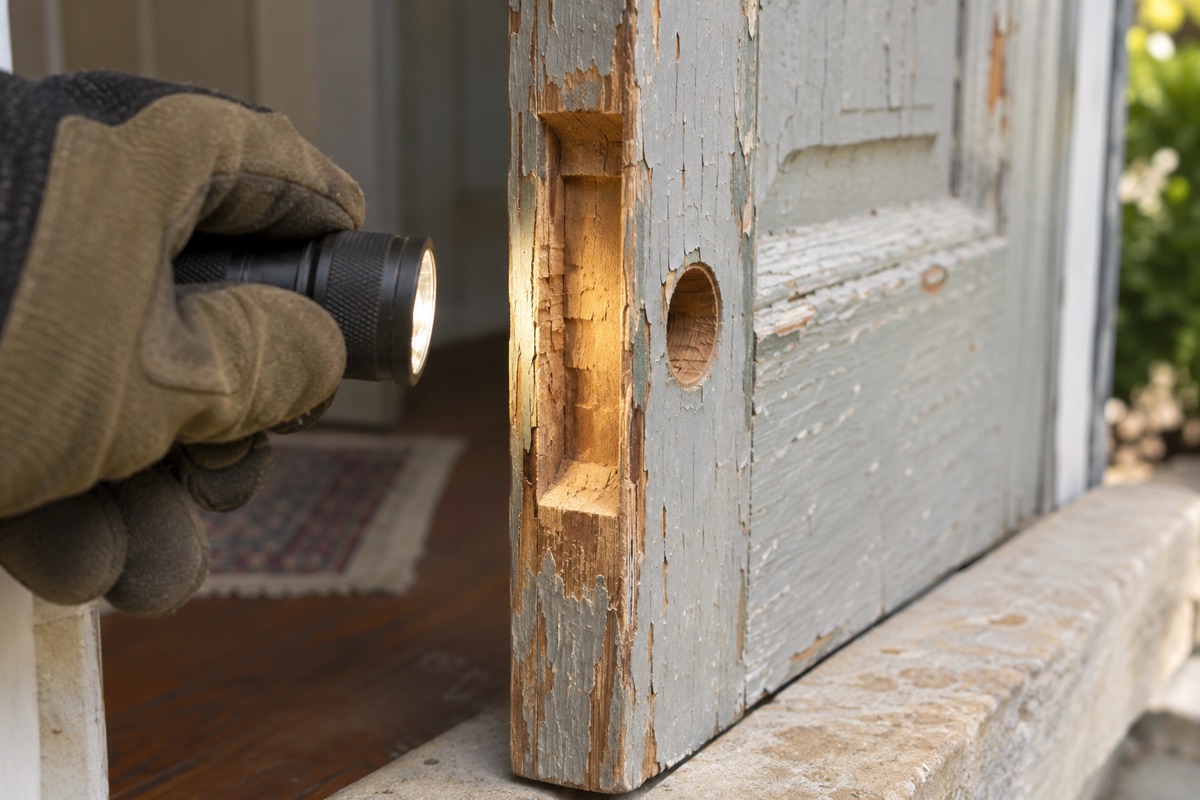
A mortise lock has a long, rectangular body that sits in a pocket cut into the door edge, so it is a different prep from a bored lock. Doors that were swapped or re-drilled can also carry extra holes. Do not guess at either. Ask someone who can look at the door.
Emtek explains the split in mortise vs tubular locks and says a professional is typically needed to prep a door for a mortise lock. That is the reason this guide stops at the pocket and does not give mortise steps.
Extra holes show up on older doors and on doors moved from another opening. You may see a plugged hole, a second edge hole or a pocket that does not line up with anything. Photograph the edge and the face and bring the pictures when you ask. Our residential door services page covers the door side of the job. An extra hole does not always stop a new lock from fitting, but it is a reason to look closely before you buy.
When a fit problem means a locksmith visit
Call when the holes are the wrong size, the backset is neither standard size, the door is thicker than the lock allows, a mortise pocket is involved, or the lock still binds after it fits. Schlage tells owners who are not comfortable doing the door work to call a locksmith. We are a Texas licensed locksmith, DPS licence B07298601. Serving Austin since 2012.
Have your numbers ready when you call, along with the make of the old lock if you can read it on the latch or the faceplate. That detail lets the locksmith look up the sheet before you talk, which makes the conversation shorter and more useful. Ask the locksmith what they need from you, and ask what the visit includes before you agree to it. Good questions are whether a photo of the door edge helps, whether the backset and thickness are enough to pick a lock, and who supplies the hardware. Ask for the Texas licence number, too. A licensed locksmith can give it to you without a pause.
If the real issue is the key or the cylinder, not the fit, a rekey may be what you want. Our lock rekeying page explains the difference. For a fit problem, call (512) 777-0021 with your numbers.
Frequently asked questions about measuring a door lock
What is the backset of a door lock?
Backset is the distance from the edge of the door to the center of the big hole in the door face, the cross bore. The two standard sizes are 2-3/8 in and 2-3/4 in. Measure to the center of the hole, not its near rim, and compare the number with the lock’s box.
How do I know if my door lock is 2-3/8 or 2-3/4?
Hook a tape measure on the door edge where the latch sits and read to the center of the big hole in the door face. The number should be 2-3/8 in or 2-3/4 in. If it is neither, a standard lock will not fit properly, and the door may need work.
How thick can a door be for a standard deadbolt?
On many models the range is 1-3/8 to 1-3/4 in. Measure the door edge at the height of the lock, then read the range on the new lock’s own sheet, because it varies by model. A thicker door usually needs a special model or a thick door kit.
Do I need to know left or right handing to replace a door lock?
Mostly for curved levers. Knobs and straight levers usually skip handing. For a curved lever, stand outside the door, on the side it opens away from. Hinges on the left mean a left-hand lever, and hinges on the right mean a right-hand lever.
What if my new lock does not fit the holes in my door?
An adjustable latch covers both standard backsets, and a hole that is too small can be enlarged with a hole saw. A hole that is too large, an odd backset or a thick door usually means door work, a carpenter, a different lock or a locksmith visit.
Measured and still not sure? Call us in Austin
Read out your numbers or describe the door, and 512 Locksmith will tell you what fits. If the measurements point to door work, we will say so. Call (512) 777-0021 or see our full list of residential locksmith services. For the install itself, use how to change door locks yourself.
Call 512 Locksmith at (512) 777-0021 with your backset, bore sizes and door thickness. Texas DPS licence B07298601.