
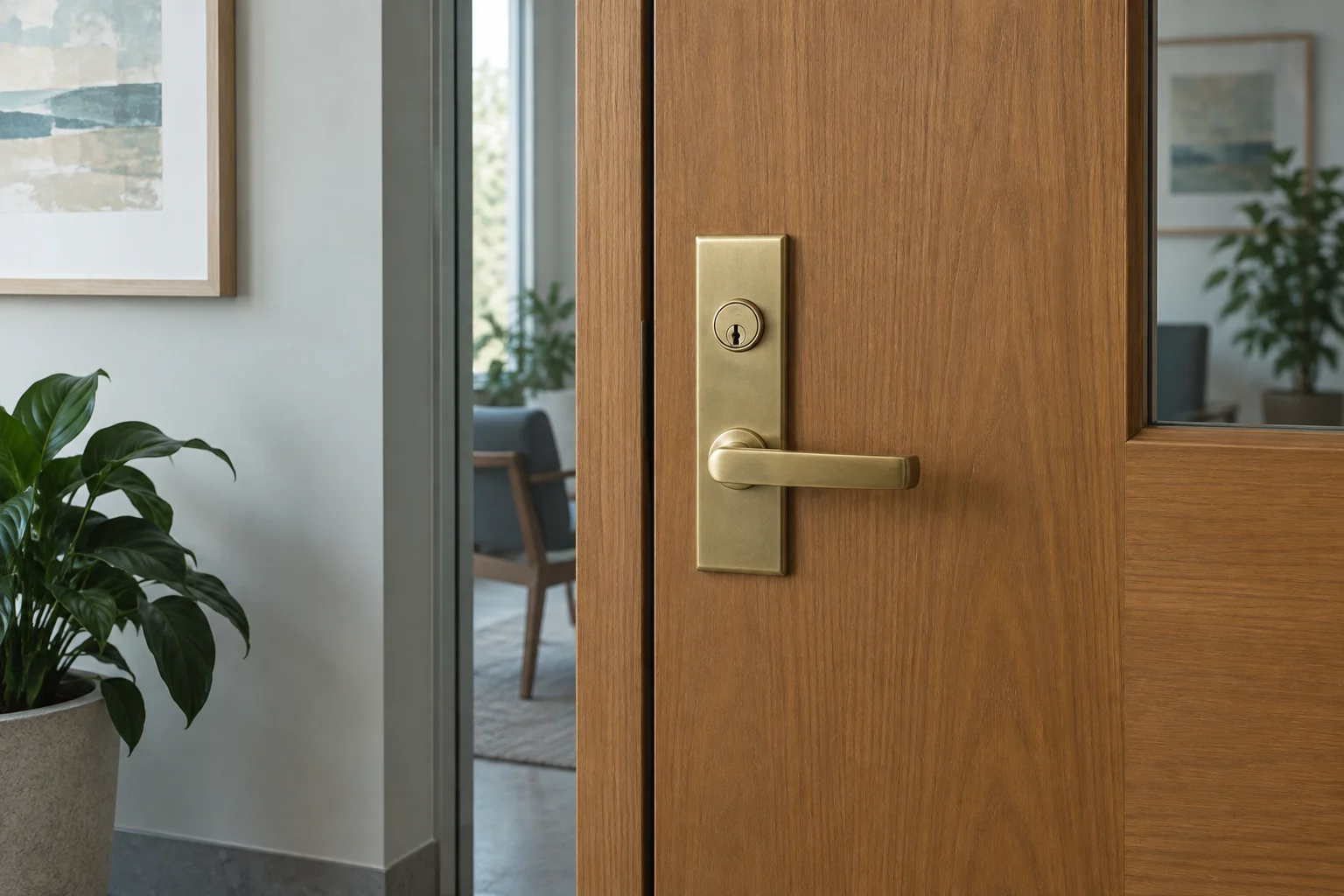
A deadbolt extends a bolt into the frame when you operate the lock. A deadlatch uses a spring latch with a deadlocking feature. Depending on the complete lock function, it can secure the door as it closes. Identify how your entrance should work before choosing either type.
In this guide
What a deadbolt does and why it fails
A deadbolt is manually operated. You turn a key from the outside or a thumbturn from the inside to throw the bolt. Electronic deadbolts use a motor to slide that same bolt, though the backup entry method depends entirely on the model. Unless you have a specific electronic model configured with an automatic locking timer, closing the door does not secure it. You have to take a deliberate action to lock a deadbolt.
If the bolt operates with the door open but binds when closed, the opening and strike need assessment alongside the lock. Alignment, pressure and hardware faults can produce similar symptoms. A new cylinder alone may leave the original problem unchanged.
Schlage's guide to deadbolt types explains common options. The distinction between a standard keyed cylinder, an inside thumbturn and electronic operation matters when you compare replacements. The lock you choose dictates how you enter and how you leave.
A separate deadbolt above the handle
What a deadlatch does and how it locks
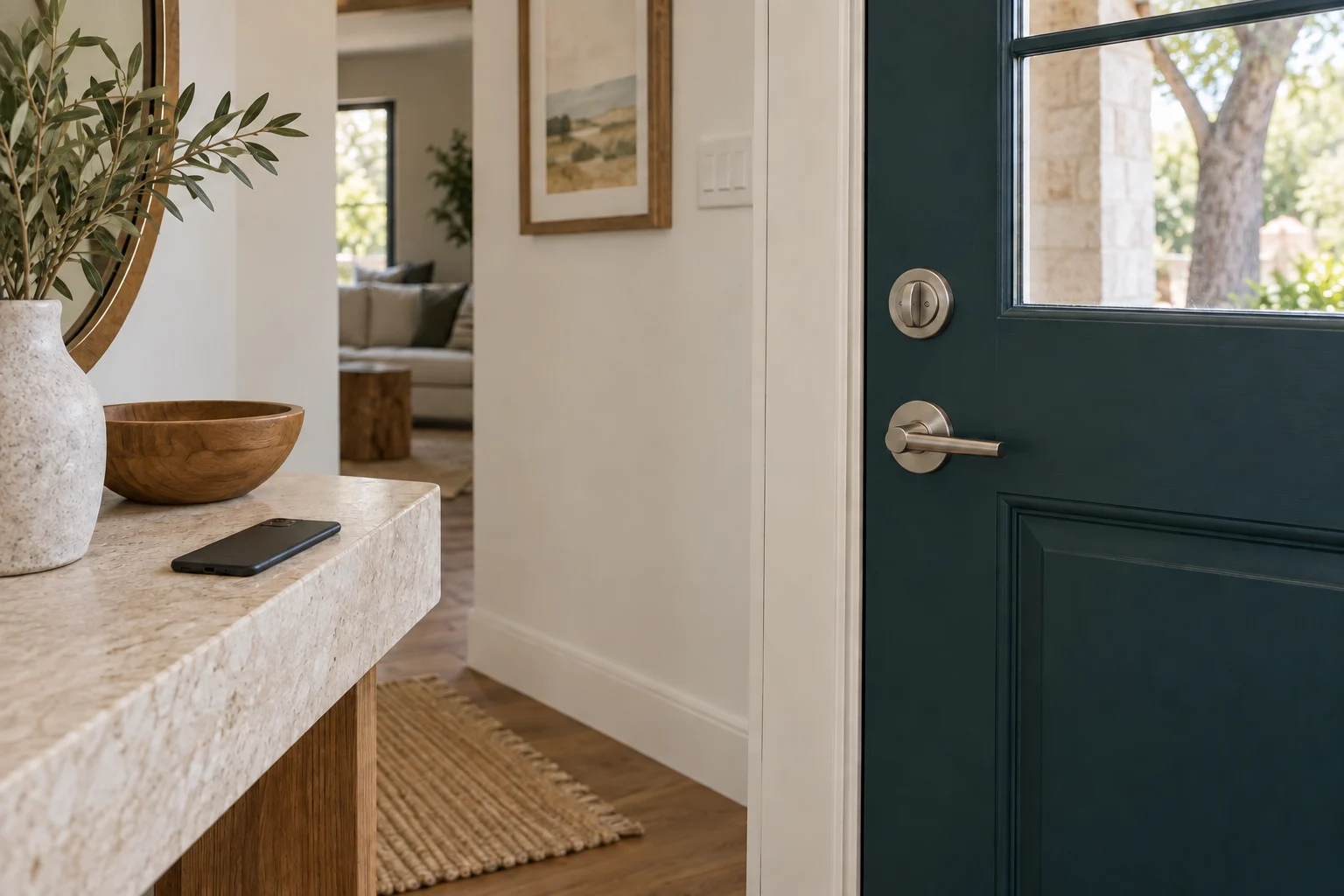
A deadlatch uses a spring-loaded latch with an additional deadlocking function. Some designs have an auxiliary plunger beside the main latch. Correct installation lets the components interact with the strike as the manufacturer intends.
The deadlocking feature resists pushing the latch back when the door is properly closed. It does not make the complete opening immune to force or manipulation. Self-locking behavior also depends on the lock function; do not infer that behavior from the latch name alone.
Some products are separate auxiliary deadlatches mounted above a handle. Others incorporate a deadlocking latch directly into a knob, a lever or a mortise lock. Schlage describes its B250 deadlatch as an option for a self-locking door without a handle on the auxiliary lock itself. That is one specific product function, not a universal rule for every lock carrying the name.
Why the strike gap matters
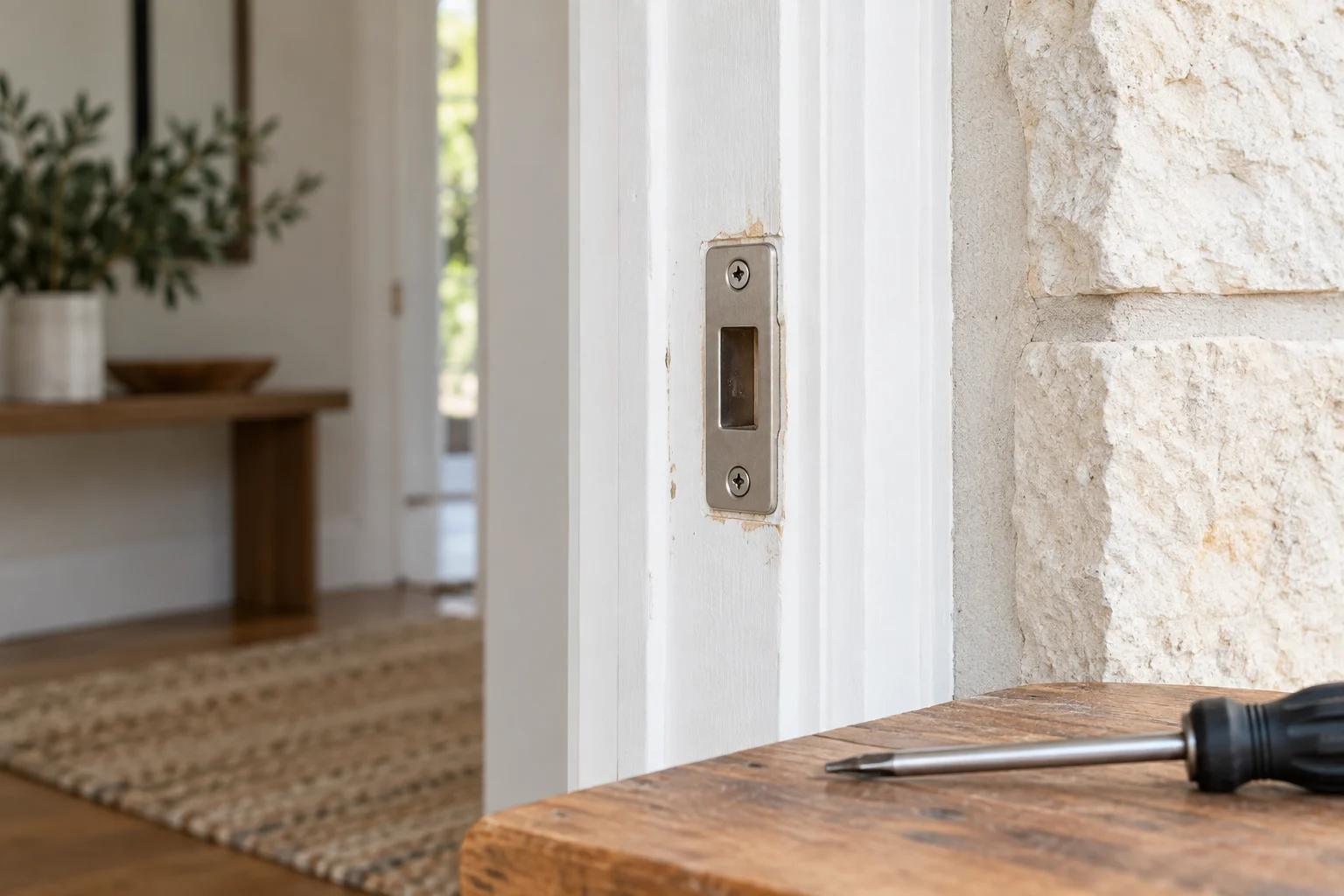
The strike, door gap and latch position affect whether the deadlocking feature engages. A door that clicks shut is not proof that every component is working correctly. Ask for the exact model's installation requirements to be checked rather than modifying the strike by trial and error.
What locks when the door closes?
The latch and the deadbolt do different jobs.
- Latch
- Deadlocking feature
- Deadbolt
Further reading: Schlage: Types of deadbolt locks for your front door, Schlage Commercial: B250 Series Grade 2 Deadlatch
Common replacement misunderstandings
People often buy a new lock assuming all door hardware is universal. A residential door preparation involves a few specific measurements. The backset is the distance from the edge of the door to the center of the keyhole, which is usually two and three eighths inches or two and three quarter inches. The crossbore is the large hole drilled through the door face.
If you try to put a commercial deadlatch on a standard residential door, the hole size or the backset might not line up. Similarly, if your door is exceptionally thick, a standard deadbolt tailpiece might not reach all the way through to the inside thumbturn. Photograph the inside, outside and the edge of the door before buying parts. Those physical details tell a locksmith much more about your options than a picture of the key alone.
The strike matters
Compare the way you use the door
| Question | What to check |
|---|---|
| Should the door lock when it closes? | Identify the lock function and whether automatic locking makes sense for the people using the entrance. |
| How will you leave from inside? | Check the inside operation and the exit requirements for that door before changing any hardware. |
| Does the door already have another lock? | Review both locks together, including their spacing and the steps needed to open the door from the outside. |
| Is the door used with an access system? | Confirm compatibility with the strike, controller, door closer and existing exit hardware. |
Complete door decision examples
The choice between a deadbolt and a deadlatch comes down to how the entrance operates day to day.
For a home entrance, a deadbolt paired with a passage handle can separate latching from locking. Consider whether that matches the household routine and how every user will leave from inside. Other lock combinations behave differently, so test the complete entrance.
For a shared gate or pool entrance, self-closing and self-latching requirements deserve a separate assessment. Select gate hardware for the applicable safety rules, users and exposure; a general door-lock comparison does not identify the correct pool-gate device.
For a business rear exit, assess occupancy, required exit operation and any rated assembly before selecting hardware. Panic or fire-exit devices are required in some situations, not every commercial opening. Tell the installer about the access control system, closer and existing exit equipment.
Start with the door's job
Use the full opening and its daily routine to narrow the choice.
Needs a deliberate lock step
Compare deadbolt options, including how people unlock and leave from inside.
Needs to secure when it closes
Check the exact self-locking function, closer and strike. The word deadlatch alone does not confirm that behavior.
Shared gate or business exit
Have the complete opening assessed for its users and applicable exit requirements before buying hardware.
When to repair, rekey or replace
If you like the current hardware and it operates smoothly, ask whether rekeying the lock solves your problem. Rekeying changes the internal pins so the old key no longer works, while keeping the existing lock body on the door. Replacing a sound, high quality deadbolt solely because a key is missing is usually unnecessary.
If the bolt binds, the cylinder turns without operating the lock or the frame is damaged, assess repair and replacement together. Do not file or enlarge a strike before checking the hardware and door requirements.
Keep suitable hardware
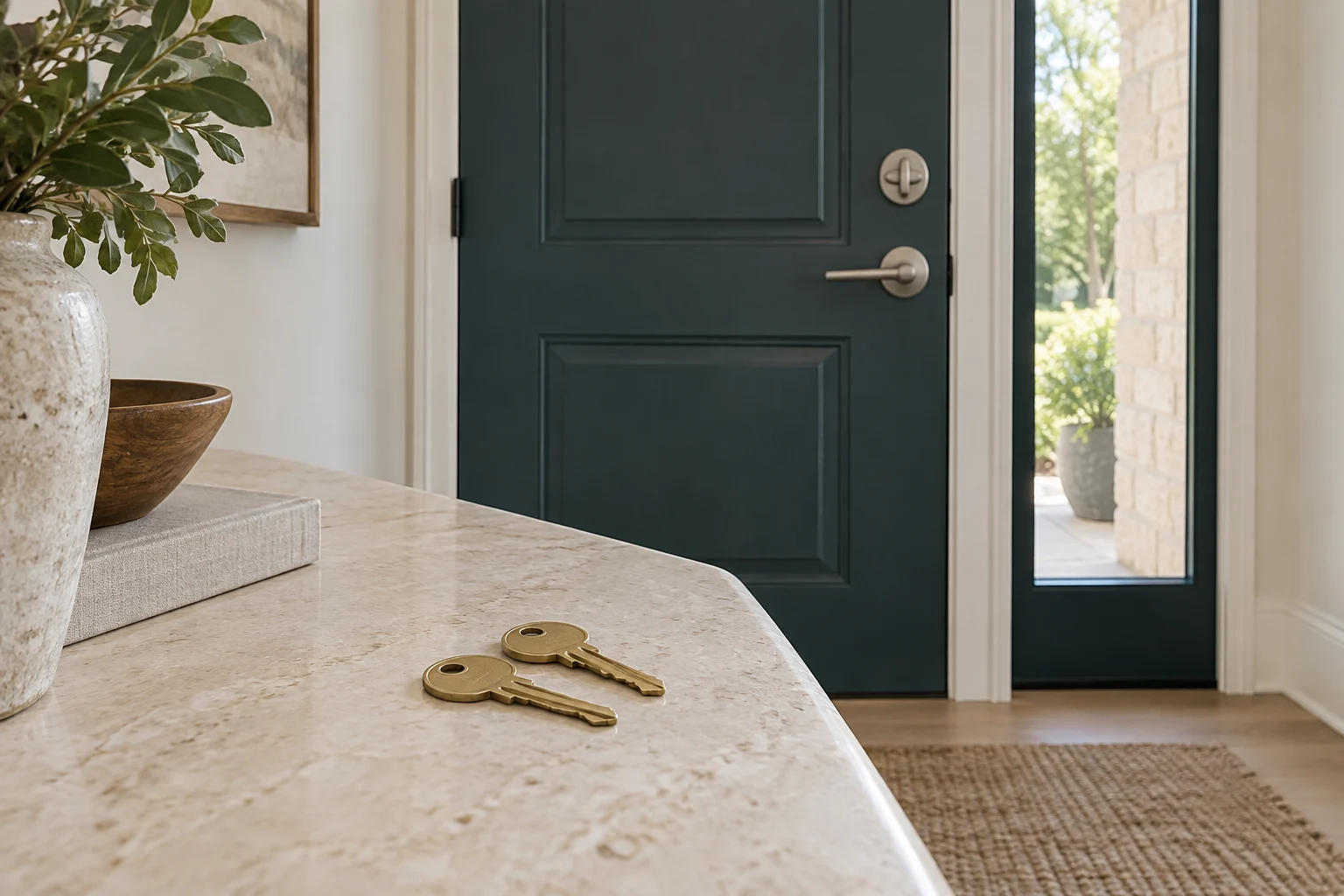
Common questions about door locks
Can I replace a deadlatch with a deadbolt?
It depends on the holes already drilled in your door. If the deadlatch is a standalone auxiliary lock mounted above your main handle, the hole spacing might accept a standard deadbolt. However, if you have a deadlocking latch built into a knob or lever, you cannot simply swap it for a deadbolt without changing the entire handle set and potentially drilling new holes.
Why does my deadbolt only turn halfway?
Why does my deadbolt stop partway?
A partly moving bolt can have several causes. Report whether ordinary operation differs with the door open and closed, without forcing it. That observation helps the assessment but does not prove the cylinder is sound or identify the repair.
Does a deadlatch offer the same security as a deadbolt?
Does a deadlatch offer the same security?
Compare the exact products, their intended functions and the complete opening. A deadbolt and a deadlatch operate differently; the names alone do not establish a tested force-resistance ranking. Suitable installation, strike engagement and safe exit matter for either.
Get help identifying your lock
512 Locksmith has served Austin for more than a decade. For deadbolt service in Austin, call (512) 777-0021. Dispatch accepts calls 24/7. Describe whether the door is stuck open, stuck closed or simply needs a different access arrangement. Ask the team to confirm the service options, parts availability and a quote for your specific door setup before arranging a visit. Texas license B07298601.
Sources and further reading
- Types of deadbolt locks for your front doorSchlage
- B250 Series Grade 2 DeadlatchSchlage Commercial