

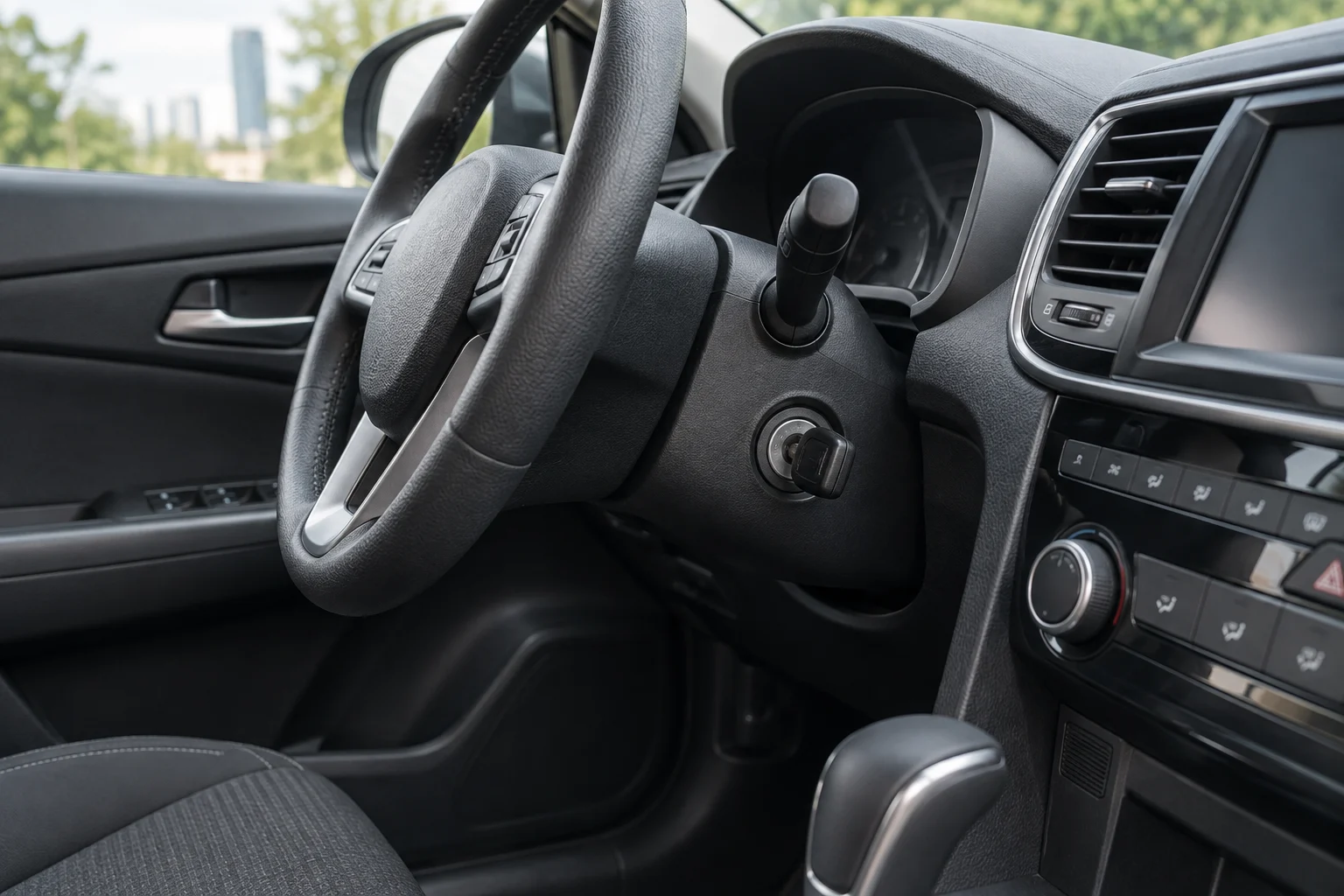
A key that will not turn and an engine that will not start are different symptoms. The fault may be in the mechanical ignition cylinder, the key, the electrical starting system or the immobilizer. Describe what happens before booking a repair so the provider can confirm whether an automotive locksmith or a repair shop is the right starting point.
In this guide
Diagnosing the exact problem
Several different components can cause ignition failure. A locksmith evaluates the vehicle to determine which specific system is causing the trouble.
Wear or damage can affect a mechanical key or ignition cylinder. Report binding, unusual looseness or a key that comes out unexpectedly, but do not assume the source of wear before inspection. Stop using a suspect ignition if it could affect safe vehicle operation.
The electrical switch and mechanical cylinder are distinct components, and their arrangement varies by vehicle. If the key turns smoothly but the car does not crank, or if the dashboard lights flicker and die when you turn the key, the electrical switch itself might be faulty.
A key-recognition warning may call for assessment of the key and immobilizer as well as the vehicle's power supply. Transponder key service is one possible route; the warning alone does not prove that programming is needed.
A no-start symptom needs a diagnosis
The key, cylinder and electrical system can produce different problems.
- Reported issue
- Scope check
- Authorization
Further reading: AAA: 14 reasons why your car will not start
Separate the symptoms
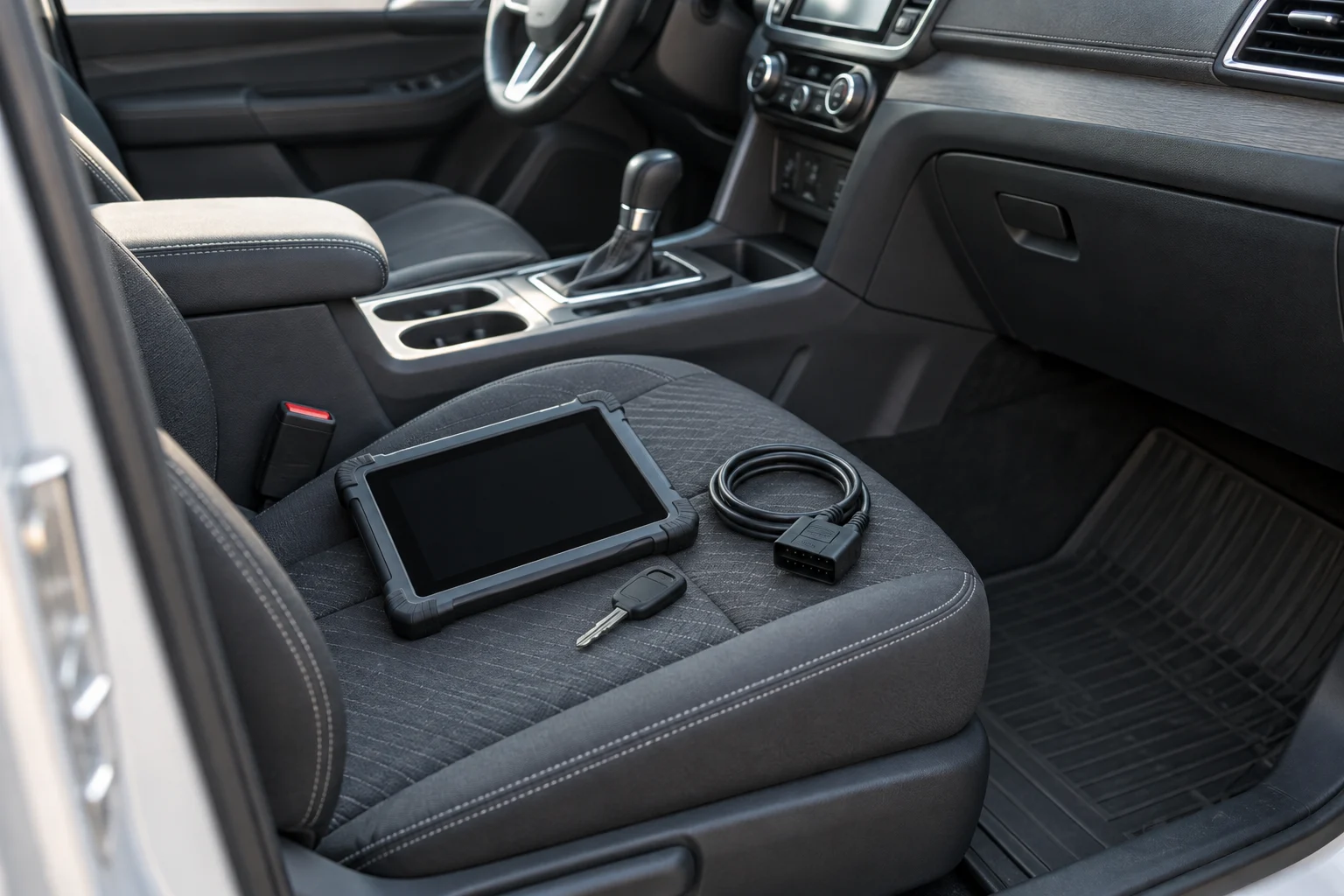
Describe the symptom clearly
Record what the vehicle actually does. These observations guide the provider's questions and should not be treated as a diagnosis:
| Symptom | Information to report |
|---|---|
| Key binds or refuses to rotate past accessory | Whether the key inserts fully and whether a sound spare behaves differently |
| Ignition rotates loosely with no resistance | Where normal resistance or detents seem absent |
| Key turns smoothly but engine remains silent | Dashboard behavior, crank/no-crank and any other power symptoms |
| Engine refuses to crank and security light flashes | Exact warning message and whether a second authorized key works |
Binding or unusual free movement needs inspection. Possible faults include the key, cylinder and related components, but normal-feeling rotation does not rule out a mechanical issue and looseness does not prove one specific part has broken.
When the rotation feels normal but the engine remains silent, the focus shifts to the electrical side. A silent engine could mean a failed ignition switch, a dead battery or a broken starter motor. A locksmith can often handle the mechanical cylinder and the transponder key, while a dead starter motor requires a mechanic.
If the vehicle manual describes a normal steering-lock release procedure, follow that procedure gently. Do not force the steering wheel or key. A procedure for another model may not apply.
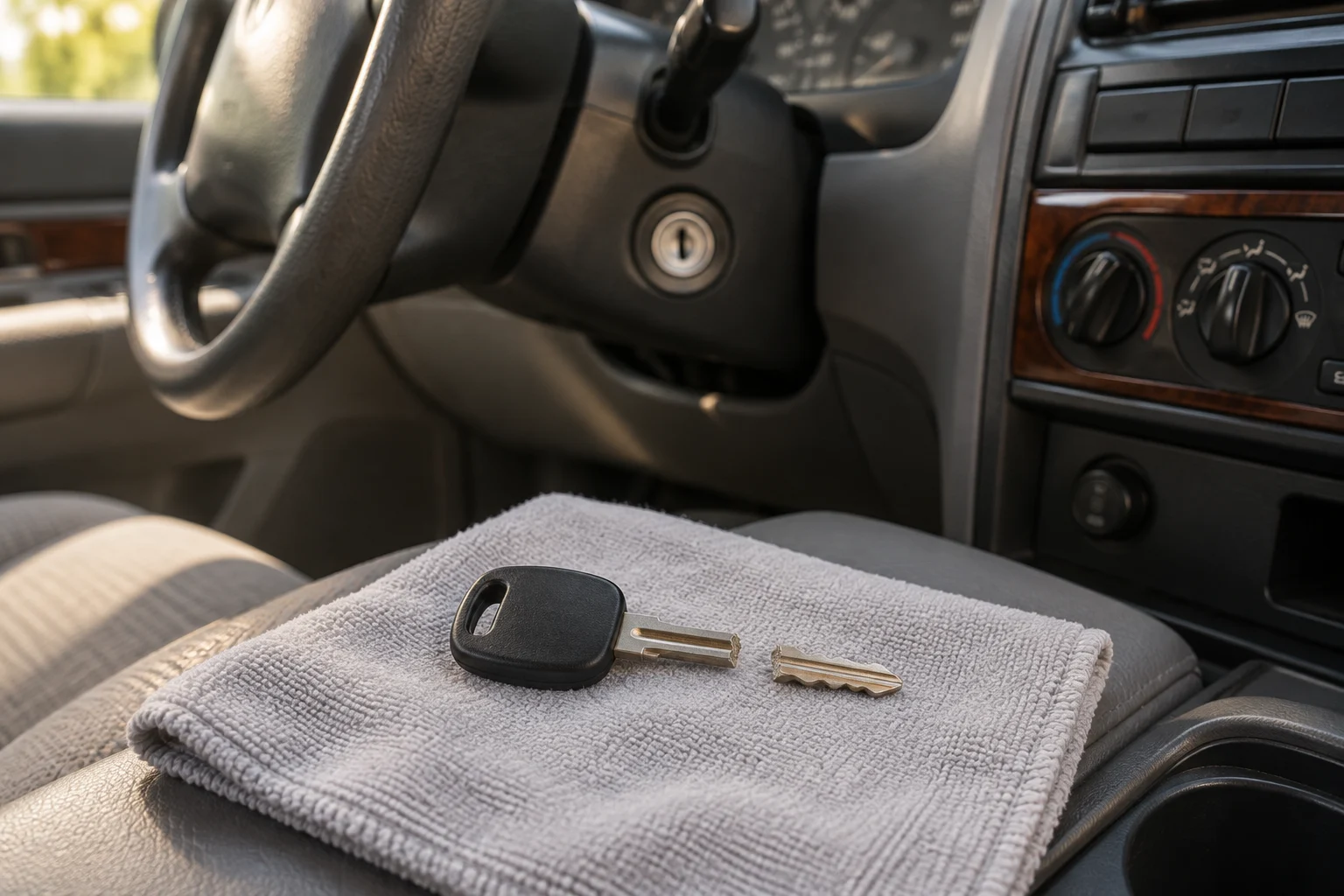
Broken ignition key fragment
What observations Matter
Note whether the key inserts fully, turns to each normal position and comes out normally. Tell the provider whether the dashboard lights appear, whether the engine cranks and whether you see a key or immobilizer warning. You do not need to dismantle anything to report those observations.
Tell the provider when the symptom started, whether it followed impact or water exposure and whether it is intermittent. Include year, make and model; model names alone can cover several ignition designs.
The limits of key tests
If a sound spare behaves differently, report it. If both keys fail, report that too. Either observation is useful, but neither isolates the cylinder, electrical switch or immobilizer without further assessment.
Testing multiple keys helps, but do not force a key that binds. Applying heavy torque with pliers will snap the blade off inside the keyway, turning a straight repair into a complicated extraction. Stop if turning a key takes force.
Repairing versus replacing the unit
Once the problem is identified, the locksmith will recommend a repair or a complete replacement based on the condition of the parts. A serviceable mechanical cylinder may be repairable, depending on its condition and parts availability. Ask what failed and how the proposed ignition repair addresses it.
If the ignition was damaged during an attempted theft where a tool was forced into the keyway, or if the internal metal housing is heavily worn down, replacement may be needed. If the vehicle stalls or has a steering or ignition fault while driving, stop safely and arrange appropriate roadside help rather than continuing to test it on the road.
Ask whether ignition switch repair for your make, model and year can be done at your location. Some jobs need workshop diagnosis, ordered parts or manufacturer-specific procedures. A mobile locksmith can handle many cylinder rebuilds and transponder issues in a parking lot, but a completely shattered steering column housing might require a tow to a facility.
Matching keys to the new ignition
Ask whether a replacement cylinder can be keyed to match the vehicle's existing door key. Compatibility varies, and electronic programming is a separate question. Confirm how the doors and ignition will operate after the work. Having one key for the door and a different key for the ignition is an option, but matching them is usually preferred for convenience.
If a replacement key is part of the repair, ask how its correct specification will be established and whether the existing worn key is suitable as a reference. Test the agreed door, ignition and remote functions afterward. See car key replacement.
Which symptom are you seeing?
Key will not turn normally
Report whether a sound spare behaves differently.
Key turns but engine will not start
Describe lights, messages and sounds for diagnosis.
Engine stalls or steering behaves abnormally
Stop safely and arrange appropriate roadside help.
Check the matching key
The repair provider decision
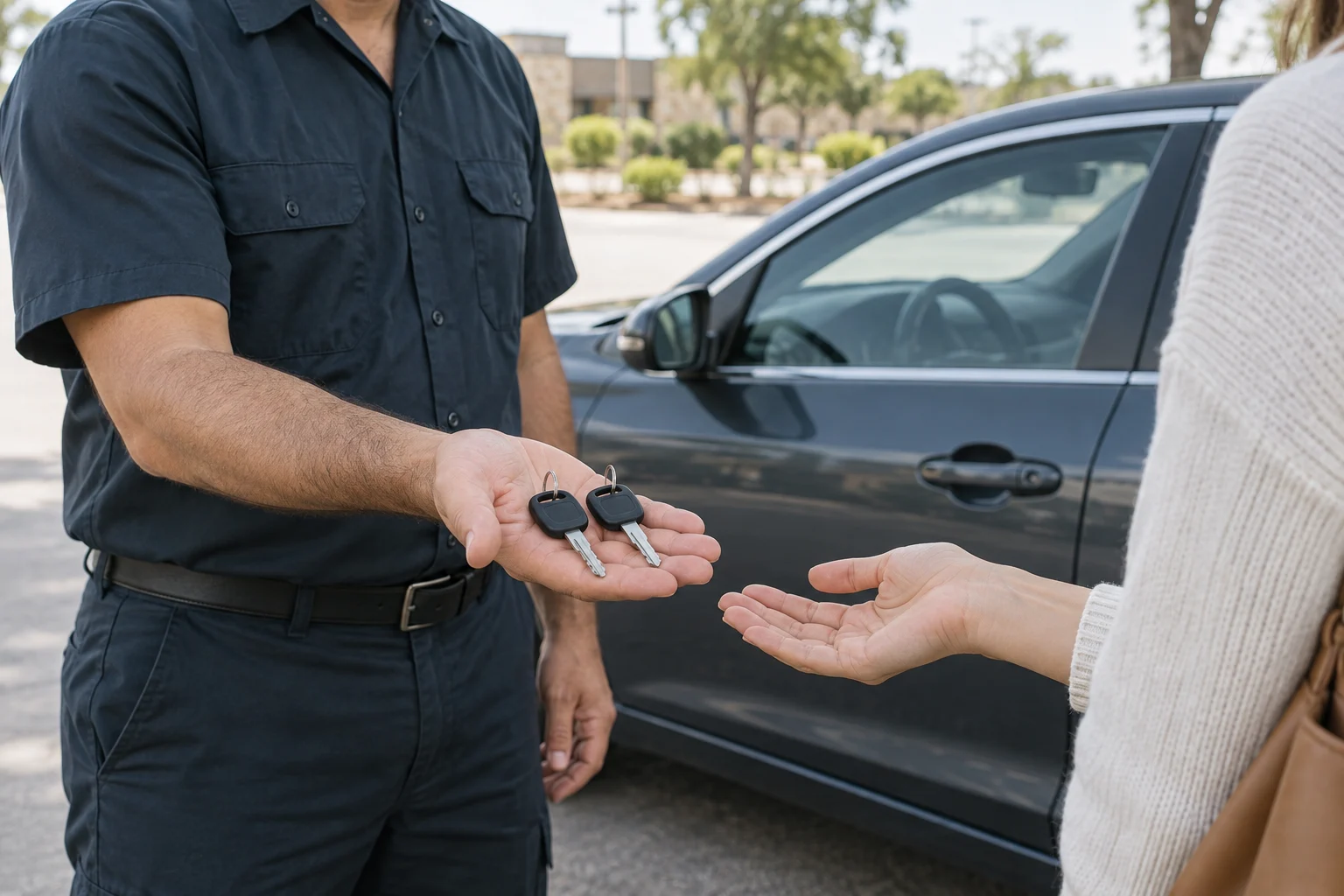
A mobile locksmith may be suitable for supported key or cylinder work, while other faults need a workshop. Ask the dealer or repair provider whether the vehicle must be present and whether parts need ordering before arranging transport. Do not assume one type of provider always repairs or always replaces.
If the diagnosis points to a failed starter motor, a blown electrical relay or a severely damaged steering column assembly, a traditional automotive repair shop is the correct provider. Ask the locksmith during the initial call if the symptoms you describe fall within their service scope.
What a repair quote should explain
Ask whether the proposed work concerns the mechanical cylinder, electrical switch, key or another part. Find out whether diagnosis, parts, key cutting and programming are included, and what happens if the fault turns out to be elsewhere in the starting system.
If the lock was damaged during a theft attempt, mention any visible damage around the column and any missing keys. Ask whether the plan also addresses the missing key's electronic access and the remaining mechanical locks.
Getting professional help with your vehicle
Avoid dismantling the steering column or forcing the key. The area can contain safety and electronic components that need vehicle-specific procedures. 512 Locksmith has served Austin for more than a decade. Call (512) 777-0021 with the symptoms and vehicle details to discuss the service scope and quote. Dispatch takes calls 24/7.
Sources and further reading