

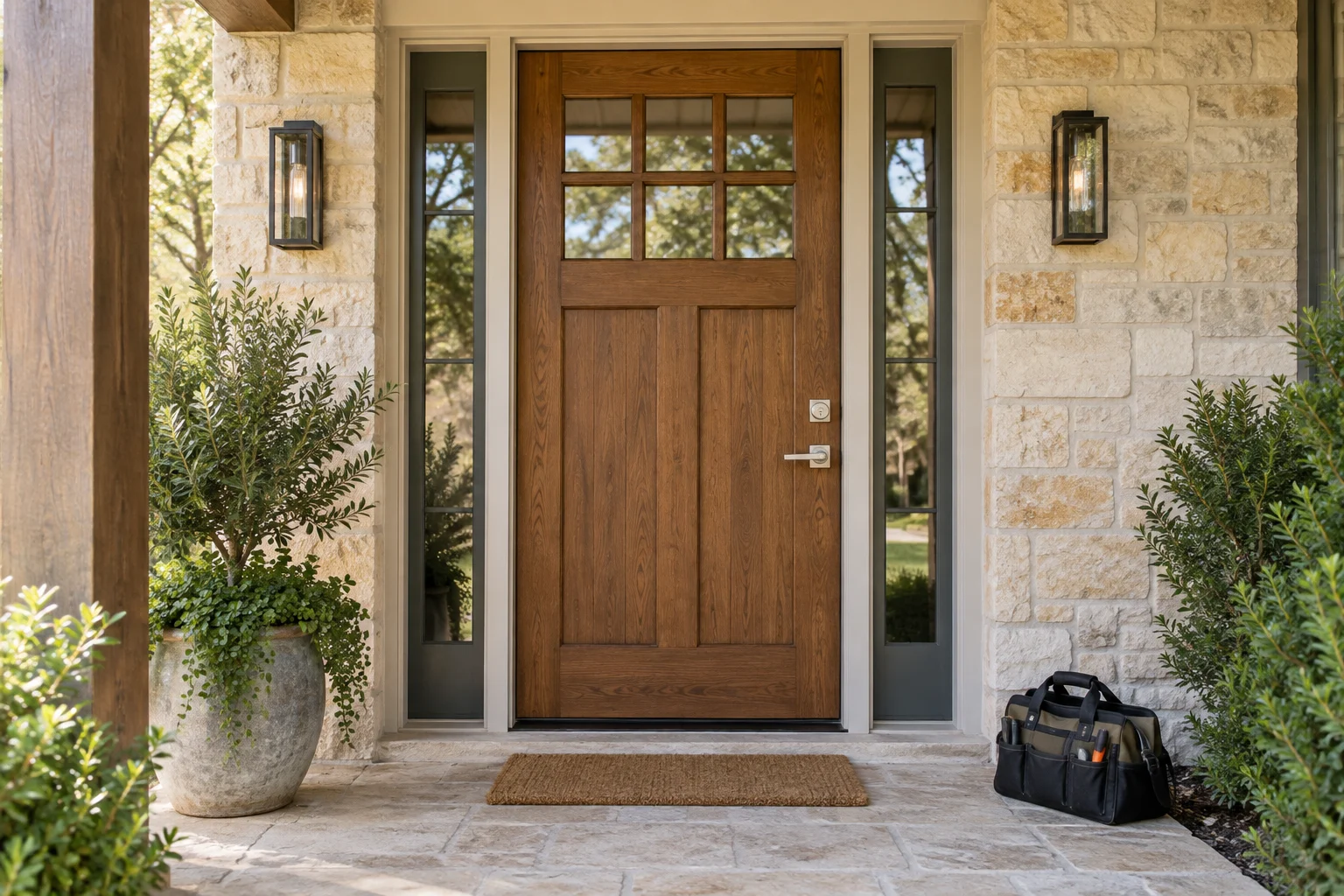
A sheltered porch and a door in direct afternoon sun expose hardware differently. In Austin, check the model's operating limits, installation requirements and finish warranty alongside door fit. 512 Locksmith has served Austin for more than a decade; the useful question is what suits this entrance, not which brand is universally best for Texas.
In this guide
- 01How the local climate affects your doors
- 02Lock materials built for extreme weather
- 03Smart locks, temperature limits and network options
- 04Recommended hardware types for Austin homes
- 05Hardware maintenance routines
- 06Warning signs of weather damage
- 07Compare the exact model, not just the connection
- 08Frequently asked questions about weather and door locks
How the local climate affects your doors
Weather can change the fit between a door, its frame and the lock. Heat can cause materials to expand, while heavy humidity introduces moisture into wood and metal alike.
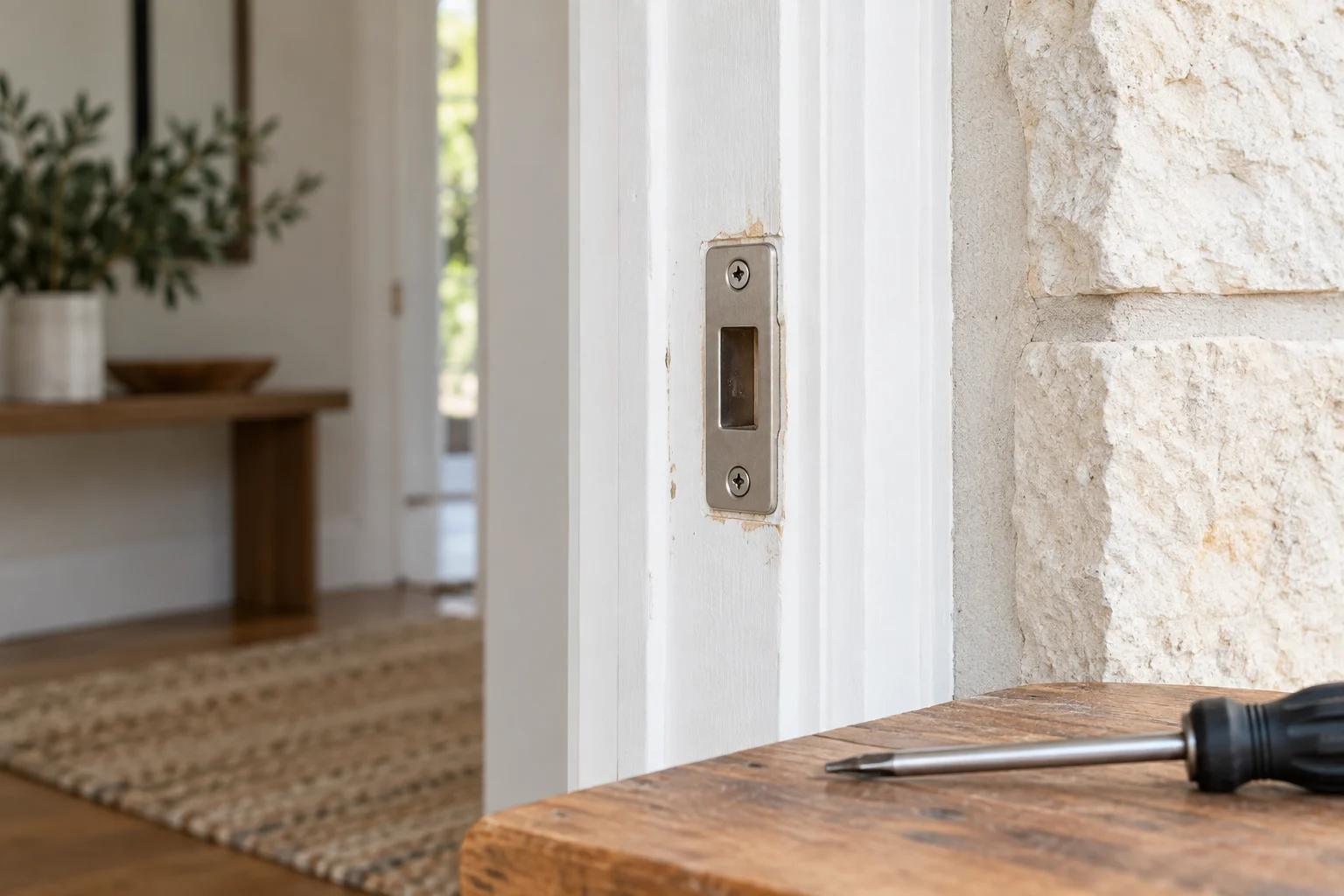
A bolt that works with the door open but binds when it is closed suggests an alignment issue. Seasonal movement, worn hinges or a damaged frame may be involved. Check the mechanical fit before replacing an electronic lock or increasing motor force. If you force a lock to turn against a misaligned strike plate, you place unnecessary stress on the internal tailpiece and the key itself.
High humidity introduces a different set of problems. Moisture in the air promotes corrosion on unprotected internal steel components. Look for visible corrosion, water exposure and changes in how the key turns rather than assuming every sticking lock has rust inside. Wooden doors can also swell and contract with moisture changes, potentially affecting alignment and closure. When the door swells, the latch may not reach the strike plate opening fully, leaving your home vulnerable even if you hear a click.
A binding lock may be a door-fit problem
Weather exposure can change how the door meets its frame.
- Opening edge
- Latch or bolt
- Keeper opening
Door and strike fit
Lock materials built for extreme weather
Manufacturers use several different metals for residential hardware. Material, construction and finish all affect how hardware handles exposure to rain and intense sunlight.
Ask which parts and finishes are intended for exterior exposure. A decorative brass-colored finish does not tell you what the internal parts are made from. A lock might have a solid brass exterior but utilize standard steel internal components that require protection from direct rain. Read the care instructions and warranty exclusions for the exact finish. Some manufacturers offer lifetime finish warranties, while others explicitly exclude damage from harsh climates.
Do not rank a complete lock by one material alone. Seals, construction, finish and installation affect how it performs. If the entrance gets wind-driven rain, confirm whether the product needs a sheltered installation before you buy it.
Smart locks, temperature limits and network options
For a door in direct afternoon sun, compare the exact model's operating limits and exposure requirements. A touchscreen, physical keypad and mechanical lock have different components; the product specification and installation conditions should guide the choice.
Modern electronic locks offer various connectivity options, including Wi-Fi, Bluetooth and Thread. You may also see the Matter logo on new hardware. Matter is an interoperability layer that allows devices to communicate across different networks; it is not a physical hardware specification. A lock's radio choice or network compatibility does not prove its weather resistance. A Matter-compatible lock still relies on its physical gaskets and exterior housing to keep moisture out.
If you install a complete exterior smart lock, understand its backup-entry method and keep the required key or power source accessible outside the locked home. Backup entry is strictly model-specific. Some electronic deadbolts feature a traditional mechanical key override hidden beneath a physical cover. Other keyless models offer two external metal contacts where you can touch a standard nine-volt battery to power the keypad long enough to enter your code. Never assume you can bypass a dead battery without the specific backup method designed for that exact model.
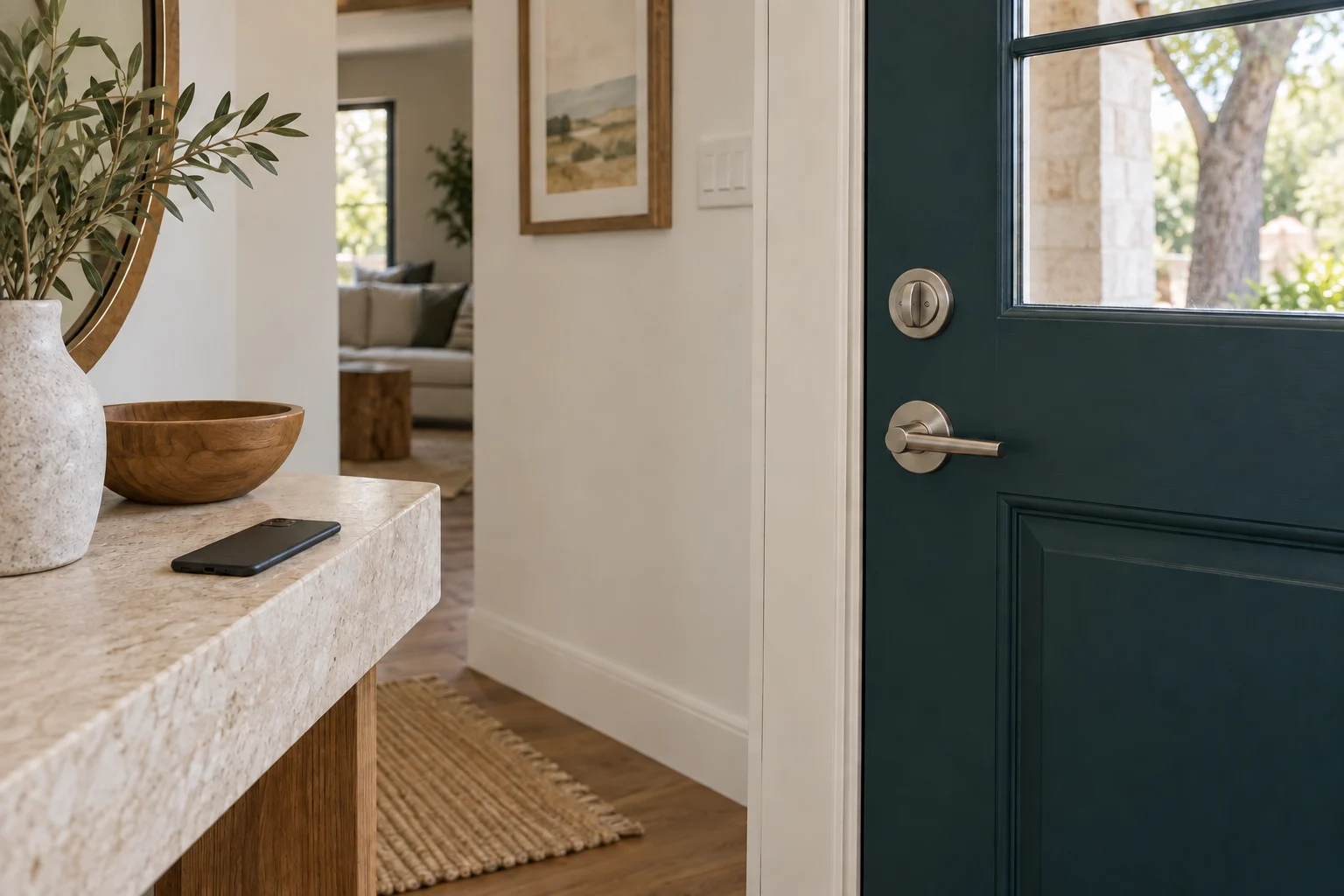
An interior retrofit can reduce the exterior exposure of some electronic parts while retaining compatible exterior hardware. It does not guarantee a controlled temperature or suitability for every door. Level Bolt with Matter is an example of a retrofit design; check the supported deadbolt, door and network requirements rather than assuming all retrofits replace only a thumbturn.
Interior deadbolt above a lever handle
Recommended hardware types for Austin homes
When evaluating hardware for your exterior doors, look for specific features rather than just a brand name. No single lock is the mandatory choice for every Austin door.
A mechanical deadbolt avoids batteries and connected features, but still needs correct alignment and care. Product grades describe performance under the applicable tests; they do not guarantee that a lock will never bind in hot weather. Check the manufacturer's explanation of residential ratings when comparing products. Residential grading should not be confused with a blanket numeric commercial grade or a promise that the hardware is pick-proof.
If you want to upgrade your entry points, residential locksmith services can evaluate your door alignment before installation. You can also ask a technician about smart lock installation options suited for your specific door orientation and network setup.
Hardware maintenance routines
Routine checks can reveal wear or poor alignment before operation becomes more difficult. Follow the product's maintenance schedule and investigate changes in how the door closes or locks.
Every few months, test how smoothly your key turns while the door is open. If you feel grinding or significant resistance, the internal cylinder likely needs attention. Use only the lubricant and cleaning method specified by the lock manufacturer. Avoid mixing products or spraying electronics; different lock designs have different care requirements. Spraying a wet lubricant into a smart lock keypad can permanently damage the circuitry.
Check the alignment between your door and the frame. If you have to push or pull hard on the door to throw the deadbolt, check the hinges, strike and frame alignment. A technician can distinguish a fit problem from a worn cylinder before recommending work.
Check an exposed entrance
Fit
Note whether the latch or bolt binds when the door is closed.
Exposure
Check the maker's limits for sun, rain and temperature.
Maintenance
Use the maker's cleaning and lubrication guidance.
Warning signs of weather damage
Pay attention to how your hardware operates daily. A key that becomes increasingly difficult to insert or turn needs attention, but the symptom alone does not identify the cause. Visible corrosion on the housing or strike deserves attention, though it does not establish the condition of the internal mechanism.
If batteries need replacement unexpectedly often, follow the model's troubleshooting guidance for battery type, door fit, settings and connectivity. Those factors can affect consumption, but the pattern does not identify one cause without further checks.
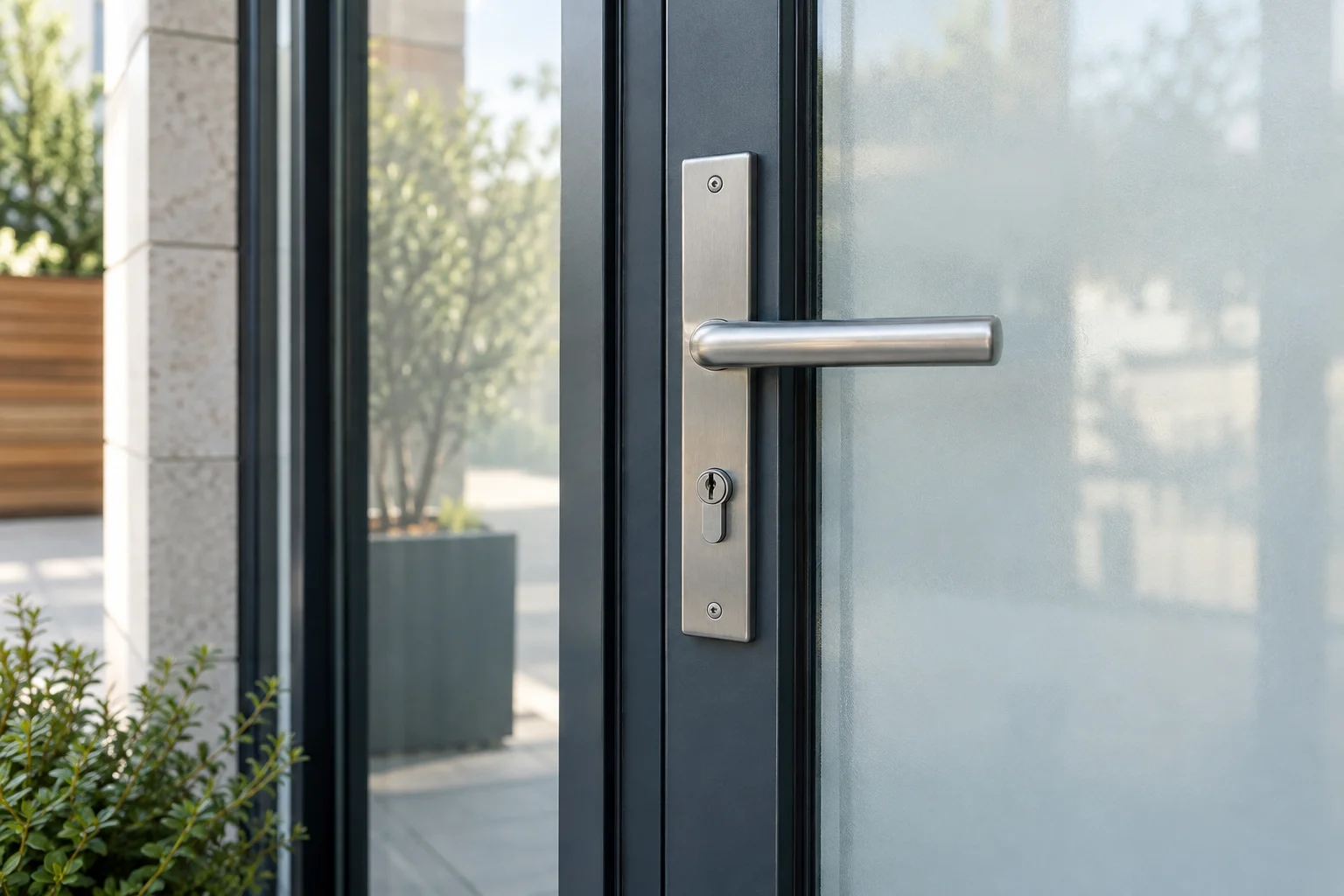
Inspect the exterior lock
Compare the exact model, not just the connection
Schlage Sense Pro offers Matter over Thread and supported-device entry features, but those features do not establish its suitability for a particular exposed door. Compare its installation and environmental specifications with the actual opening. For a mechanical option, evaluate the same fit, finish and maintenance questions; removing electronics does not remove weather-related wear.
Frequently asked questions about weather and door locks
How do I check whether a smart lock suits direct sun?
How do i check suitability for direct sun?
Check the specified operating-temperature range and exposure requirements for both exterior and interior components. Direct sun can create different conditions from a shaded air-temperature reading. Do not assume a product's network features establish outdoor suitability.
Does a Matter compatible lock handle weather better?
Matter is an interoperability standard for smart home networks, not a physical hardware specification. The lock's weather resistance depends entirely on its exterior seals, finish and materials, not the radio protocol it uses to communicate with your phone.
Why does my deadbolt only stick during the summer?
Why does the deadbolt stick in summer?
Seasonal door movement is one possible cause, alongside hinge, strike and hardware faults. Report whether the bolt works differently with the door open and closed. That observation helps an assessment; it does not prove the lock is sound or the frame is the cause.
What happens if the smart lock battery dies in the heat?
Backup access depends entirely on the lock model. Some smart locks retain a traditional mechanical keyhole, while others provide external metal contact points to temporarily connect a battery. Check your manual to understand your specific backup method before you need it.
Can high humidity rust the inside of a keypad lock?
Moisture can accelerate corrosion on internal steel parts if the exterior housing is not sealed for exposed installations. Always confirm whether a lock requires a sheltered porch before installing it on a door that takes direct rain.
If operation changes, have the hardware assessed to identify the needed repair. Call (512) 777-0021 or contact 512 Locksmith. Texas business license B07298601. Dispatch takes calls 24/7; discuss appointment options for your address.
Sources and further reading