Commercial access and day-to-day operation
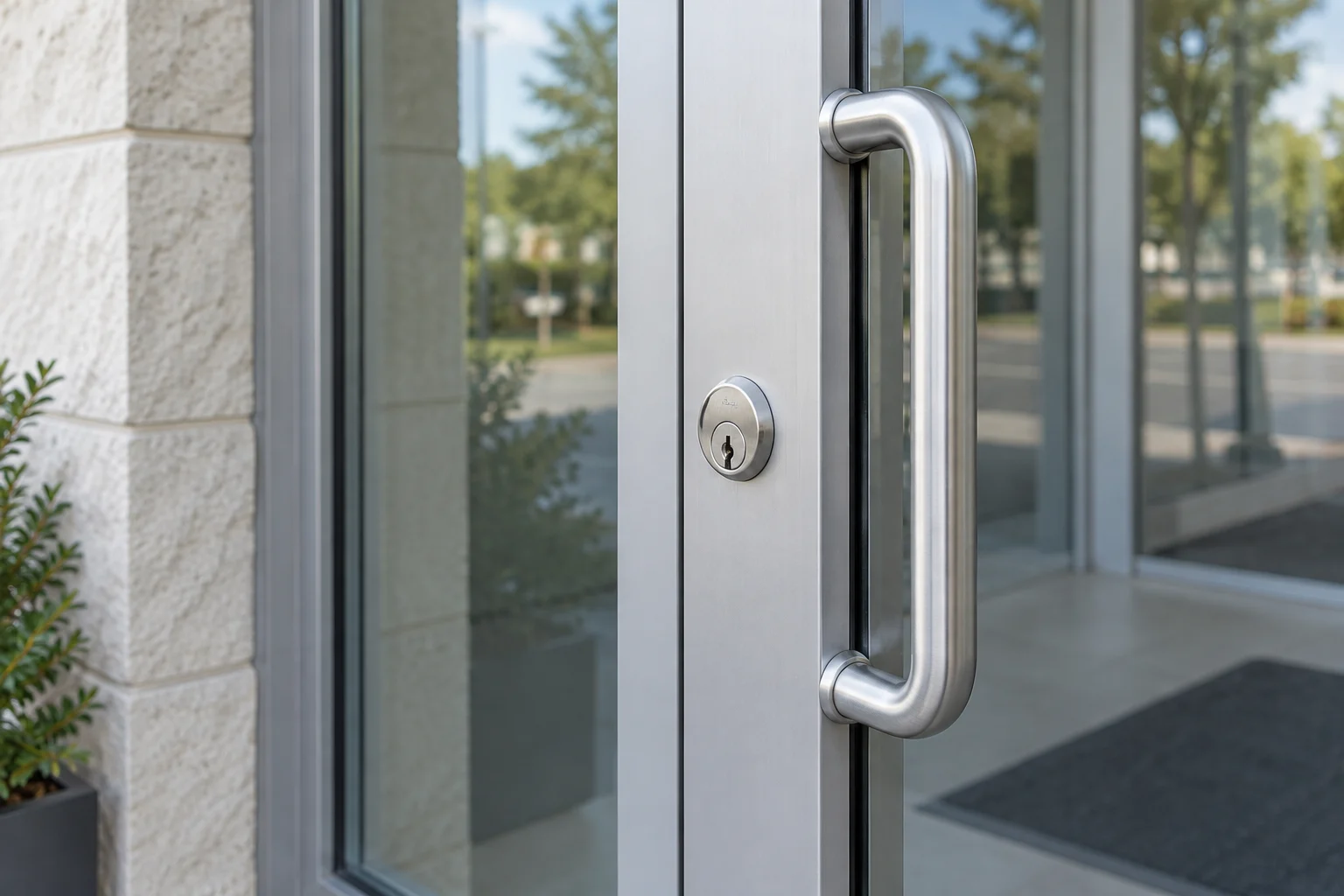
Business owners in Bastrop manage constant traffic through their front doors and need reliable hardware to keep operations running securely. Commercial access involves distinct key permissions separating the main office, inventory storage, and the owner's private spaces. Implementing a master key system can give selected managers broader access while other keys open only their assigned doors. Planning this key architecture requires mapping out exactly who needs access to which rooms before any cylinders are pinned. For a narrow-stile aluminum storefront, an Adams Rite 4900 is one example of a deadlatch to identify during assessment. The actual door preparation and function decide compatibility.
Day-to-day opening and closing faults often stem from related hardware, such as an aging door closer. A heavy door slamming shut or failing to latch completely compromises the security of the building. We check how the closer, hinges and latch work together. A door that does not return to a secure position needs that fault resolved alongside any key change.
Migrating to electronic commercial security requires compatible system credentials. Readers, credentials and management software need to work together, with an administrator who can maintain permissions. An access log documents credential activity, showing a specific card or fob was used, but it does not absolutely prove the identity of the person holding it. Keep the administrator account and recovery details under the business's control, and plan how staff changes will be handled.