

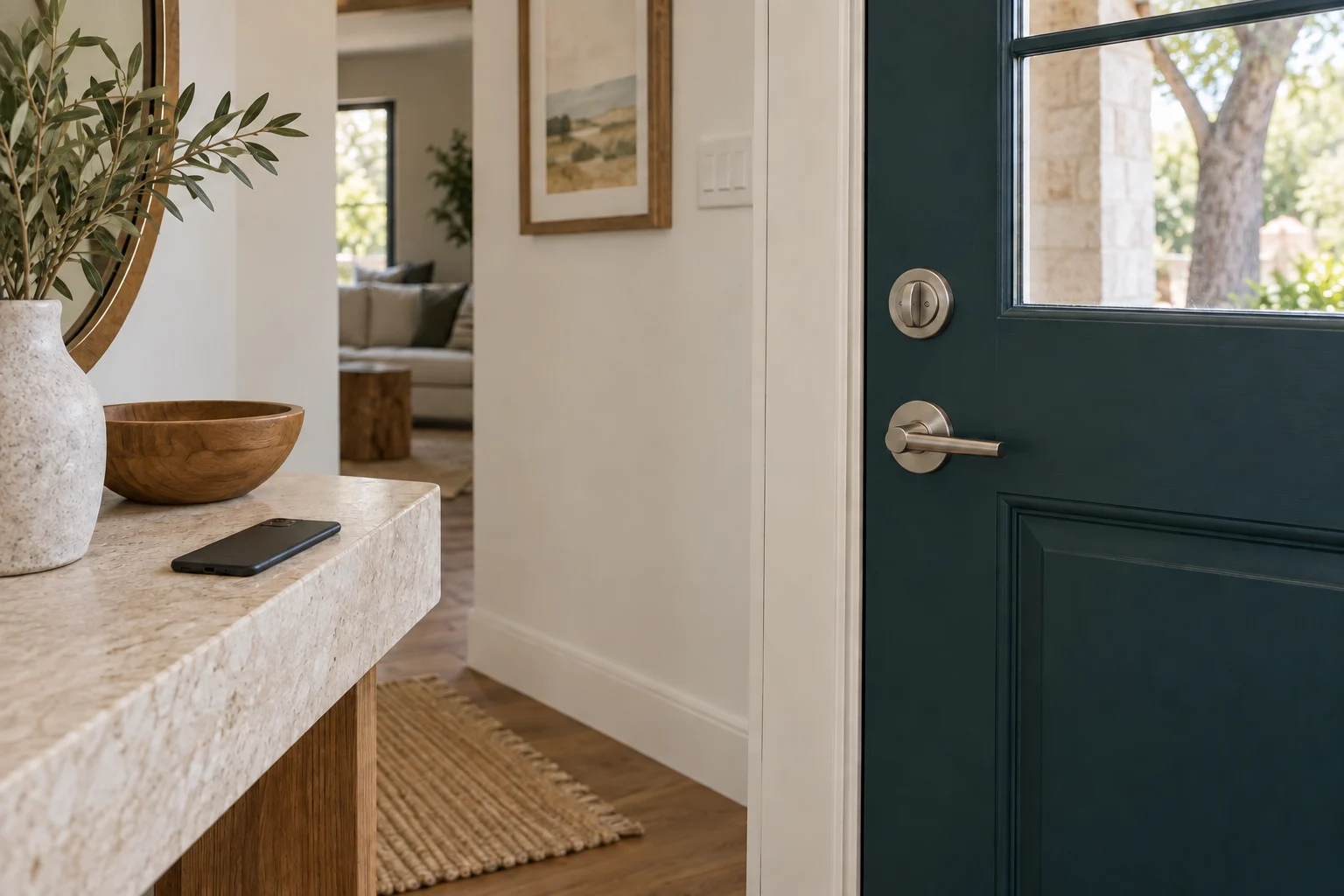
A deadbolt and a locking knob do different jobs on a door, and they are usually installed together for a reason. A knob or lever operates a latch that holds the door closed inside the frame. A deadbolt moves a separate, solid piece of metal into the door jamb. To compare security, look at the exact lock function, the strike plate, and the condition of the door itself, rather than judging by the handle alone. Relying on just one or the other changes how your door handles physical force and how you enter and exit your home.
In this guide
Know exactly which kind of knob you have
Not all door knobs provide security. A privacy knob used on a bedroom or bathroom is different from a keyed entry lock. Privacy knobs usually have a simple push-button or turn-piece on the inside and a small hole on the outside for emergency unlocking. They are meant to keep an occupied room private, not to secure an exterior entrance against forced entry.
Some keyed entry locks include a deadlocking latch. Its auxiliary component and strike must be installed as designed for that feature to work. The handle's appearance does not identify the lock function; check the model and instructions.
The specific role of a deadbolt
A deadbolt extends a solid piece of metal into the door frame when you operate its key, thumbturn, or electronic control. Unlike a knob, it does not latch merely because the door closes, unless the product has a specific automatic feature that does that separately.
The separate bolt contributes to securing the opening, but the lock cannot compensate for a damaged frame or unsuitable strike. Assess the door assembly rather than treating any deadbolt as force-proof.
| Hardware | Main job | What to check |
|---|---|---|
| Deadbolt | Secures the closed door with a solid non-spring bolt. | Full bolt travel, strike alignment, inside operation, and the product's intended use. |
| Keyed entry knob or lever | Operates the latch and controls entry according to its function. | Latch type, deadlocking feature where fitted, strike compatibility, and key operation. |
| Privacy knob or lever | Provides privacy for an interior room. | Its intended use and emergency-release instructions; do not substitute it for suitable exterior security hardware. |
A knob latch and deadbolt have different jobs
Compare the complete entrance rather than one piece of hardware.
- Knob latch
- Deadbolt
- Strike opening
Separate door functions
Read the actual product rating, not the packaging
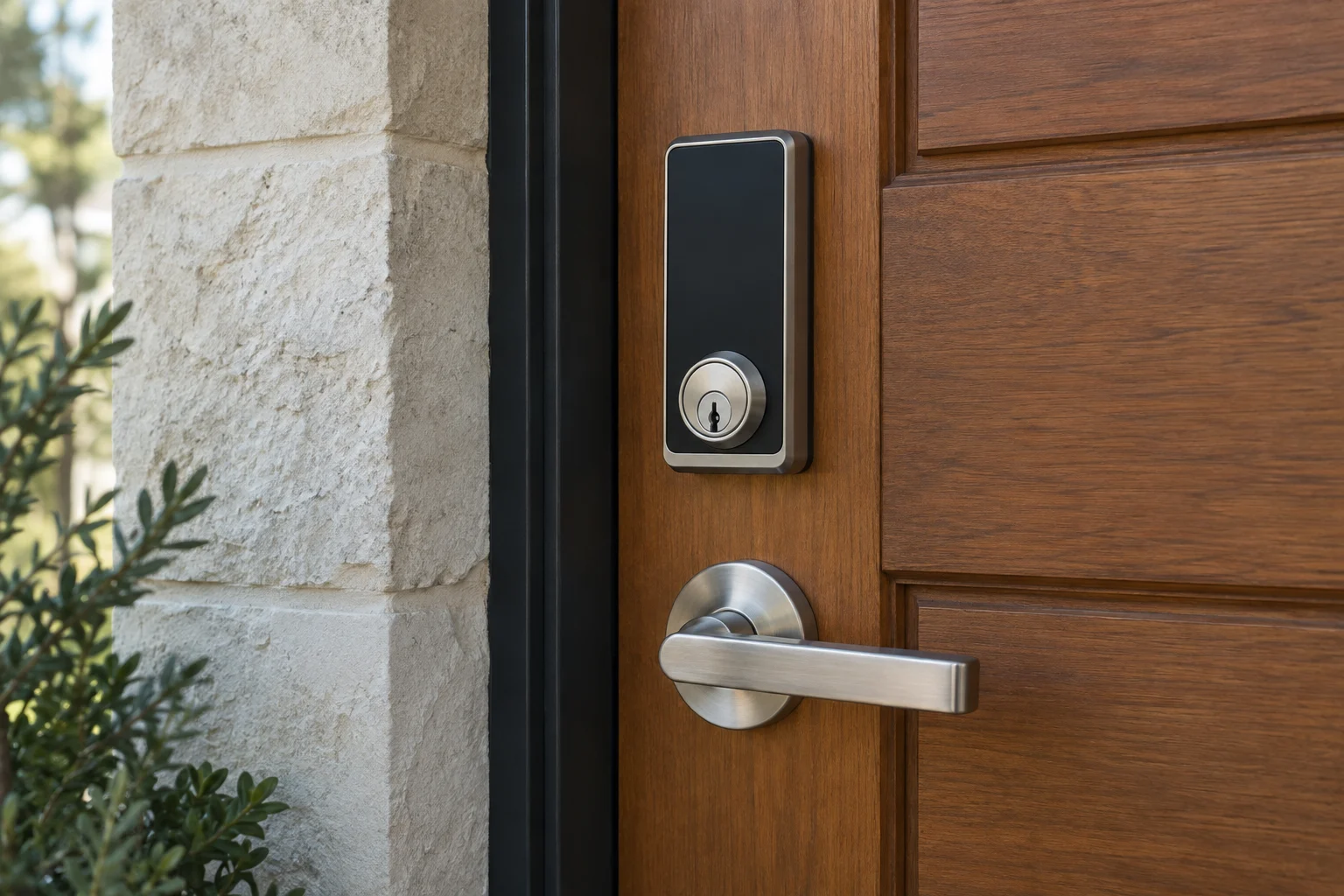
Hardware standards do not all use the same grading system. BHMA residential ratings cover Security, Durability, and Finish, using letter ratings in each category while other applicable standards use numeric grades. Do not assume a particular number means a lock is only for interior doors, or that a high rating makes a lock invincible.
Use the BHMA residential rating guidance and certification program to check what the product was actually tested for. A rating is useful information for comparing materials and cycle-testing, but it does not repair a weak frame or a poor installation. A high-grade deadbolt installed into rotted wood with short screws will not provide the security it was tested for.
Mortise-style door hardware
Check the door frame and strike alignment
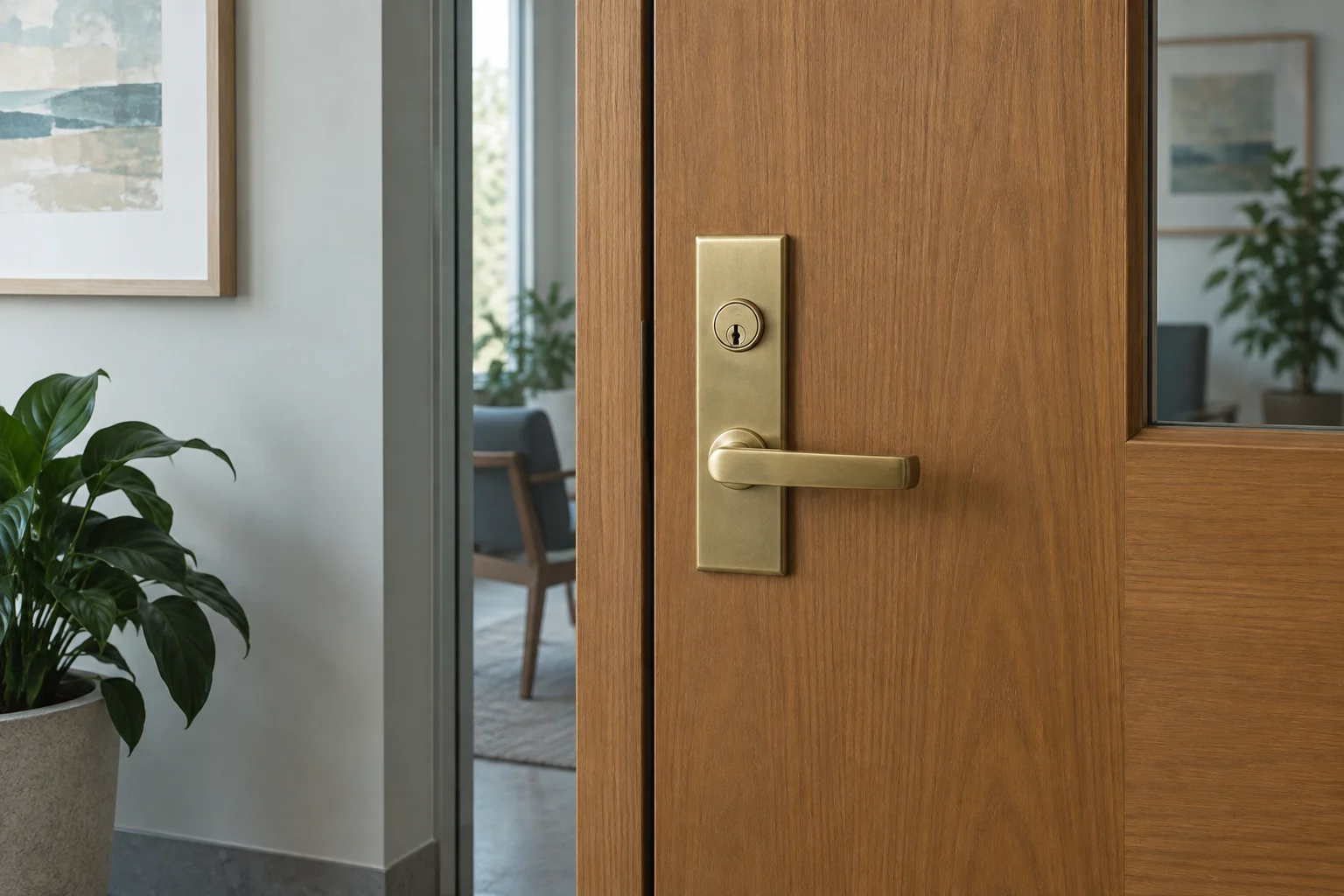
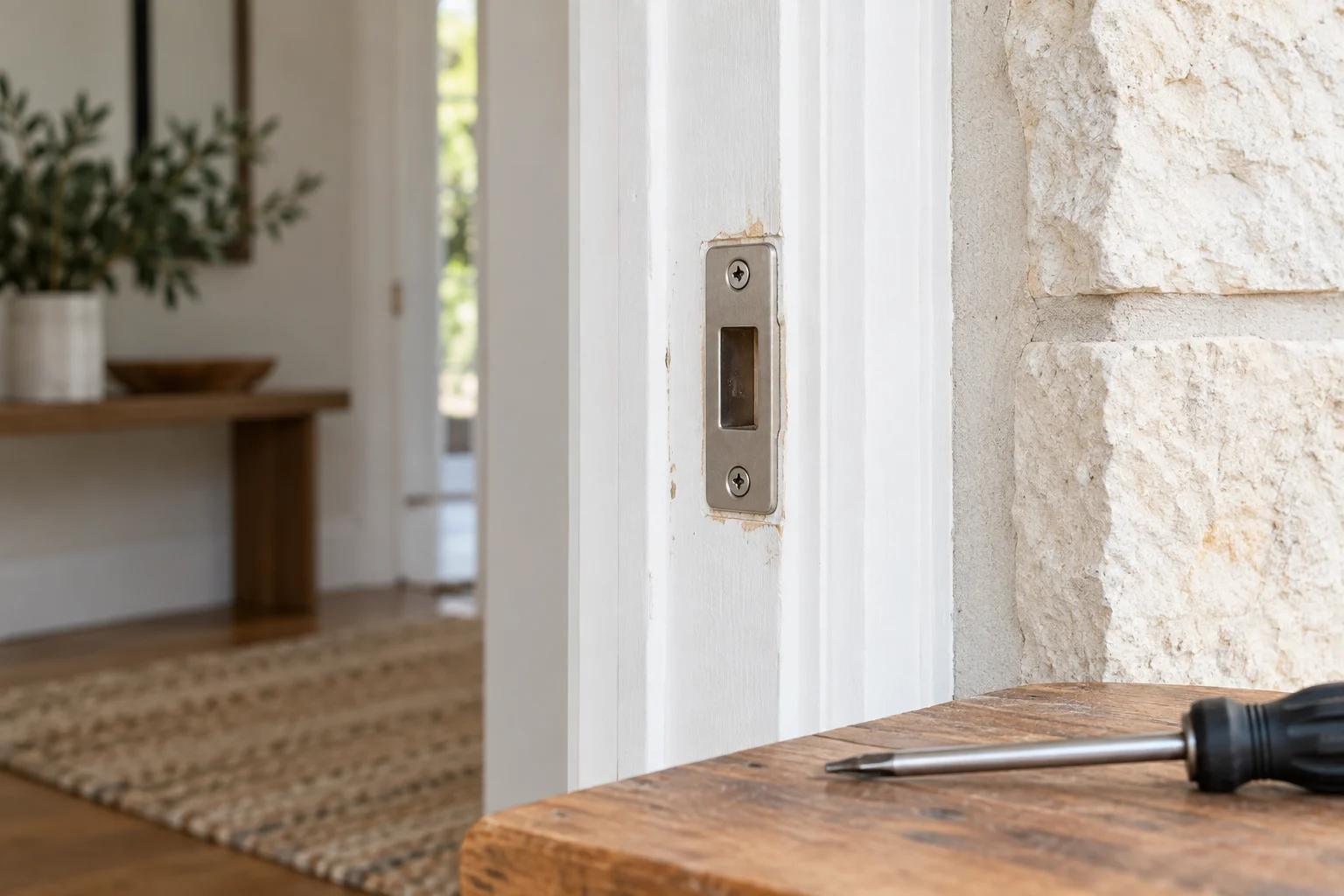
The lock, strike, fasteners and frame work together. Have damaged mounting points assessed and select reinforcement for the actual construction. There is no universal screw length or installation method for wood, metal and rated doors.
If the key turns freely with the door open but the bolt binds or requires you to pull the handle when it is closed, inspect the fit. That symptom can have several causes, such as weatherstripping pushing the door outward or hinges sagging, and does not prove a foundation problem. Door repair or strike plate adjustment may be relevant alongside lock work so the deadbolt can fully extend without scraping.
Compare the complete opening
Interior privacy
Use the hardware for its intended room function.
Exterior entry
Identify the actual knob or lever function and deadbolt setup.
Binding door
Assess alignment before buying a stronger cylinder.
Frame and strike
Keep the inside exit practical for your household
A single-cylinder deadbolt commonly uses an inside thumbturn; a double-cylinder model uses a key inside as well. That changes escape operation. Have the proposed arrangement checked for the door, building and users before adding a keyed inside cylinder.
Consider everyone who uses the door, including children, visitors, and people with limited hand mobility. A heavy knob might be difficult for an elderly relative to turn, making a lever handle a more practical choice. Ask the installer to demonstrate the complete exit sequence with all locks engaged. The hardware should balance your exterior security requirements with the reality of who needs to get out quickly.
Common questions about entry hardware
Should i use both a deadbolt and a locking knob?
Many exterior doors use both, but the right arrangement depends on the lock functions and required exit sequence. A passage handle and deadbolt behave differently from a self-locking keyed knob plus deadbolt. Decide whether you need separate locking points and test how everyone enters and leaves.
Can one key operate both the deadbolt and the knob?
Possibly, if the keyways and cylinder designs are compatible. Brand names alone are not enough to establish that. A replacement cylinder may be an option, or the existing hardware may need to remain on different keys.
What if i only want to carry one key but have different brands of locks?
If the hardware works well and you only need to stop old keys from opening it, ask about rekeying. If you want to consolidate to one key but the current locks are incompatible, a locksmith can evaluate which lock is easier to replace with a matching brand. If the latch, bolt, or frame is damaged, have that fault assessed before deciding on replacements.
Does a deadbolt lock automatically?
A standard mechanical deadbolt does not lock automatically when you pull the door shut; you must physically turn the key or thumbturn to throw the bolt. If you need a door that locks as it closes for a specific security protocol, read our deadbolt versus deadlatch guide before choosing a replacement.
Next steps for your doors
For help identifying suitable hardware for your exterior doors, call (512) 777-0021. 512 Locksmith has served Austin for more than a decade. Describe the entrance, the current hardware, how it is used, and what you want to change. A technician can evaluate the frame and alignment, discuss the differences in operation, and confirm the work and quote before booking.
Sources and further reading