

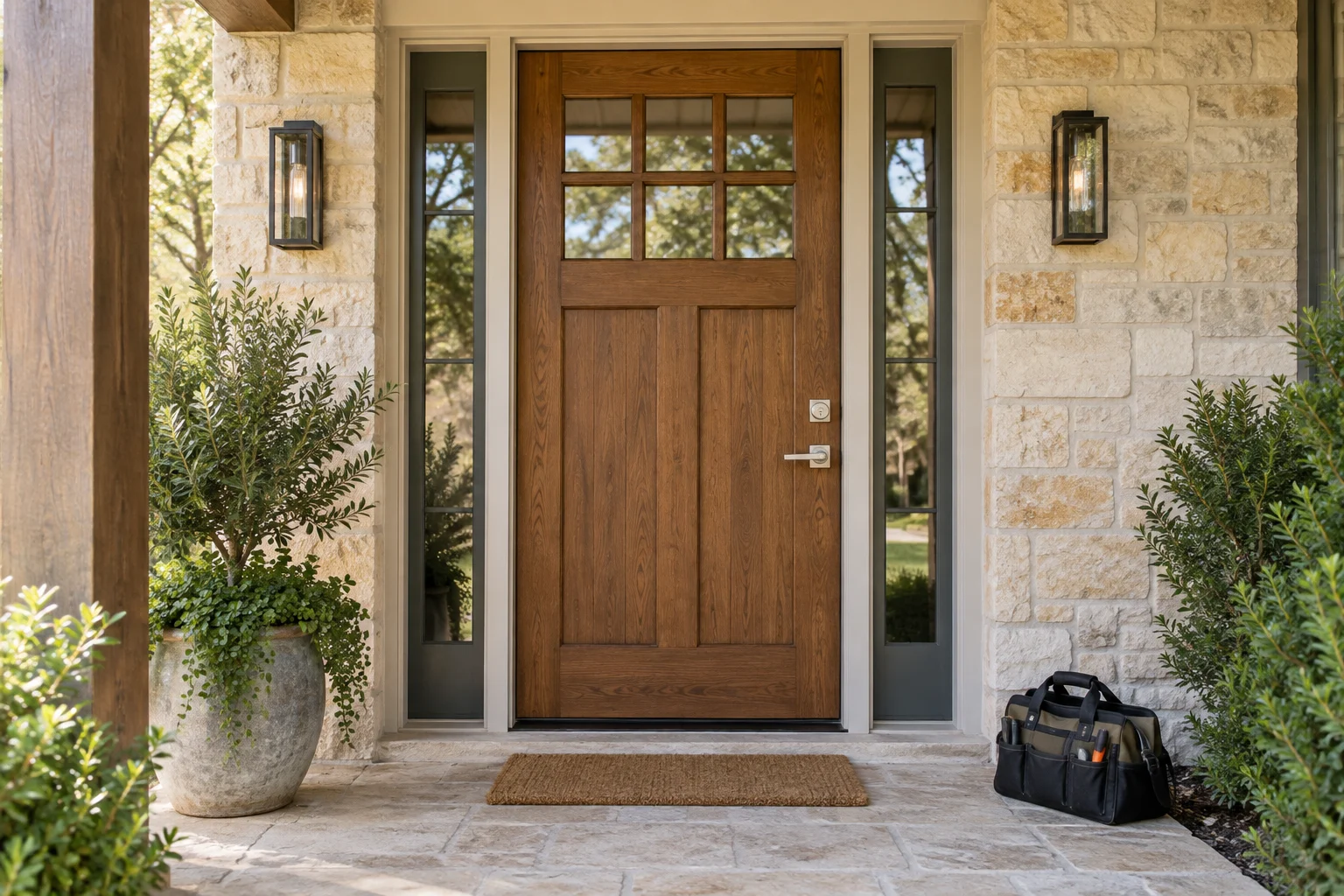
Replacing a door lock is a practical project for many homeowners. You might want to upgrade your physical security or install a new deadbolt after moving into a new house. In many cases, if you simply want to stop old keys from working after a move or a roommate change, lock rekeying may let you keep serviceable existing hardware. However, if the physical hardware is broken or heavily rusted, have it assessed to determine which parts need replacement.
In this guide
Choosing the right replacement hardware
Before removing the old lock, measure the existing door preparation. You need to know the backset, which is the exact distance from the edge of the door to the center of the large lock hole. You should also measure the thickness of the door and the diameter of that large hole, known as the bore hole. Compare those measurements with the manufacturer's instructions. Also check the latch faceplate, handing and any clearance needed for the inside assembly; matching one measurement is not enough.
Locks are categorized by industry grading standards. Different hardware standards use different ratings, including letter-based residential ratings. Check the exact product's intended use and certification instead of assuming a number alone tells you where it belongs.
Interior deadbolt above a lever handle
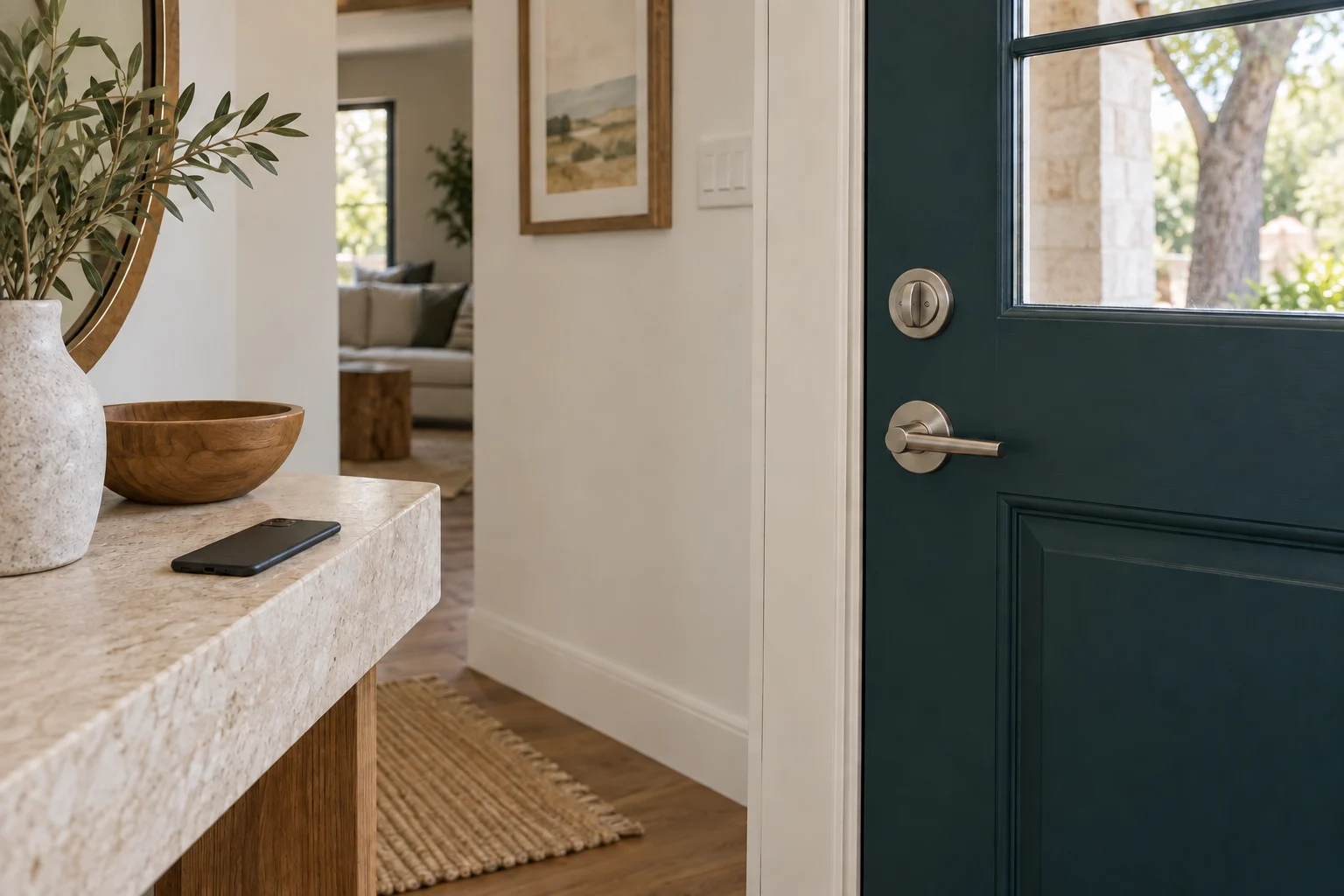
Replacing a standard deadbolt
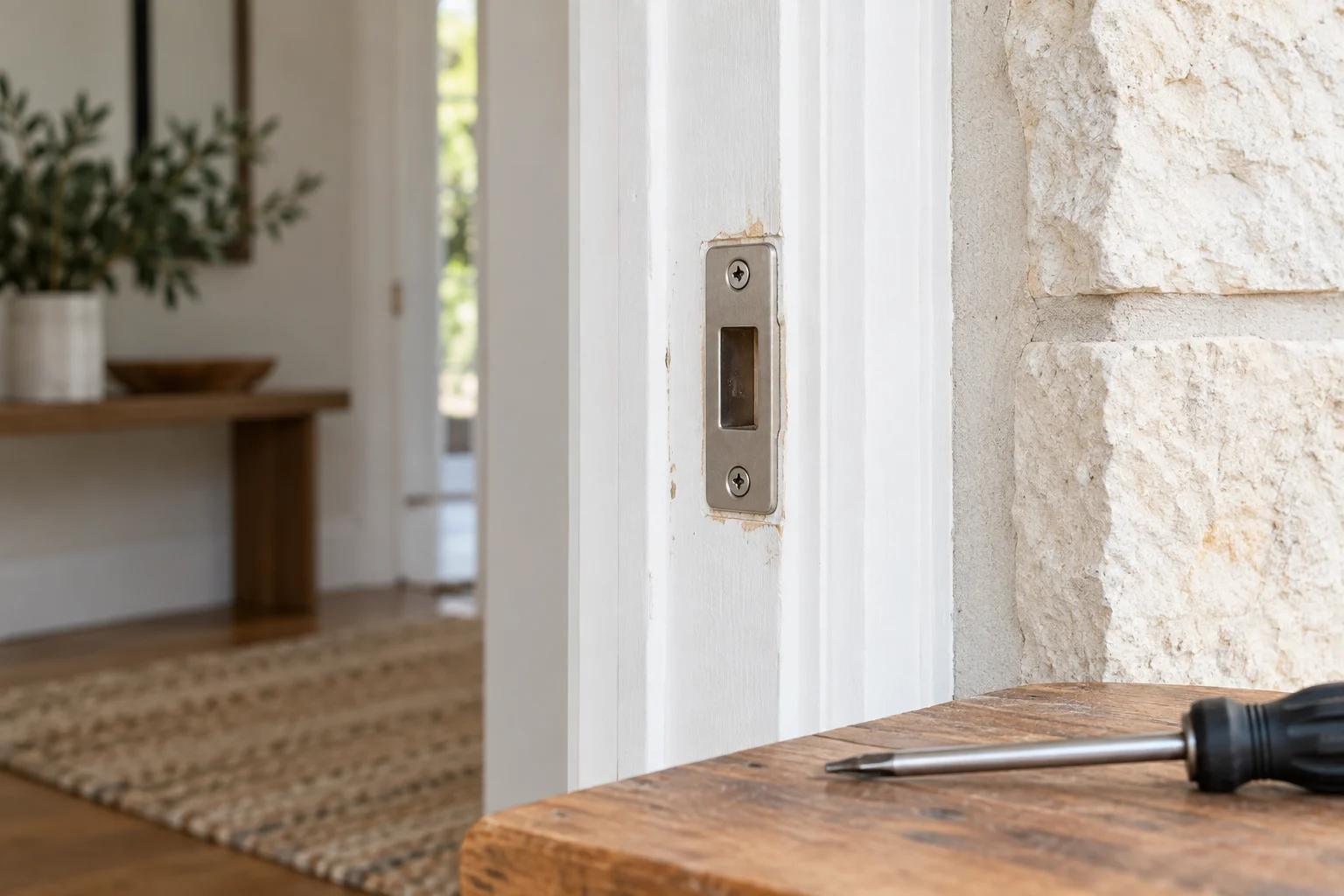
Start by opening the door to access all sides of the lock. Remove the visible screws on the interior faceplate and pull the interior thumb turn and exterior cylinder halves away from the door. Next, unscrew the metal strike plate from the door frame and remove the bolt mechanism from the edge of the door.
To install the new deadbolt, slide the new bolt mechanism into the edge of the door, following the bolt orientation and backset instructions for that model. A deadbolt is not the same component as a beveled spring latch. Secure it with the provided wood screws. Insert the exterior cylinder through the door hole so that the internal metal tailpiece engages fully with the bolt mechanism. Align the interior thumb turn plate on the other side, insert the long connecting screws, and tighten them until they are snug but not crushing the door. Finally, install the new strike plate on the door frame. Test the thumb turn with the door open to verify that the solid bolt extends and retracts smoothly without binding.
Test the strike fit
Replacing a doorknob lock
Knob locks secure interior doors and work alongside deadbolts on exterior doors. To remove an old knob, you may need to locate a small release button or narrow slot on the neck of the interior knob. Depressing this hidden button allows you to pull the knob straight off the spindle. Remove the mounting plate screws, pull the exterior knob away, and extract the latch from the door edge.
Insert the new latch into the door edge and secure it with screws. Slide the exterior knob into place, making sure the central spindle passes completely through the latch mechanism. Attach the interior mounting plate and secure it firmly with screws before snapping the interior knob back onto the spindle. Install the corresponding strike plate on the door frame and test the latch by turning the knob.
Installing electronic and smart locks
Smart locks generally replace a standard deadbolt. Check the model's door preparation and alignment requirements before fitting it. If the door sags on its hinges or requires you to push it hard to engage the deadbolt, a smart lock motor will struggle to throw the bolt and drain the batteries quickly.
Follow the manufacturer instructions exactly for routing the internal wiring cable to avoid pinching or cutting it between the metal mounting plates. After securing the hardware to the door, follow the model's battery, handing and setup procedure. Some locks use an app; others use controls on the lock.
Check the fit before finishing
Measure
Record door thickness, backset and existing holes.
Install
Follow the exact product's instructions and check inside operation.
Test
Confirm smooth latch or bolt travel and safe exit before relying on the door.
Handling common installation problems
If the new lock will not latch properly when closed, the door might be misaligned with the new strike plate. You may need to adjust the strike plate position or check the door hinges for sagging. If the key is very difficult to turn, the mounting screws holding the two halves together might be overtightened, which binds the internal cylinder. Loosen the long screws slightly and test the operation again.
If your door requires structural modifications to fit a modern lock, or if you need help with a fresh door installation, have the door assessed before cutting or enlarging openings. For professional lock replacement in Austin and Central Texas, contact 512 Locksmith at (512) 777-0021. Our 24/7 dispatch is available to help secure your residential or commercial property.
When the new lock binds
Works with the door open
Check door fit and strike alignment before assuming the replacement lock is defective.
Binds with the door open
Recheck the exact installation instructions and part orientation.
Exit action feels wrong
Stop and have the full opening assessed before relying on the door.
Before removing anything
Confirm that you have permission to change the lock. Renters should contact their property manager, and owners should check whether the door is part of a shared or fire-rated assembly. Keep another secure way into the property available while you work.
Lay out the new hardware and instructions before taking the old lock apart. Photograph the existing arrangement and keep its parts together. If the new lock does not fit, stop rather than forcing screws or leaving the entrance unsecured.
Match the old opening
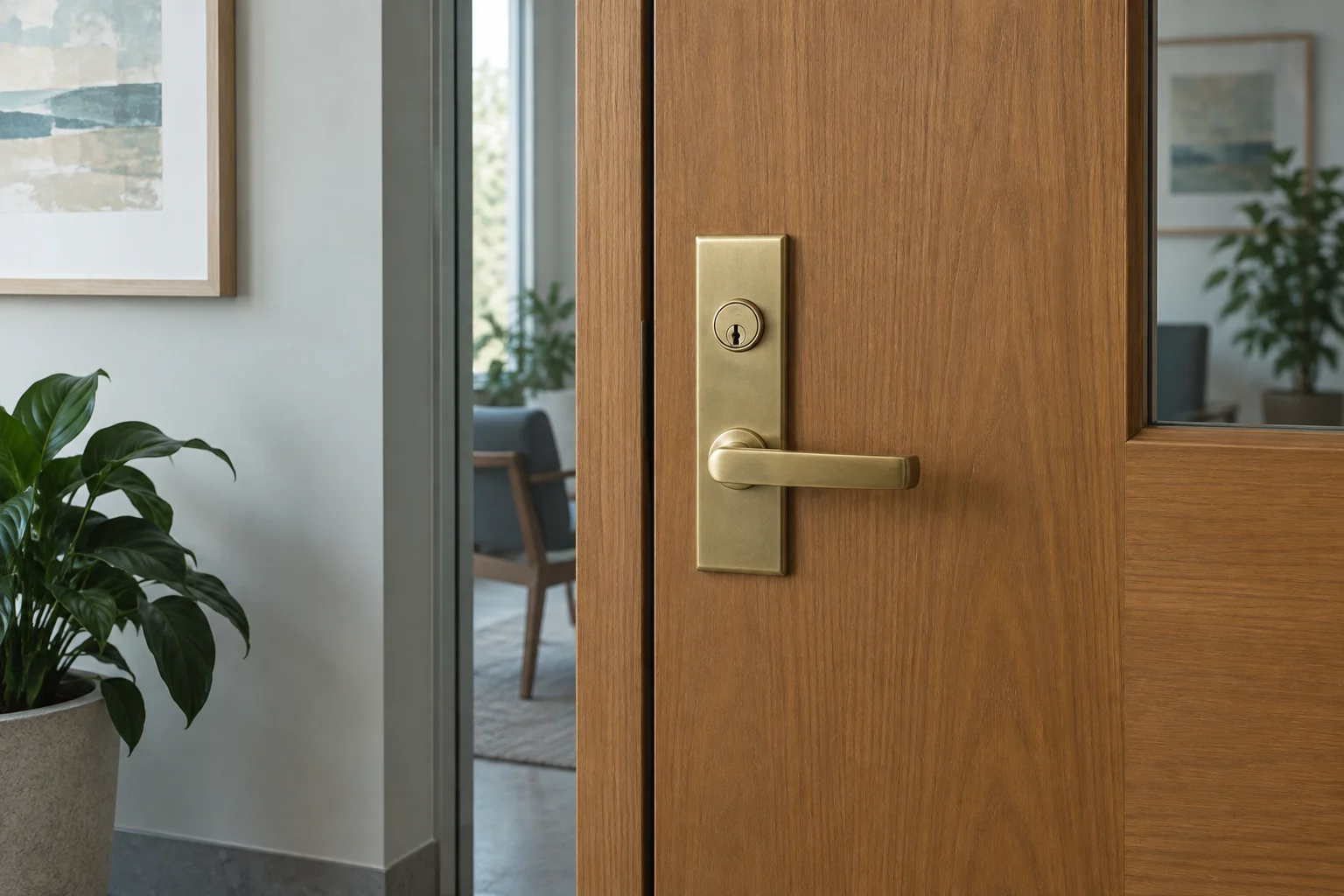
Test the complete door before closing it
With the door open, check the key, inside control and latch or bolt through their normal movement. Then check the fit carefully with the door closed while keeping a working key and another way back inside available. The bolt should move without having to lift or force the door.
For a smart lock, test the backup method as well as the main code or app. Save the setup and recovery information somewhere accessible. Follow the exact model instructions, such as those available through Schlage product support, rather than treating these general steps as a replacement for the manual.
Test the new lock with the door open first
A bolt that moves freely in the open door can still bind at the frame.
- Opening edge
- Latch or bolt
- Keeper opening
Further reading: Schlage: How to install a deadbolt lock
Sources and further reading