

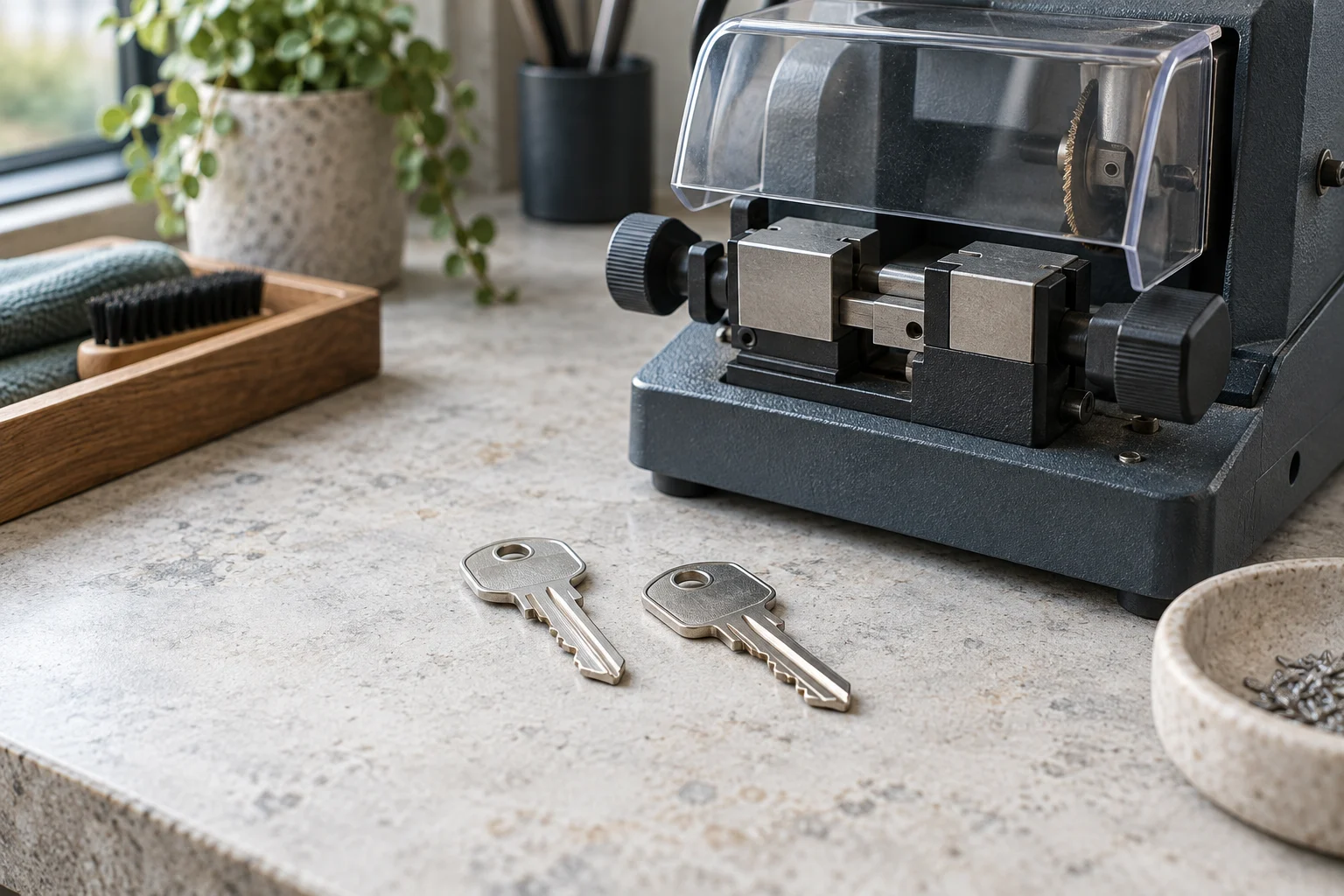
If your keys are missing, start with the last place you used them and anyone who might have a spare. If neither helps, the next question is whether you need entry, a replacement key or a change to who can access the property.
In this guide
- 01Review your recent locations and retrace your steps
- 02Check for a spare key with family or friends
- 03When to call a locksmith for property access
- 04Replacing the lost keys for a vehicle or home
- 05Deciding whether to rekey your home locks
- 06Handling lost keys in a commercial setting
- 07Set up a backup after the problem is solved
Review your recent locations and retrace your steps
Retrace the trip from the last time you had the keys. Check pockets, bags, seats and the lock where you last used them. Call any shop, restaurant or reception desk you visited. If you think they are inside a locked car or house, say so when requesting help.
House keys at an entry door
Check for a spare key with family or friends
Contact a trusted person who may hold an authorized spare. For a rental or managed property, ask the manager about the access procedure. Do not assume they hold a key or can attend immediately.
When to call a locksmith for property access
If there is no spare, call about a home lockout or the relevant vehicle service. Describe the lock and any damage. The technician should assess the available entry methods and explain any likely repair or replacement before you agree to work.
For a vehicle lockout, give the year, make and model and identify where the key may be. Entry methods depend on the vehicle and the condition of its doors and locks. Avoid prying the door or trying improvised tools while waiting.
Replacing the lost keys for a vehicle or home
Regaining physical access is only the first step if the original keys remain permanently missing. You will still need a way to secure the property.
For a vehicle replacement, confirm that the provider supports your key system. Ask which ownership documents are needed and whether cutting, programming, entry and a visit are included. A replacement remote is not automatically a complete working starting key.
For a home, a new key may be possible without replacing all the hardware. But if the old key is lost and could be used by someone else, making a matching key does not remove that access. Discuss the security goal before choosing the job.
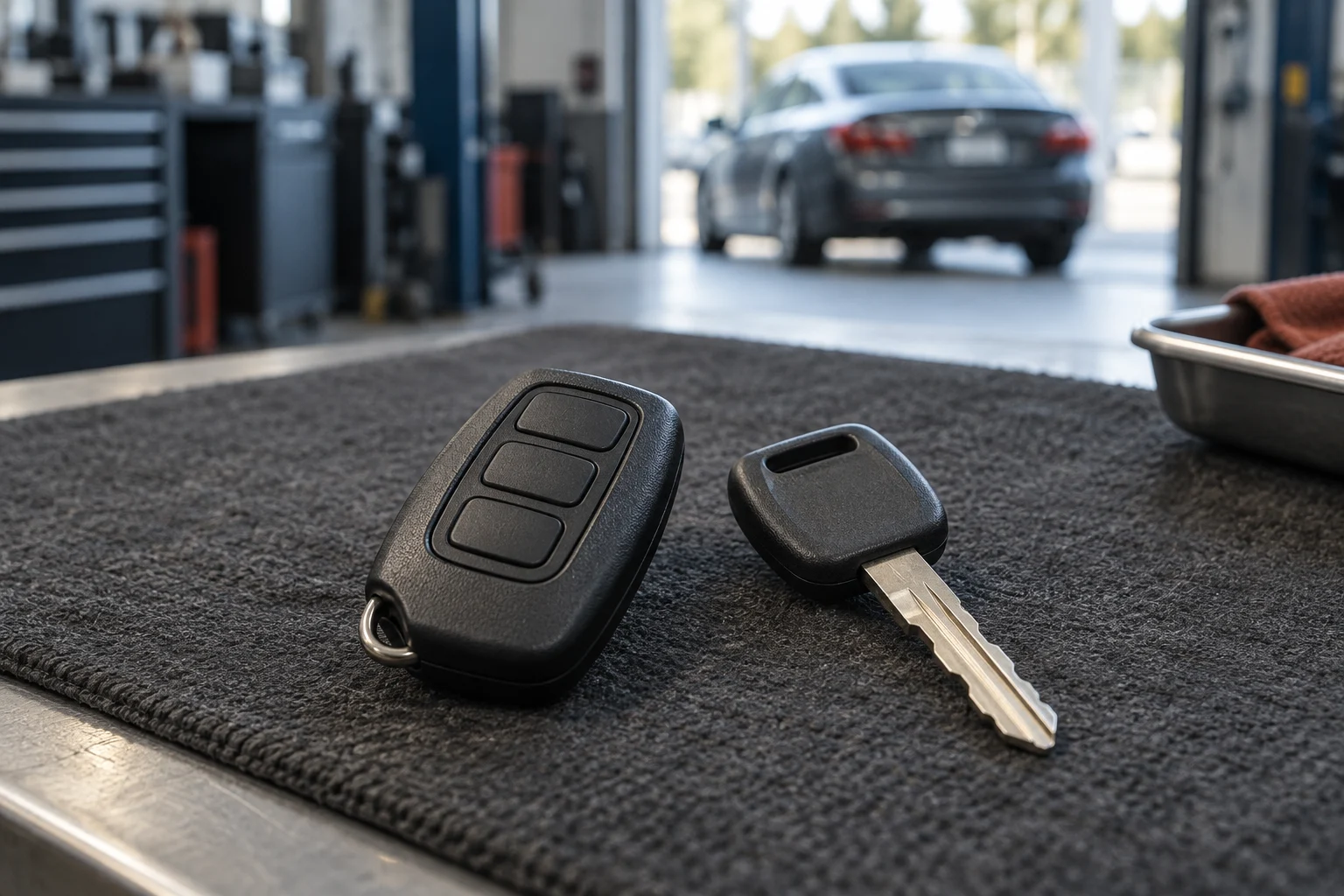
Replacing a vehicle key
Deciding whether to rekey your home locks
If your house keys are permanently lost, particularly if they were lost alongside identifying information like a wallet or a piece of mail, it is wise to consider rekeying your locks.
Rekeying changes the key that operates a suitable cylinder. The old key should no longer operate that rekeyed cylinder. It does not repair a damaged latch, frame or lock body, so ask whether those need attention too.
If you want different hardware, compare its function and fit before choosing. A keypad can reduce reliance on a carried key, but backup access, battery care and user management still need a plan.
A spare key is not the end of the access question
Consider what the missing key opens and who may find it.
- Existing key
- Cylinder
- New key
Further reading: Schlage: When you should rekey your exterior locks
What did the missing key open?
Home
Review rekeying when the key could lead someone to the property.
Vehicle
Ask about mechanical and electronic credentials for the exact model.
Business
Notify the person responsible for access and map affected doors.
Handling lost keys in a commercial setting
For business keys, notify the person responsible for access. A master key may open several doors, so they need to identify which openings are affected and decide on changes. Electronic credentials may need revoking through the system administrator.
Before booking any professional service, be prepared to describe the type of lock on your door or the exact make, model, and year of your vehicle. You should also confirm the identification documents you have available to prove ownership.
Account for shared keys
Set up a backup after the problem is solved
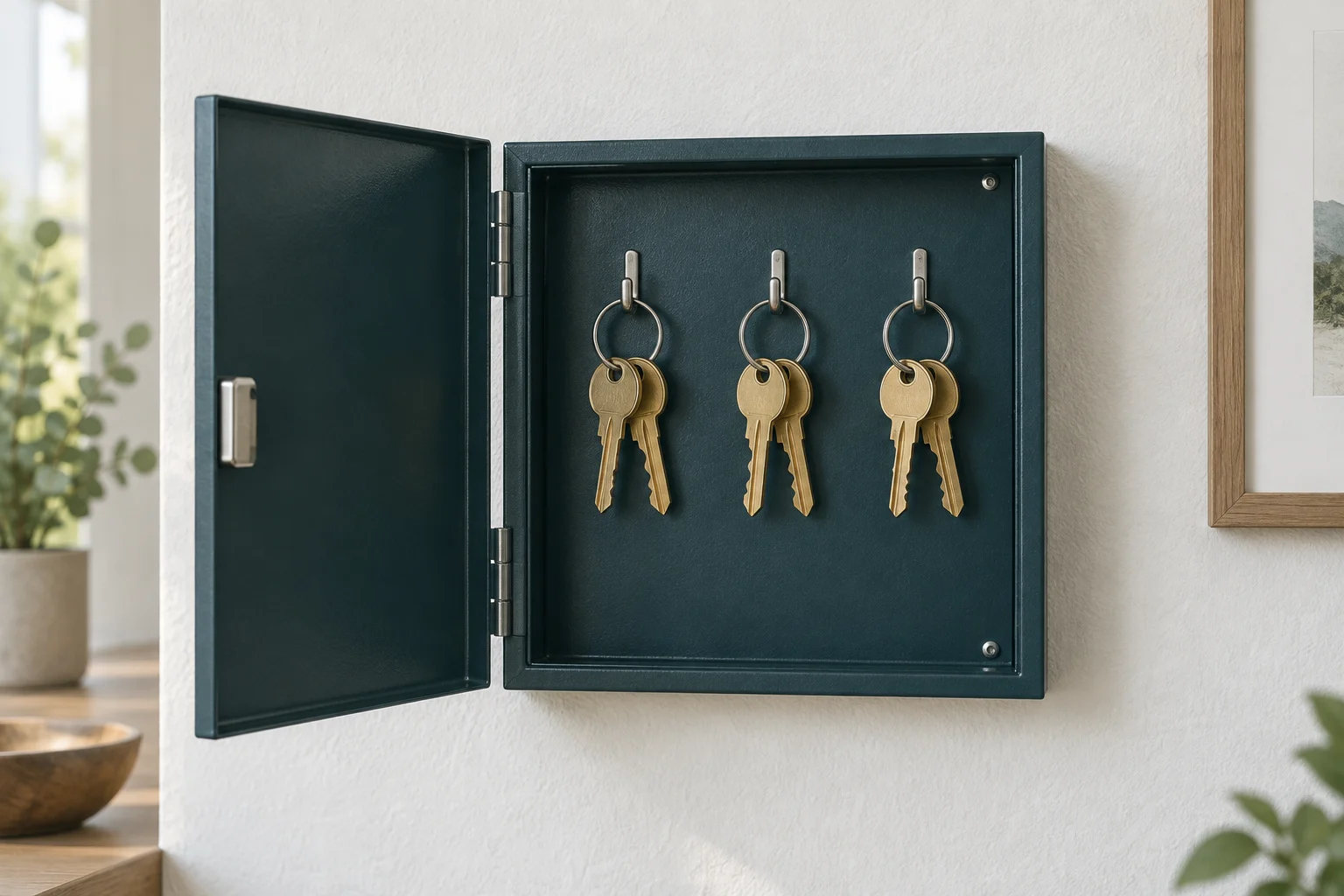
Keep a record of who has spare keys and choose a secure storage arrangement. Avoid labeling keys with the property address. A tracker may help locate a nearby key, but it does not replace the key or prevent it being used. Test any spare before putting it away.
Sources and further reading