

Once you are authorized to take possession of a home, decide who should have access. The keys handed over at closing may not account for every copy. Rekeying compatible, serviceable locks lets you change the working key without automatically replacing the handles and deadbolts.
In this guide
Rekeying versus replacing locks
You do not necessarily have to buy entirely new hardware to secure your house. If the existing door knobs and deadbolts are in good working condition, a technician can rekey them. Rekeying involves taking the lock cylinder apart and replacing the internal pins so that a new key operates the lock while the old keys no longer work.
Replacing the locks is necessary when the hardware is severely worn, damaged, or if you want to upgrade to a different style or a higher security model. If the current locks are difficult to turn or have loose internal components, rekeying will not fix the mechanical wear.
Change access without replacing a sound lock
Rekeying is useful when the hardware works but old keys should not.
- Existing key
- Cylinder
- New key
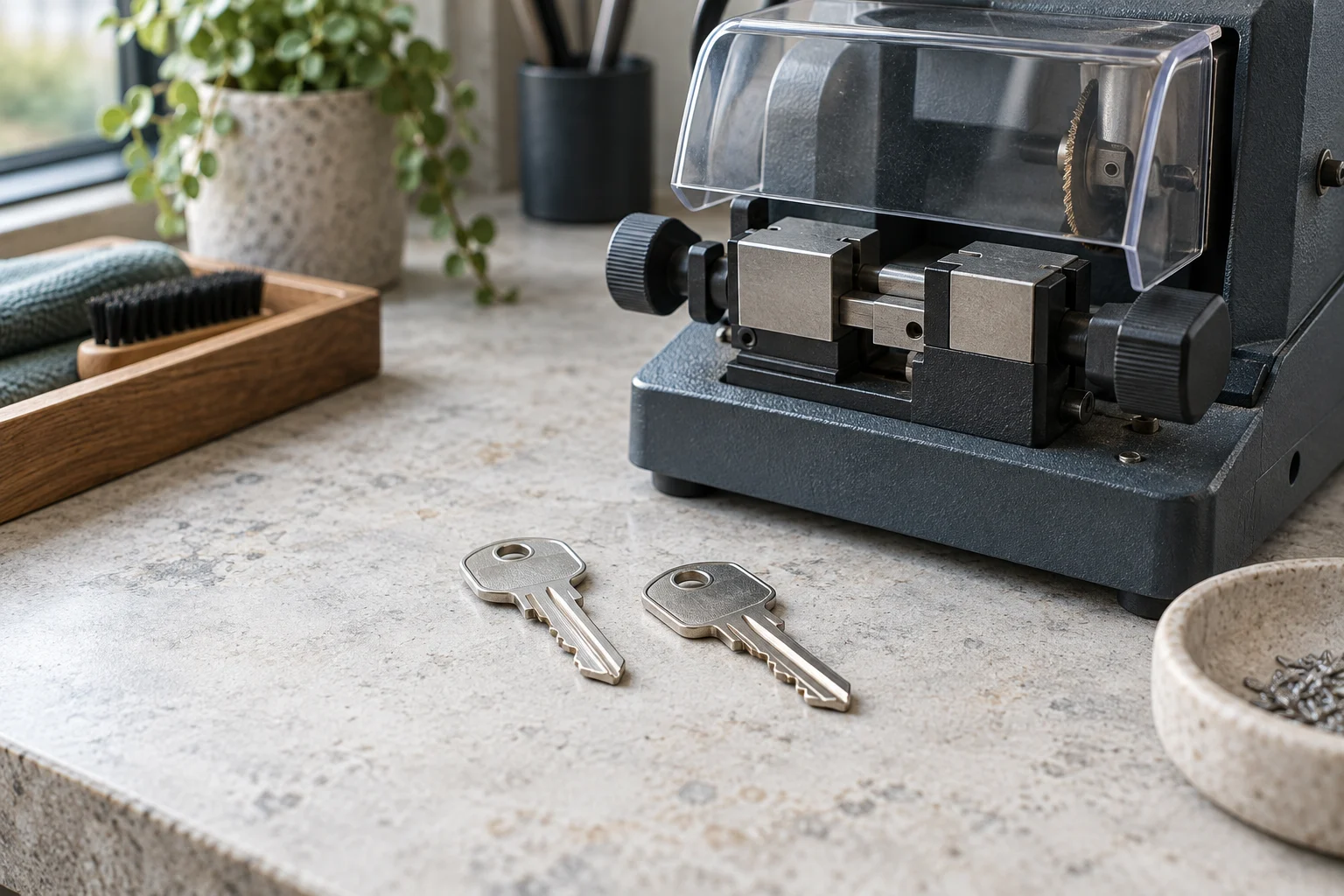
Cut keys beside a key machine
Which locks require attention
Start by updating the primary entry points. This includes the front door, back door, side garage entry, and any sliding doors that use keyed cylinders. If your property has a detached shed, a pool house, or a pedestrian gate, evaluate those locks as well.
Many homeowners use this opportunity to key all their exterior doors alike. Instead of carrying a heavy ring of different keys for the front and back doors, a technician can often set all compatible locks on the property to accept a single new key.
| Service option | When to choose this approach |
|---|---|
| Standard rekeying | The current hardware functions smoothly and you simply want to invalidate old keys. |
| Hardware replacement | The locks stick, have heavy rust, or you want to install heavier duty deadbolts. |
| Keying alike | You want the convenience of opening multiple compatible locks with one key. |
| Smart lock upgrade | You want to manage access codes for contractors or family members without copying physical keys. |
New-home handover
Identify
List every door and any manager-controlled access.
Change
Ask which cylinders can be rekeyed and which need repair or replacement.
Test
Try each new key in its intended door before the visit ends.
Identify every keyed opening
Renting and the Texas Property Code
If you are moving into a rental property, the rules are different. Under Chapter 92 of the Texas Property Code, landlords are generally required to rekey exterior door locks at their own expense no later than the seventh day after the tenant turnover date, though there are some exceptions.
As a tenant, you typically need the landlord's permission before altering any locks yourself, subject to specific statutory exceptions. Discuss the rekeying timeline with your property manager before making any changes. If you have questions about your specific rights or lease terms, consult Texas Property Code Chapter 92 or seek qualified legal advice.
Considerations for centralized mailboxes
If your new home uses a centralized neighborhood mailbox, the lock management depends on who owns the cluster box. The USPS guidance for centralized mailboxes directs customers with missing keys to the property owner, manager or superintendent. The USPS handles the master access for mail delivery, and a private locksmith cannot replace or service a postal Arrow lock.
Professional locksmith services
Attempting to rekey locks yourself requires specific kits for each brand of lock and a good understanding of the small internal springs and pins. Reassembling a cylinder incorrectly can permanently jam the lock. A professional brings the correct tools to handle multiple brands and can quickly recognize if a lock is too worn to be safely rekeyed.
When scheduling an appointment, count the number of keyholes you need rekeyed and mention the brands printed on the lock faces. This helps the technician prepare the right pins and key blanks for your specific hardware.
512 Locksmith provides residential locksmith services and rekeying across Central Texas. If you are preparing to move and want to schedule a lock update, visit our contact page for 24/7 dispatch availability.
Other reasons to consider rekeying
A move is only one reason to change key access. A missing set of keys, the end of a contractor's access, a change in authorized occupants or uncertainty about old copies may also justify a review. First confirm that you have authority to make the change, particularly in a rental or shared property.
Rekeying affects the cylinders that are changed. It does not automatically remove old garage remotes, keypad codes, smart-lock accounts or keys to outbuildings. Review those separately so the access change matches your intention.
What to check before the visit ends
Test every new key in each intended lock, with the door open and then carefully closed. Confirm how many copies you received and which doors are keyed alike. Ask about any lock the technician could not rekey and decide how it will be secured.
Keep the invoice and hardware information with the property records. A clear list of locks, working keys and access codes makes future maintenance easier without recording secret codes on a document shared widely.
Review the finished work
Sources and further reading
- Texas Property Code Chapter 92Texas Legislature
- USPS guidance for centralized mailboxesU.S. Postal Service