

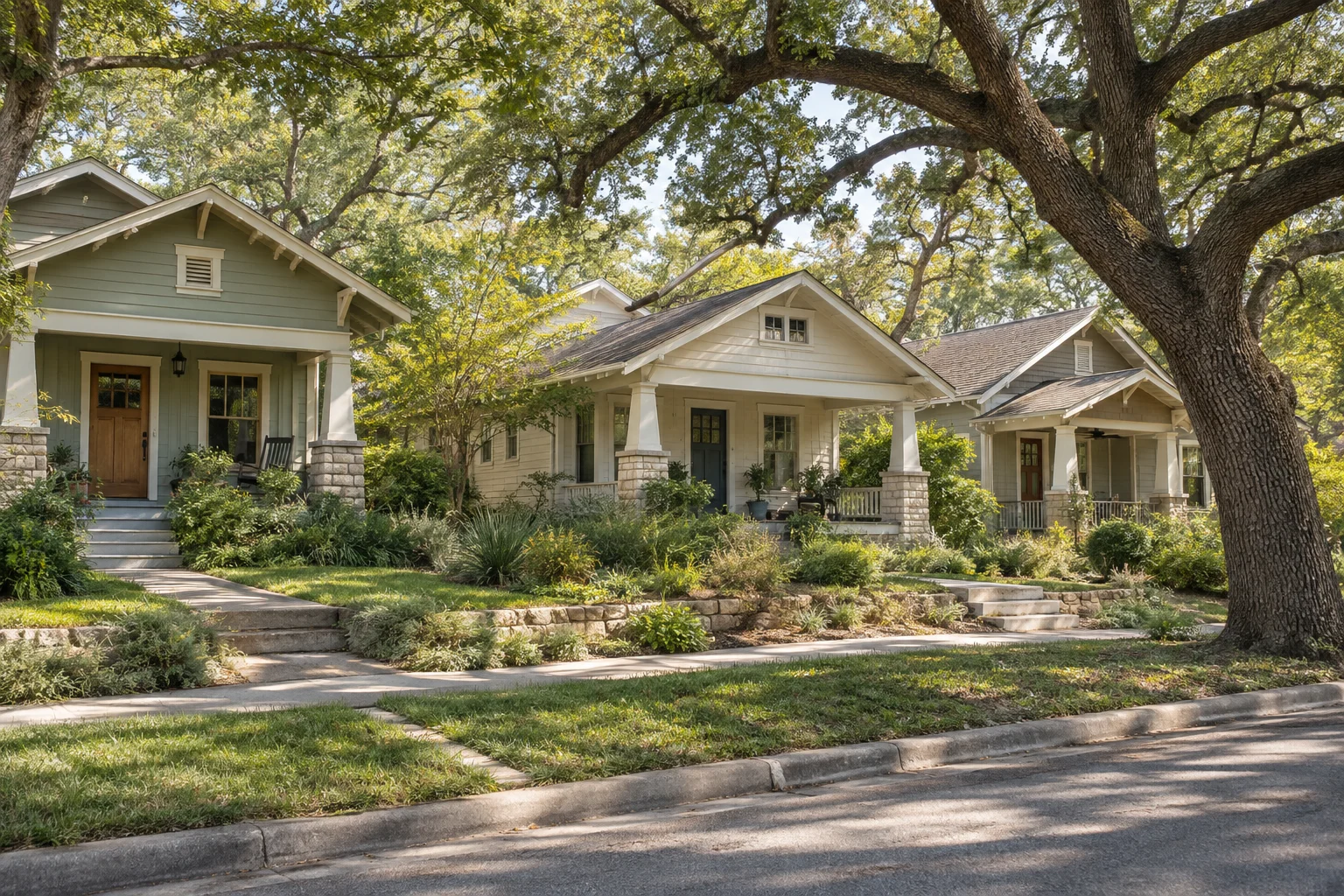
Keeping a home secure involves identifying vulnerabilities before someone takes advantage of them. Property crimes often rely on opportunity. By evaluating your exterior doors, windows, and daily habits, you can make your home a much harder target for an intruder.
In this guide
Evaluating exterior doors and frames
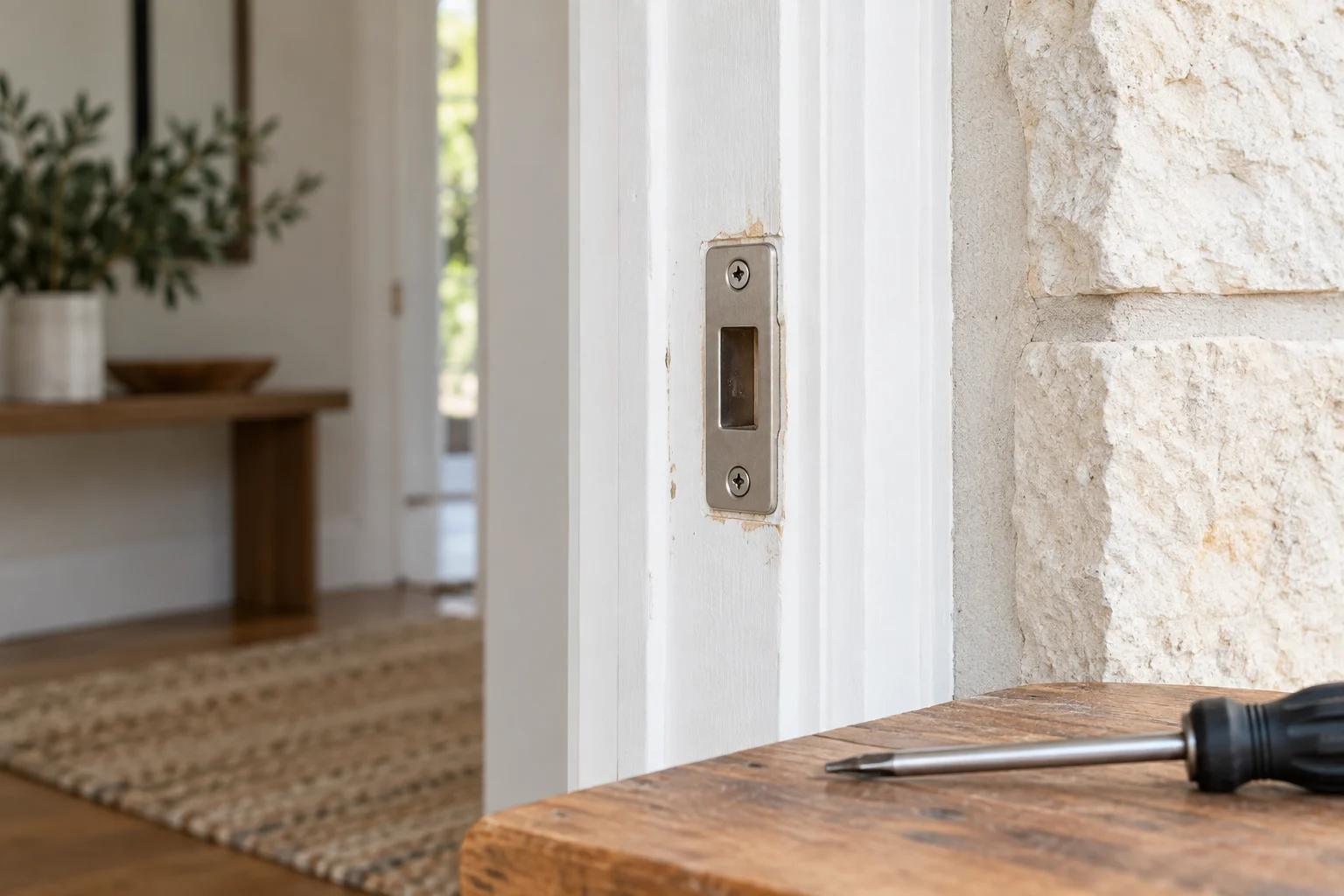
Check the front, back and side entrances, including doors you rarely use. The strength of a door relies heavily on its hardware and the frame that holds it. A heavy solid wood or metal door is compromised if the deadbolt only extends half an inch into a weak wooden frame.
Check that each deadbolt extends fully into its matching strike without lifting or forcing the door. Have damaged frames, loose strikes and unsuitable fasteners assessed. The right reinforcement depends on the door construction and manufacturer instructions; longer screws alone do not establish a secure installation.
Do not neglect the door that leads from your garage into your house. Many homeowners leave this door unlocked, assuming the exterior garage door provides enough security. Check that this entrance closes and secures properly, and preserve any applicable fire-separation and safe-exit requirements when changing it.
Inspect the door strike
Securing sliding doors and windows
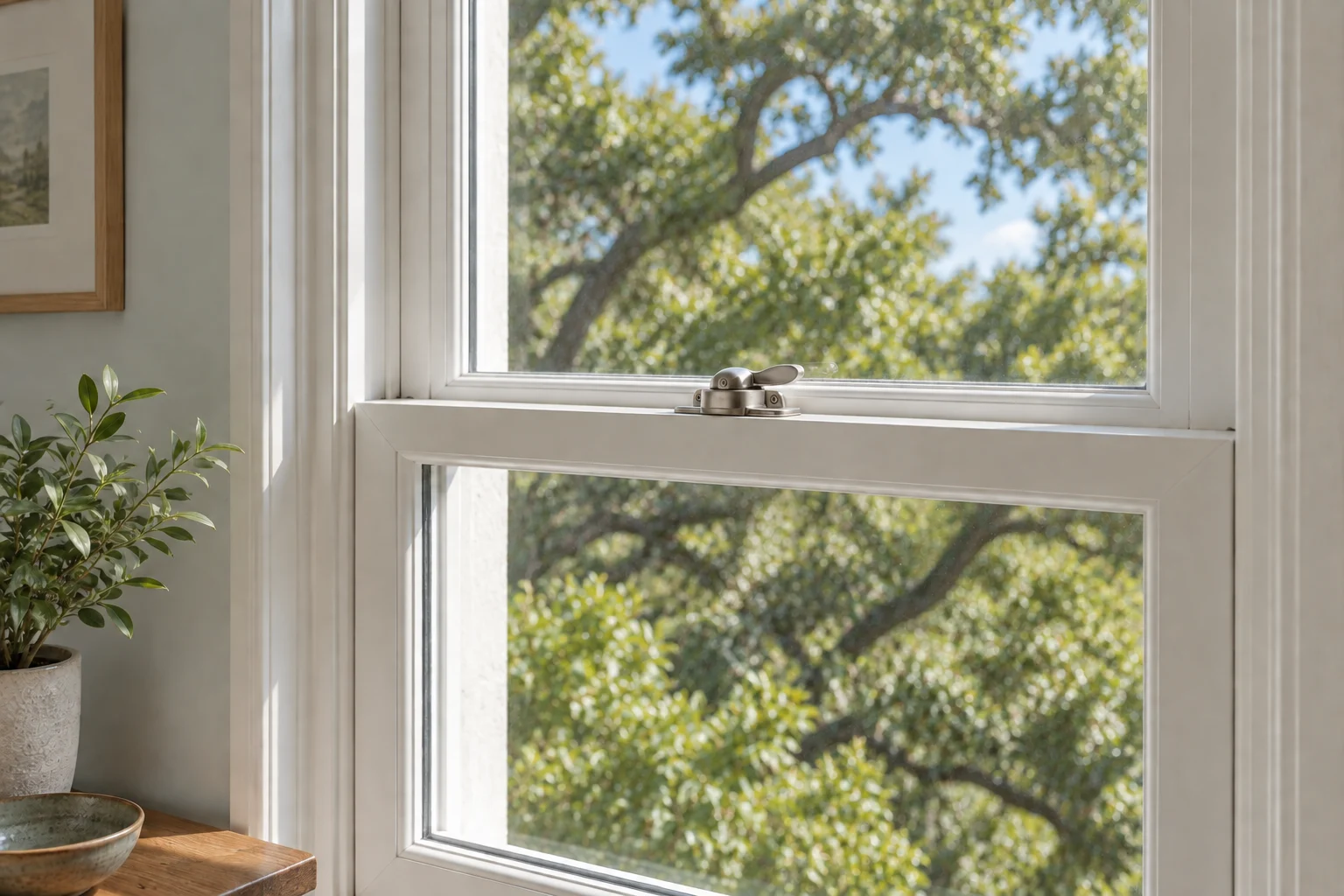
Sliding glass doors and ground floor windows require specific hardware to prevent them from being lifted off their tracks or pried open. Secondary locking mechanisms, such as track pins or blocking bars, add a physical barrier.
Keep your windows locked even when you are home. If you are concerned about the glass itself being broken, ask a qualified installer whether compatible security glazing or film is appropriate for the window. Performance depends on the product and how it is installed. Check the manufacturer instructions, and keep required emergency escape windows usable.
Window air conditioning units also present a vulnerability. Verify the unit is securely bracketed to the window frame from the inside so it cannot be simply pushed into the room from the outside.
A window latch to check
Managing visibility and lighting
Darkness provides cover. Installing motion activated exterior lights around entryways, driveways, and dark corners of your yard removes hiding spots. Pathway lighting and porch lights also help neighbors see if someone is lingering near your property.
Keep your landscaping trimmed. Bushes and shrubs that grow high around ground floor windows offer concealment. Trimming vegetation back from your entryways keeps the area visible from the street.
Inside the house, leaving a few lights on timers can make the property look occupied when you are out of town. Adjust the timers so they do not follow the exact same schedule every single day. Keep valuables out of direct sight from the street; do not leave the blinds open in a room where expensive electronics or equipment are clearly visible.
Understanding security systems and habits
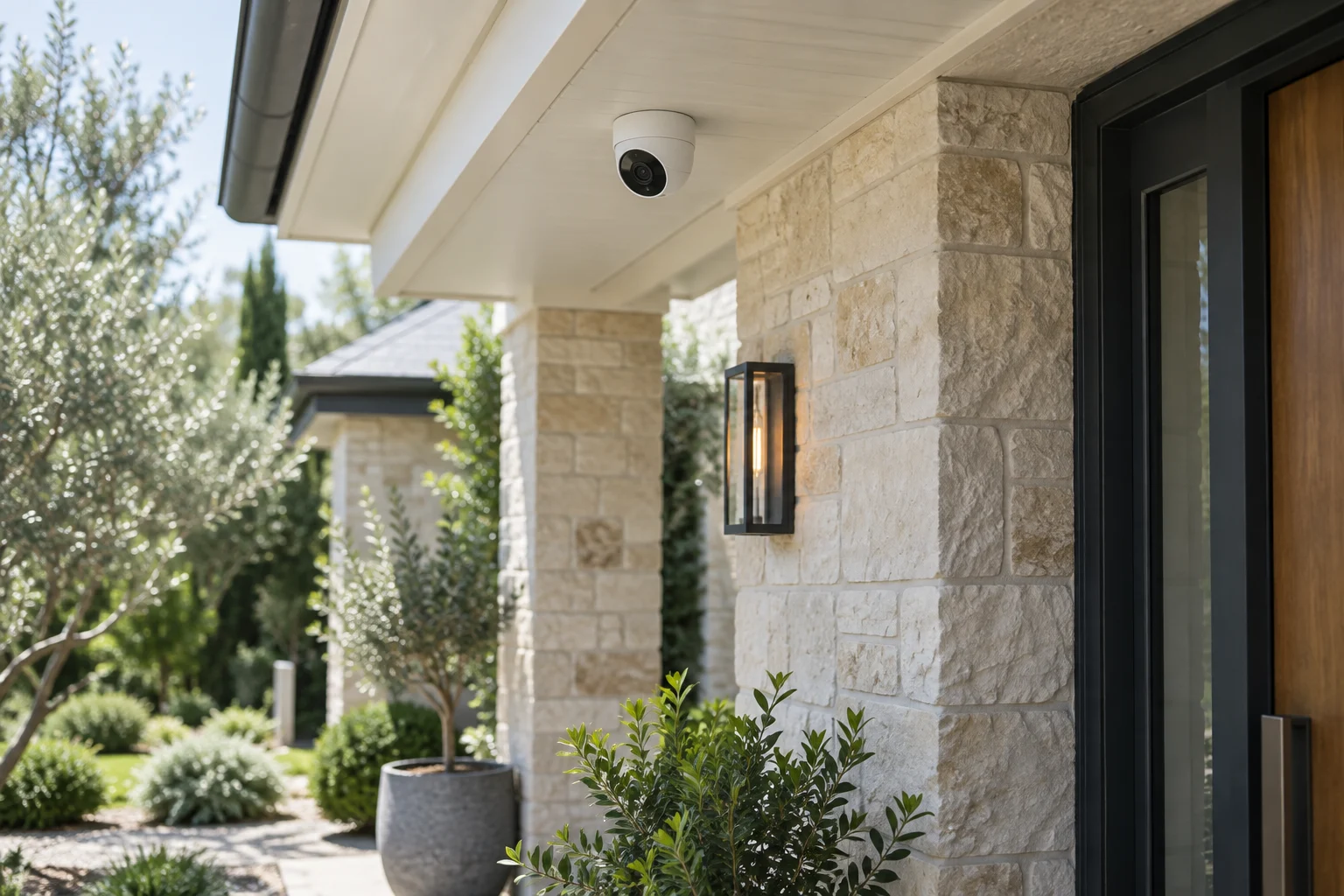
Alarm systems and security cameras serve as visible deterrents. Place cameras where they cover approaches to your front and back doors. If you install an alarm, display the warning signs near your entrances.
Good hardware is ineffective if you forget to use it. Make a habit of locking your doors every time you leave, even for a short walk. Avoid hiding spare keys under welcome mats or rocks, as these are the first places an intruder looks. Instead, give a spare key to a trusted neighbor or consider smart lock installation to control access with a keypad.
An exterior camera
What to do after a break in
If your home has been broken into and you suspect the intruder might still be inside, do not enter. Call 911 immediately. Once the police have cleared the home and taken a report, avoid touching anything until they finish their investigation.
After the authorities finish, you will need to secure the property. Call a professional to handle lock rekeying or to replace damaged hardware. Document all damage and missing items for your insurance claim.
512 Locksmith provides residential security evaluations and hardware upgrades across the Austin area. For help assessing your exterior locks or reinforcing your doors, reach out through our contact page.
Control access as well as hardware
Review who has keys, door codes, garage remotes and administrator access to connected devices. Remove permissions that are no longer needed. If a key is missing and could identify your property, ask whether rekeying the relevant locks is appropriate.
Choose a safe place for spare access. A trusted person may be a better option than an obvious hiding spot outside. For a smart lock, understand the backup entry method and keep the recovery details accessible.
A home has more than one entry point
Use the walk-through to identify the opening that needs attention.
- Entrance
- Access gap
- Separate controls
Further reading: Austin Police Department: Austin Police Department safety tips
Walk the property before shopping
Entries
Check that each door closes and locks smoothly.
Openings
Review sliding doors and windows for suitable hardware.
Access
List keys, codes and remotes that still work.
Sources and further reading
- Austin Police Department safety tipsAustin Police Department