

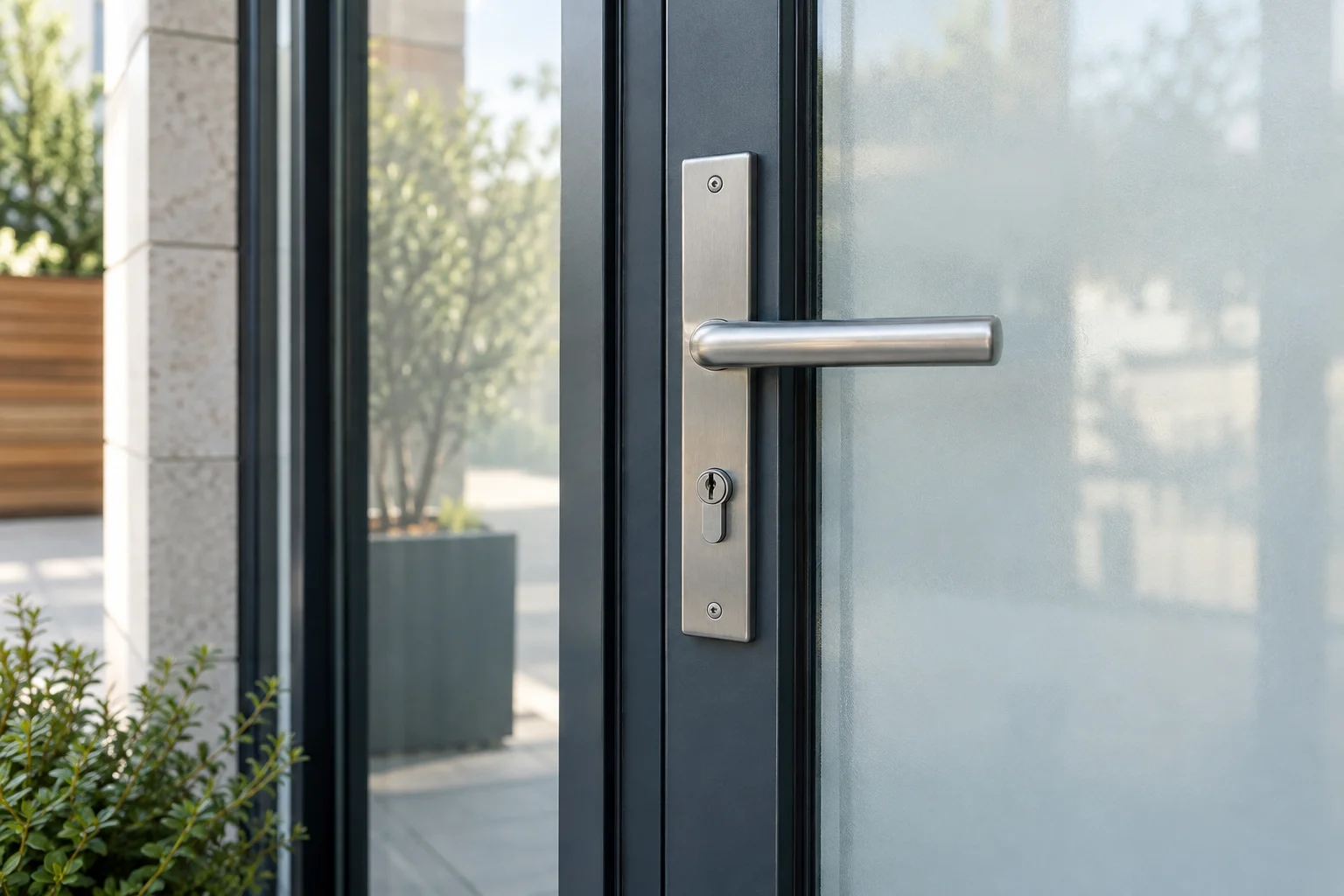
When evaluating physical security for a home or business, property owners often search for hardware that cannot be bypassed. Treat an absolute pick-proof claim with caution. While some cylinders are exceptionally difficult to manipulate without the correct key, given enough time, specialized tools, and expertise, most mechanical barriers can eventually be compromised. Resistance to lock manipulation is only one feature of a security system; it says very little about a damaged frame, uncontrolled spare keys, or an unlocked window.
Compare the exact product's tested resistance and installation requirements. A high-security label alone does not tell you how the complete entrance will perform or solve uncontrolled key access.
For a concrete specification, Medeco 4 Maxum documentation identifies drill and pick resistance under UL437. Compare that stated testing with the exact configuration you are buying; do not turn a resistance rating into a promise that the entire door cannot be defeated.
In this guide
What makes a lock resistant to manipulation?
Many mechanical locks use pins that align when the correct key is inserted, allowing the plug to turn. Designs differ in manipulation resistance. The presence of a pin-tumbler mechanism alone does not establish a product's security rating.
Some cylinders add secondary locking elements, such as sidebars or specially shaped components. Their design and testing matter more than a generic feature list. Use the manufacturer specification and applicable certification for the exact cylinder.
A more complex key and cylinder may support particular resistance or duplication-control features. It does not make the complete door impossible to open without that key.
Interior deadbolt above a lever handle
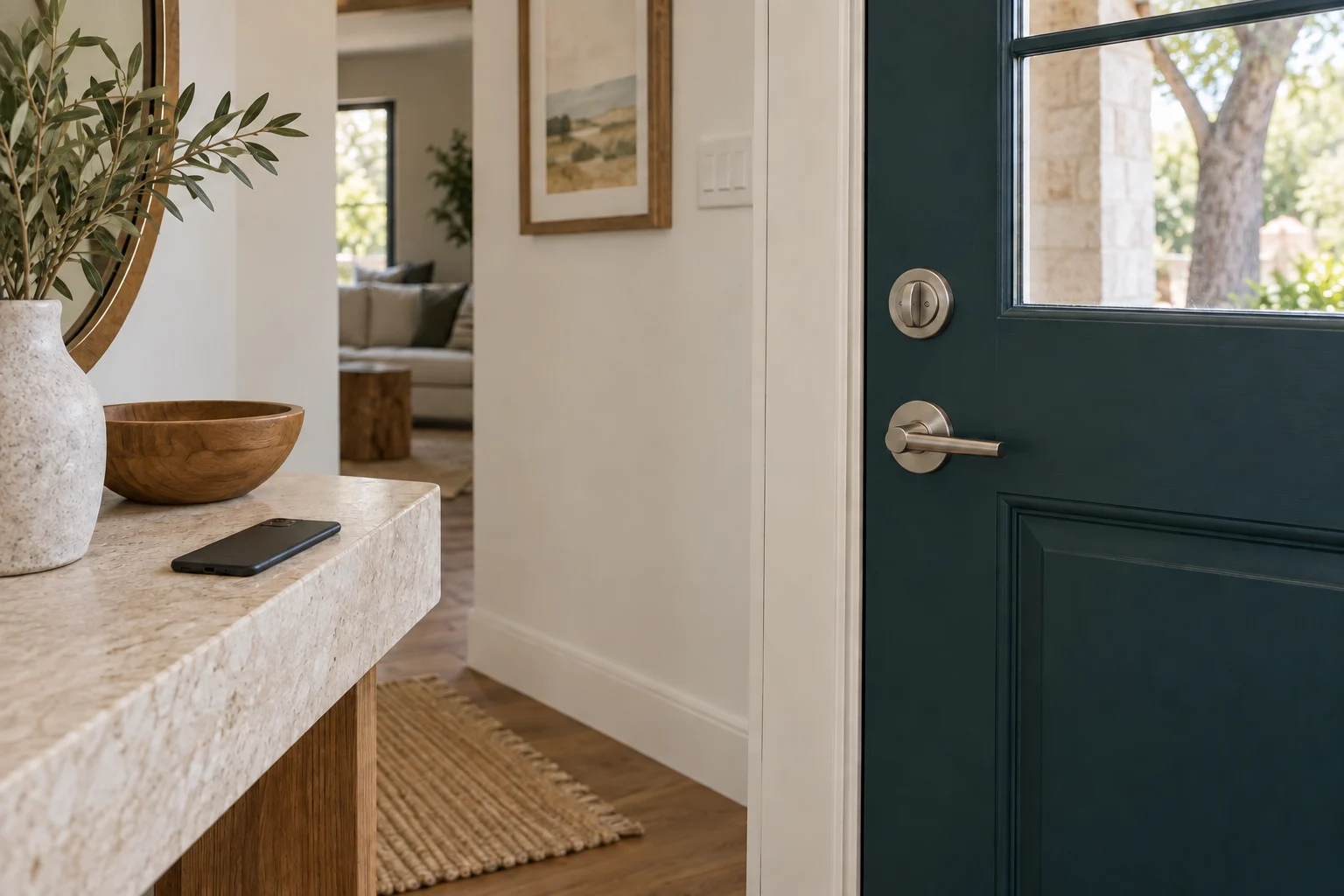
Key duplication control vs. physical resistance
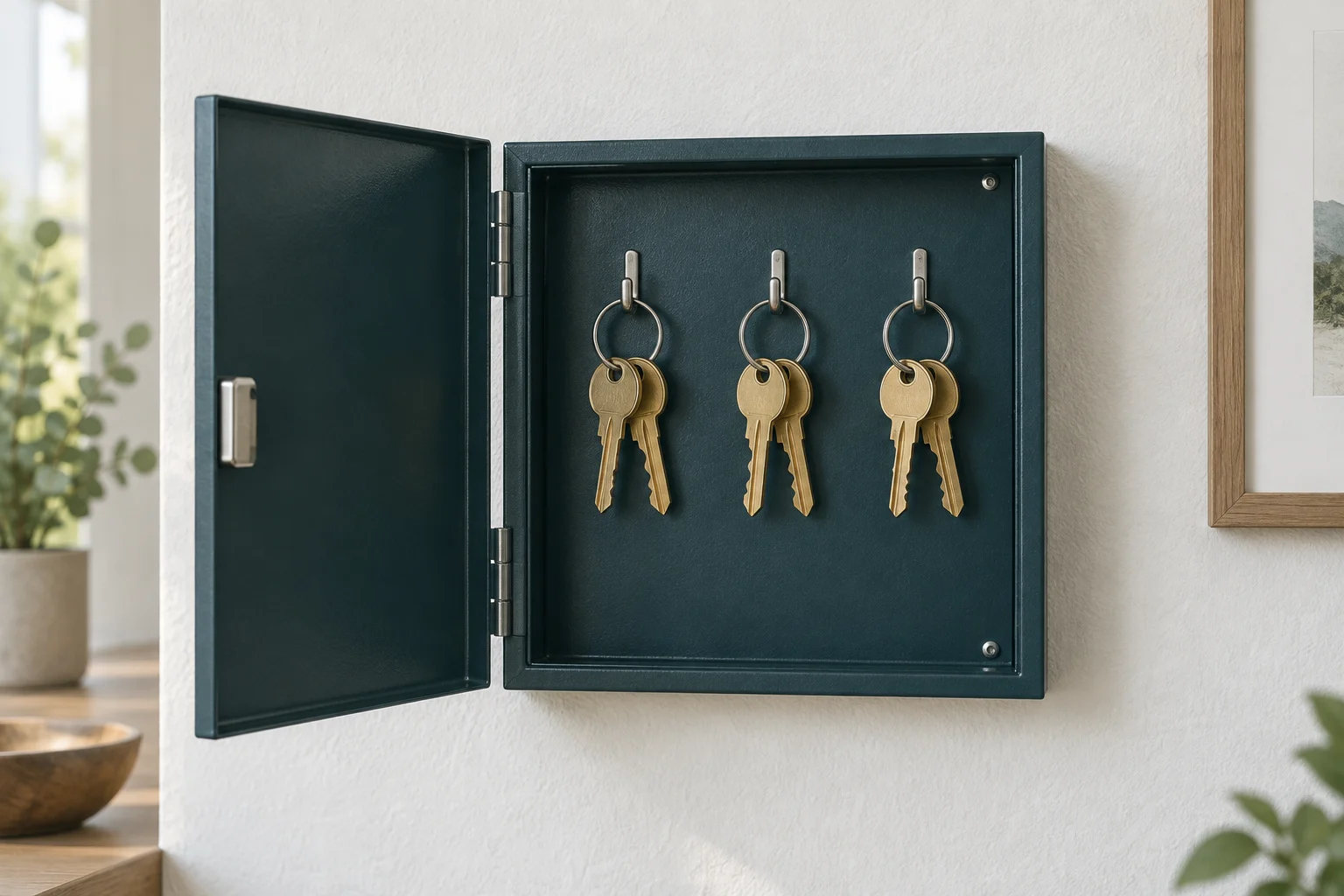
A lock that resists picking is only effective if you can control who has the key. If an employee, a contractor, or a former tenant can take a key to a hardware store and walk out with an unauthorized copy in five minutes, manipulation resistance is irrelevant. The door will simply be opened with a working key.
Restricted systems limit blank distribution or authorized duplication through product-specific rules. Patent coverage and ordering arrangements vary. Ask what authorization is required, who can supply copies and how long-term support works; do not assume every system uses the same card or signature process.
Ask how that authorization works, who supplies replacement keys, and what happens if a master key goes missing. Restricted duplication and resistance to physical picking are different features; a product may address one without addressing the other. A high-security lock should ideally provide both.
Consider key control
Forced-entry testing and complete-door security
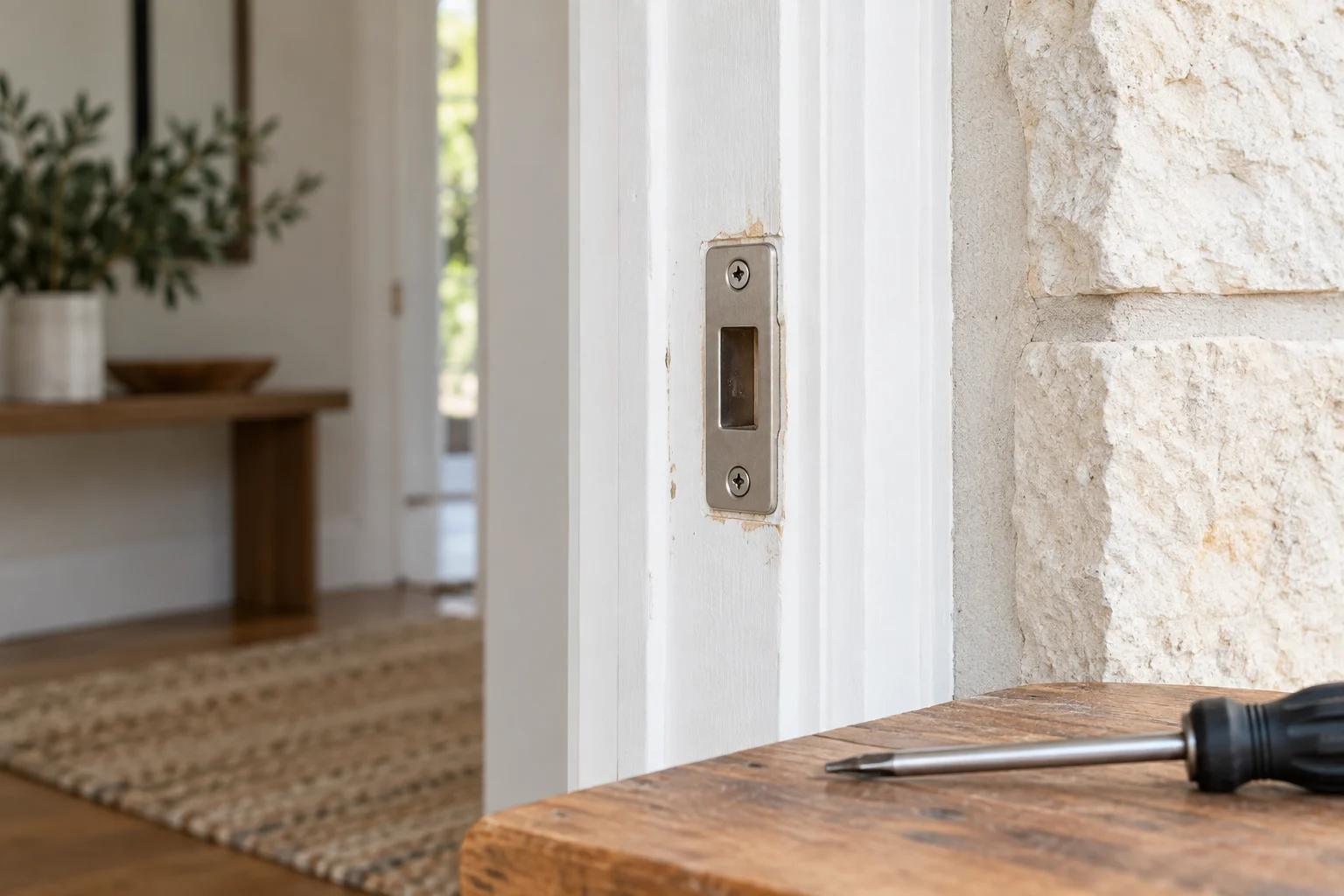
Picking resistance and forced-entry resistance address different threats. A strong cylinder cannot compensate for a damaged frame, unsuitable door or poorly installed strike.
Assess the lock housing, bolt, strike, frame and fasteners together. A mortise lock and a cylindrical lock require different door preparation, but neither format alone proves a rating. Reinforcement and screws must match the assembly and installation instructions.
Lock manufacturers use independent testing to grade their hardware. For residential products, BHMA grades indicate the lock's performance in operational cycles, strength, and security. Residential grading utilizes a letter system like A, B, or C, which should not be confused with numeric commercial grades or a blanket promise of being pick-proof. Assess the complete application, not just the cylinder name.
Match a claim to the risk
A cylinder label does not describe the whole door.
- Entrance
- Access gap
- Separate controls
Further reading: Medeco: Medeco 4 Maxum
Three different claims to check
| Concern | Evidence to request |
|---|---|
| Uncontrolled key copies | The maker's key ordering rules |
| Lock manipulation | A documented product rating or test |
| Door failure | An assessment of the strike, frame and hinges |
Do electronic locks remove the picking risk?
Removing the physical keyway eliminates the threat of traditional lock picking or key bumping, but electronic hardware introduces different considerations. Some electronic locks have no keyway at all, relying entirely on a keypad, fob, or smartphone application. Others retain a mechanical backup cylinder just in case the electronics fail.
If an electronic lock has a mechanical backup cylinder, that cylinder can still be picked. A keypad does not automatically make a lock more resistant to physical attack. Furthermore, battery-operated keypad locks need the battery checks and maintenance specified for the particular model. If the door alignment shifts due to temperature changes, the bolt may bind against the strike plate, preventing the motor from securing the door.
Commercial access control systems can manage entry permissions and, on supported systems, record credential activity. The access logs show when a specific credential was used, but they do not definitively prove who was holding that card or fob at the time. When installing electronic locks on fire doors, the hardware must allow for lawful emergency exit according to local building codes. An inside exit must remain usable, and the electronic system must not trap occupants during a power failure.
Specification checklist for upgrading door hardware
Instead of asking for a lock that cannot be picked, use this checklist to evaluate hardware for your specific building:
- Manipulation resistance: Does the cylinder use secondary locking mechanisms like a sidebar or rotating pins?
- Drill resistance: Are there hardened steel inserts or anti-drill plates protecting the internal pins and the mounting screws?
- Key control: What controls blank distribution, and how is a duplicate authorized?
- Physical reinforcement: Does the deadbolt extend fully, and is the strike installed appropriately for the actual frame?
- Door compatibility: Will the lock fit the existing prep, or does the door require a wrap-around plate to repair damage from previous forced entry?
- Code compliance: Does the complete opening meet the exit and rated-door requirements that apply?
If you are renting or changing a shared entrance, confirm permission and the requirements for the door before ordering hardware. For a useful comparison, ask for the model, relevant certification, installation requirements, and ongoing key costs. Our guide to high-security locks explains how to weigh those choices against the condition of your existing door.
Specify the risk instead of a slogan
Keys
Who may still hold copies and how are new ones issued?
Door
What condition are the strike, frame and hinges in?
Product
Which documented rating and function fit this opening?
Look beyond the cylinder
Frequently asked questions
Can a lock be upgraded without replacing the entire handle?
Often, yes. If the existing lock chassis is in good working order and comes from a compatible manufacturer, the internal cylinder can sometimes be swapped out for a high-security version. This allows you to improve key control and manipulation resistance while keeping the original exterior hardware.
What is the difference between a restricted key and a Do Not Duplicate stamp?
Is a do not duplicate stamp a restricted key?
A "Do Not Duplicate" stamp is not the same as a controlled key system. Duplication policies and actual blank availability matter. Ask the provider to explain the specific restrictions rather than relying on the words stamped on the key.
Does a high-security lock prevent someone from kicking the door in?
Does a high-security cylinder prevent forced entry?
Picking resistance does not prevent a frame or door from failing under force. Assess suitable reinforcement and installation for the actual construction. No single lock feature guarantees resistance to forced entry.
How do I get back in if I lose a restricted high-security key?
What if i lose a restricted key?
Contact an authorized provider for the key system and establish your authority. A replacement key may be an option if the records and parts support it. If entry or destructive work is proposed, ask about the method, repair scope and future key control before authorizing it.
Why use rim locks and cam locks?
How do rim locks and cam locks differ?
A rim lock case mounts on the door surface; a rim cylinder is a related component, not the same thing. Cam locks are used on items such as cabinets and customer mailbox compartments. Size and mounting style do not establish a resistance rating, and replacement-cylinder compatibility needs checking.
512 Locksmith has served Austin for more than a decade. For an evaluation of your current door hardware, reach out at (512) 777-0021 for 24/7 dispatch. Texas license B07298601.
Sources and further reading
- Medeco 4 MaxumMedeco