

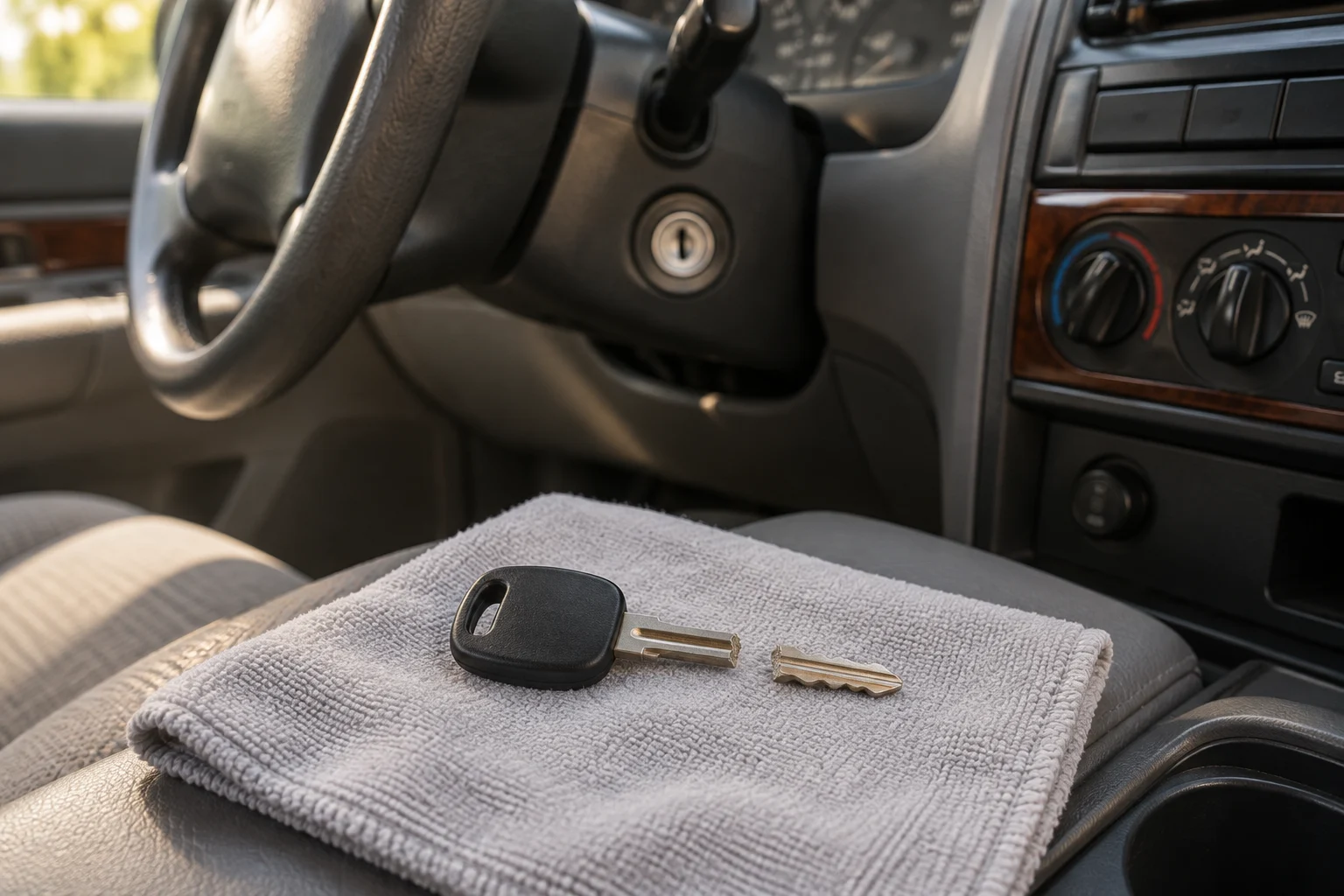
A locksmith may be able to remove a broken ignition key without replacing the cylinder, but the condition of the key and ignition decides the work. Stop turning the fragment, keep the broken key head and confirm service compatibility for your vehicle before booking.
If a child or pet is trapped inside a hot vehicle while you are dealing with a broken ignition key, call 911 immediately. Extreme temperatures inside a car can become fatal in minutes.
In this guide
Why vehicle keys break
Ignition keys endure a surprising amount of physical stress. A worn, bent or cracked blade may break when you apply turning force. Using a key as a pry tool or continuing to force a sticking cylinder can make the damage worse.
The ignition cylinder itself also contributes to key failure. The internal mechanical wafers wear down over time. When the cylinder loses its smooth operation, you instinctively apply more rotational force to start the car. This twisting pressure, combined with metal fatigue, eventually causes the key blade to shear off inside the switch.
Warning signs of ignition wear include a key that is difficult to insert, a cylinder that resists turning, or a key that can be pulled out while the engine is running. These observations need an assessment of the key and cylinder. They do not, by themselves, identify an electrical-switch fault.
What to avoid when a key snaps
Your first instinct might be to grab tools and try to pull the fragment out. You should avoid attempting to remove the piece with paperclips, stiff wire, or by spreading the keyhole with pliers.
The ignition switch is a delicate assembly. Probing the keyway can damage the mechanical cylinder or push the fragment farther inside. Pushing the fragment further into the housing can turn a straightforward extraction into a costly ignition switch repair.
You should also avoid spraying heavy lubricants into the ignition in an attempt to loosen the piece. Use only a treatment specified for that part by the vehicle manufacturer; a general door-lock remedy may be unsuitable.
A broken ignition key changes the job
A new key alone may not solve a damaged ignition.
- Key head
- Fragment
- Stop point
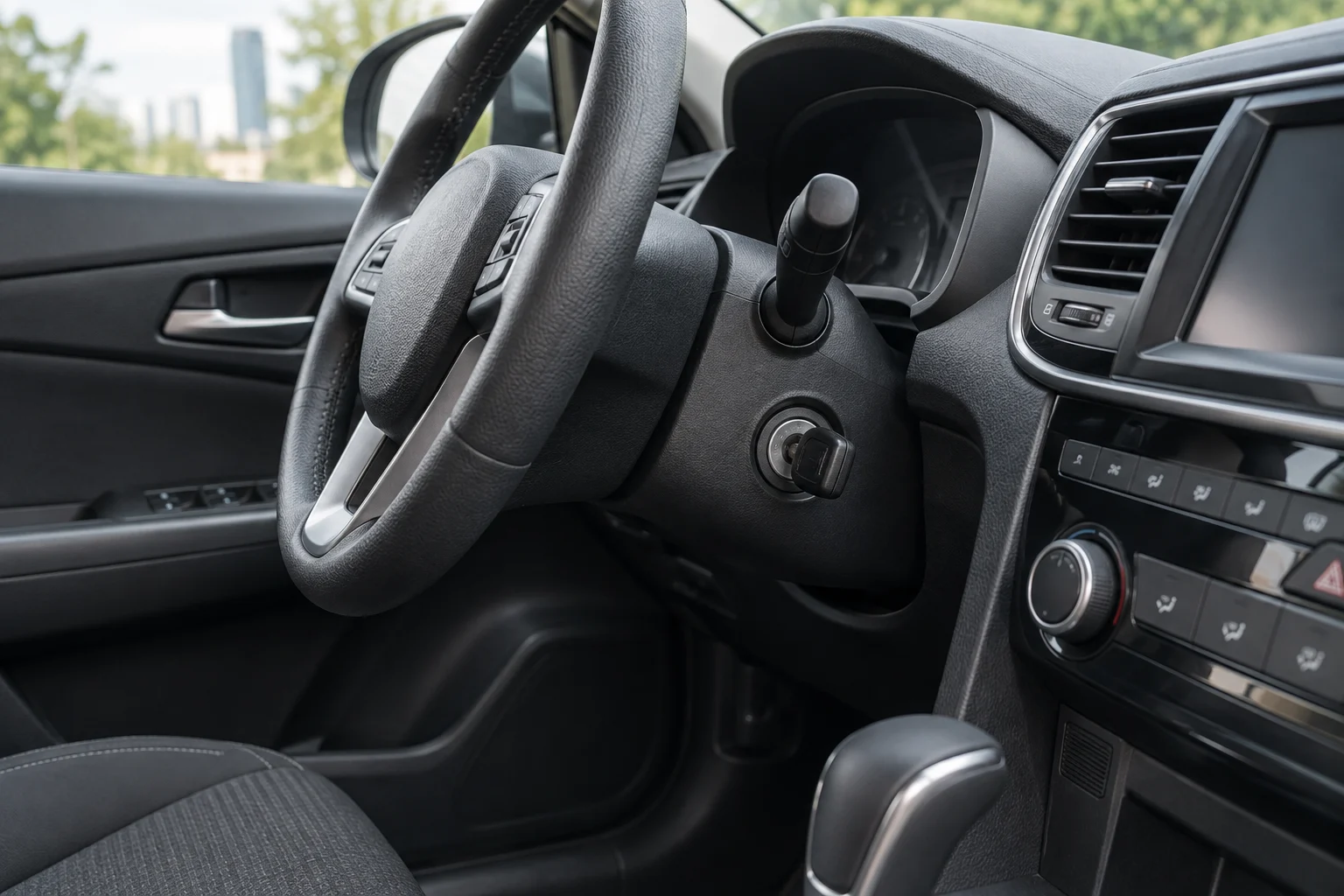
Vehicle ignition and key
How the extraction process works
A technician evaluates the ignition assembly to determine the safest extraction method. If the broken fragment is visible and protruding slightly, they use specialized extraction hooks that slide along the grooves of the keyway. These tools are designed to grip the cuts of the broken blade without pressing against the cylinder wafers.
If the fragment is wedged deeply or the cylinder is heavily worn, the technician may need to partially disassemble the steering column covers to access the ignition housing. In some cases, the entire cylinder must be removed to push the broken piece out from the back.
Getting a replacement car key
Once the fragment is removed, you will need a new key to operate the vehicle. You cannot weld or glue the broken pieces back together. A technician may be able to use the fragments, a sound spare or another authorized method to determine the replacement cuts. The available options depend on the vehicle and the condition of the key.
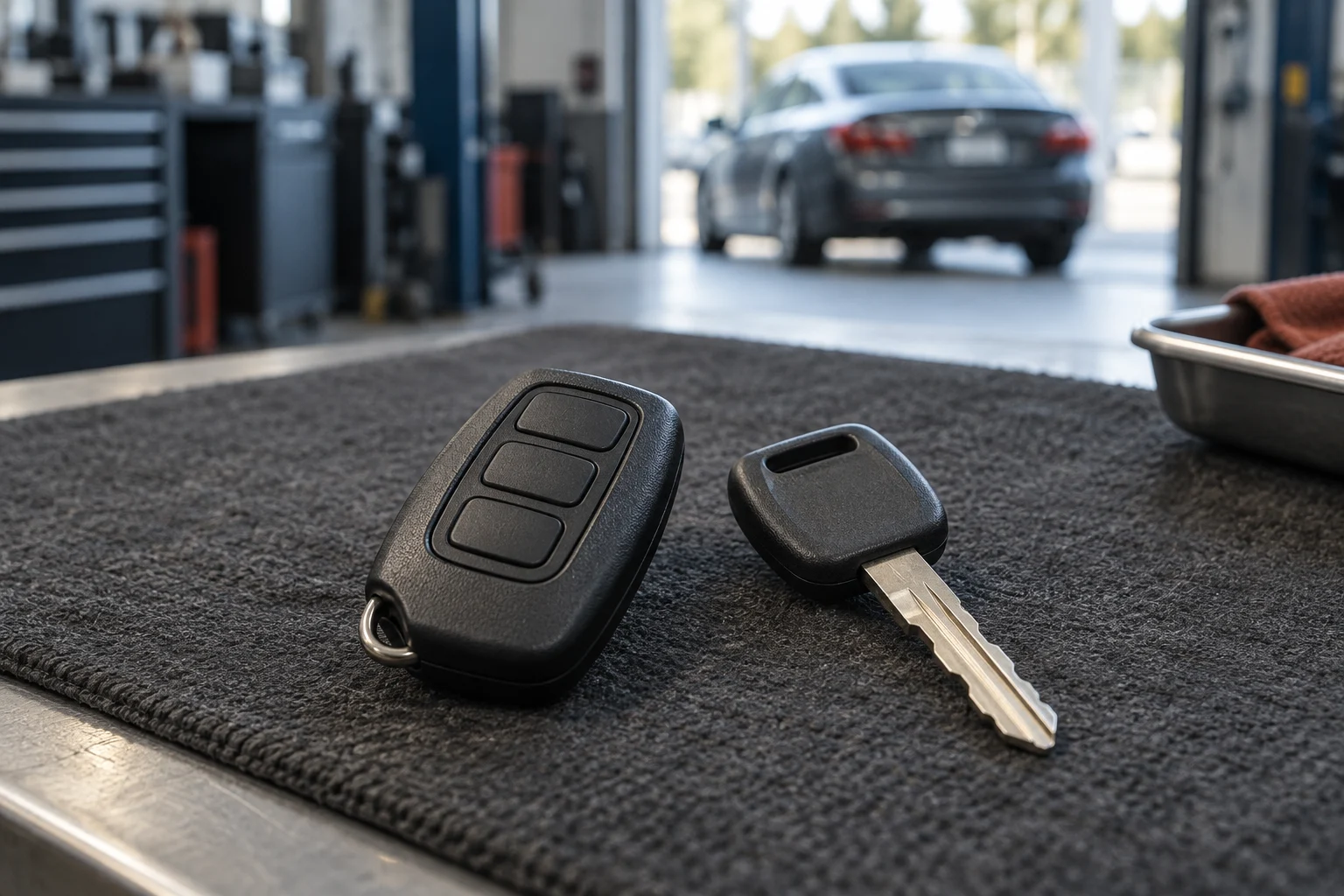
Modern vehicles require more than just a mechanical cut. If the vehicle uses an immobilizer, its key needs the correct electronic authorization as well as the right mechanical cut. A blade break does not necessarily damage the chip. Keep the original head so the provider can assess whether it is usable and which replacement key options apply.
The type of programming required depends on your specific vehicle make, model, and year. Ask whether the provider supports the cutting and any transponder programming needed for that vehicle. Some jobs require ordered parts or manufacturer support.
If you are dealing with a broken ignition key, call (512) 777-0021 to reach 512 Locksmith. We provide mobile automotive services across Austin and Central Texas under Texas DPS TOPS license B07298601.
Replacement components
What information to give the locksmith
Provide the make, model and year, your location and whether any part of the blade is visible. Mention whether the cylinder was sticking before the break and whether a spare worked normally. Tell the provider if anyone has already used glue, wire or lubricant so the assessment starts with the full history.
Ask what identification and ownership documents are needed. If those are inside the car, explain that before the visit rather than assuming the technician can proceed without verification.
What the provider needs to know
Vehicle
Give the make, model and year.
Symptom
Say whether the blade broke during insertion, turning or removal.
History
Report earlier sticking and whether a spare behaves differently.
Confirm the work after extraction
Ask whether removing the fragment leaves the cylinder serviceable. A new key will not cure worn wafers, a damaged housing or a separate starting-system fault. The provider should explain any additional repair before carrying it out.
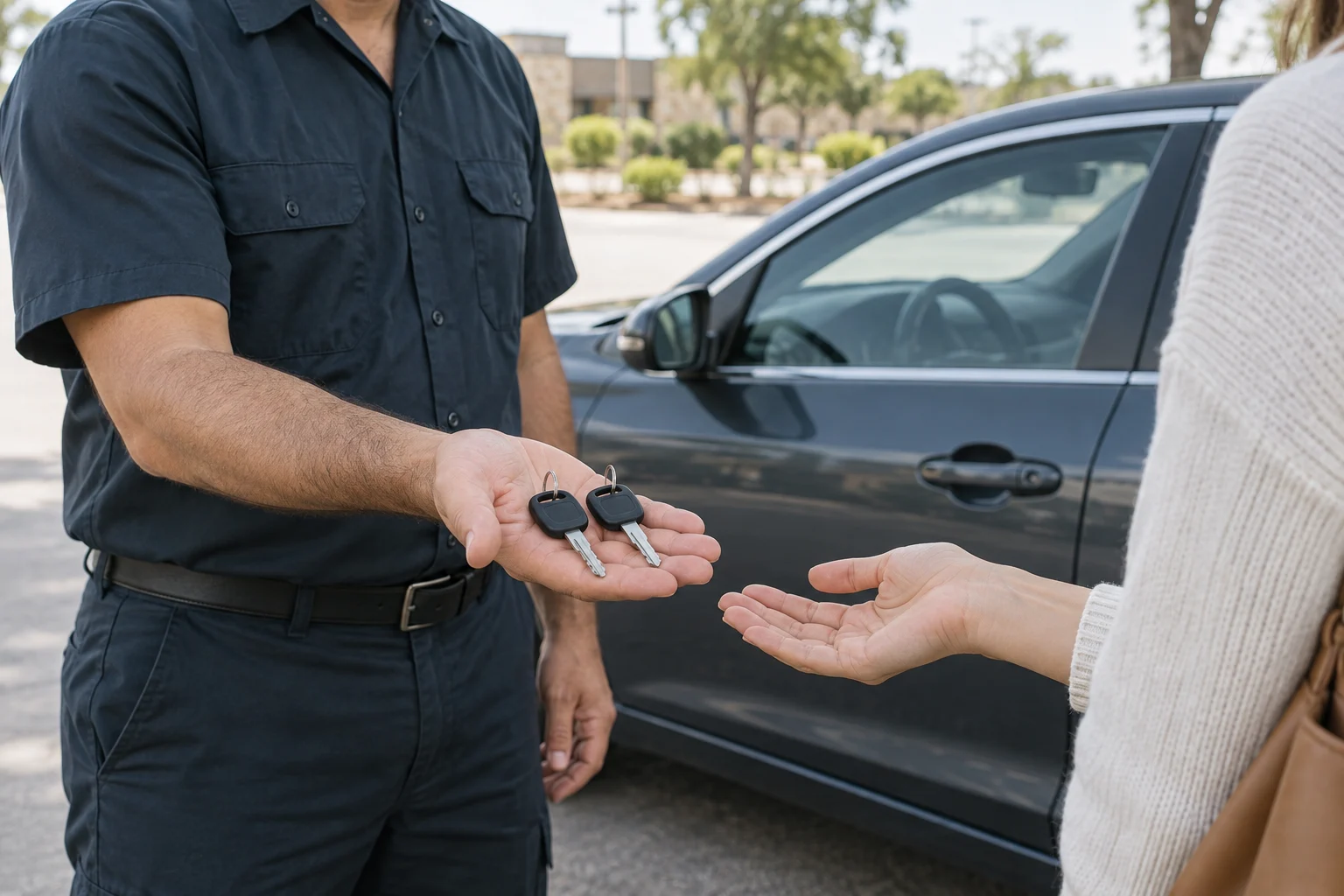
Confirm which parts of the quote cover extraction, a blade, a complete fob or key, programming and travel. Ask the technician to test the functions included in the job and explain what to do if the original sticking symptom returns.
Check the replacement
Sources and further reading