

If a window will not lock, check whether it closes fully before replacing the latch. Dirt in the track, misaligned sashes, damaged fixing points and a broken lock can produce similar symptoms. The repair needs to suit the window material, the mechanism and the hardware's exact dimensions.
In this guide
Identify the window and lock type
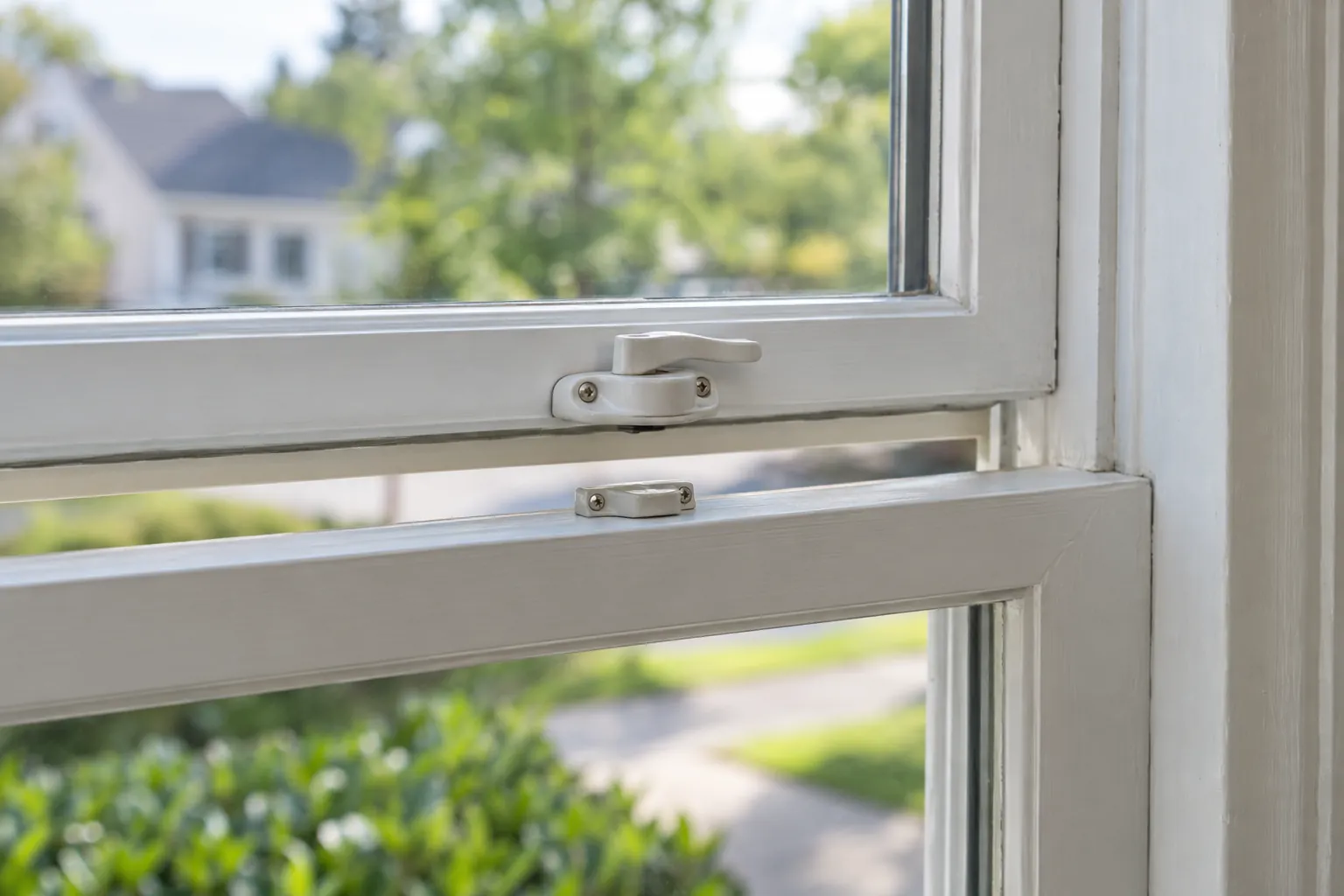
Double-hung and single-hung windows generally use a cam-style sash lock. One half sits on the check rail of the bottom sash, and the keeper sits on the bottom rail of the top sash. Turning the cam pulls the two sashes tightly together. Sliding windows often have a simple latch or a spring-loaded lock that secures the moving sash against the frame.
Casement and awning windows operate differently. They push out on a crank or hinge, using an operator mechanism to open and close. The lock is usually a separate lever on the side jamb that pulls the sash tight against the weatherstripping. Many modern casements use a multi-point locking system where one handle controls several hooks.
Designs vary heavily by product and age. Matching screw spacing alone does not establish compatibility. Handing, the keeper depth and the way the lock engages all matter. Andersen's casement and awning lock guidance illustrates how window age and lock handing affect the replacement. Use the specific instructions for your actual window model.
A sash window latch
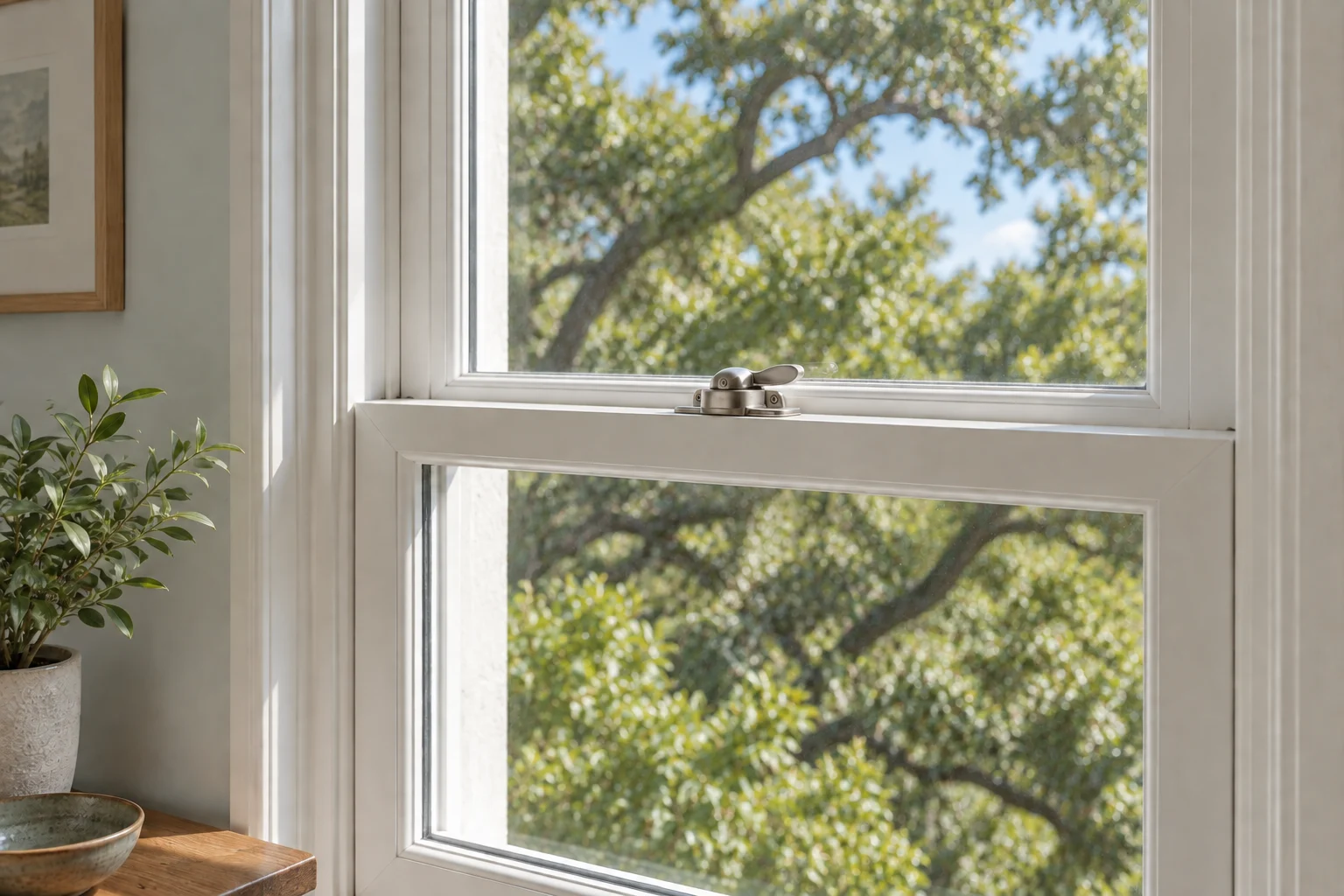
Diagnosing alignment versus broken hardware
If the mechanism operates differently with the window open and closed, report that observation without forcing it. The sash, keeper, alignment and lock may need assessment. Do not use a locking handle to drag a resisting sash into place.
Why the lock misses the keeper
Check for visible debris, dead bugs or dirt in the lower track that prevents normal closure. Follow the manufacturer's cleaning instructions to clear the sill. If the window closes but the lock still misses the keeper, the problem could involve:
- An opening or sash that no longer sits square.
- A warped wooden sash that no longer sits flat.
- A broken balance (the hidden spring system in double-hung windows) preventing the sash from resting evenly.
- Worn hinges on a casement window causing the sash to sag.
A window latch needs to meet its keeper
A loose latch and a shifted sash are different repair questions.
- Opening edge
- Latch or bolt
- Keeper opening
Fixing loose or stripped hardware
Loose screws may indicate damaged fixing points, especially in vinyl or aluminum frames. If the lock wobbles, it cannot secure the window.
Avoid larger screws, new holes or improvised packing based on a generic repair tip. Hidden hardware, glass edges and drainage features can make an unsuitable modification damaging. Use the exact window or hardware instructions.
For a broken latch, identify the correct replacement and keeper before ordering. Check whether the product instructions permit the work as a homeowner repair or require a service provider. If the glass, frame material or the internal operating mechanism is damaged, stop and have it assessed.
Latch and keeper alignment
Secondary window hardware and egress limits
Property owners sometimes consider secondary locks, such as track pins, sliding stops or keyed window locks, to supplement older hardware. You must choose these carefully based on the room's purpose.
A required emergency escape opening must retain the operation specified by the applicable rules. A keyed lock or restrictive device can create an escape problem. Have the window, room and proposed hardware checked before adding a secondary lock; not every window has the same role.
Security film is not a lock substitute
Security film is a separate product choice. Some tested systems can retain broken glass or improve resistance in a specified application, but film is not a substitute for a functioning lock or a universal weather/entry guarantee.
Performance depends on the specific film thickness, the glass type and the installation method (such as whether the film is anchored to the window frame with structural silicone). Check product evidence and compatibility rather than relying on a general claim that film makes any window secure. Film does not secure a window if the latch is broken or left open.
Locksmith versus window contractor
Locksmiths generally handle physical locking hardware, such as replacing broken cam locks, installing secondary track stops or keying patio door locks to match house keys.
You usually need a window contractor if:
- The frame is out of square and needs assessment beyond lock hardware.
- The insulated glass unit has failed, showing visible fogging between panes.
- The internal balances or casement crank operators are broken.
- The window is rotted or structurally compromised.
Choose the repair path
Lock broken
Identify the window and exact replacement part.
Window out of alignment
Ask a window specialist about sash or frame work.
Adding a device
Check safe operation and egress before installation.
Look at the whole window
Common window lock questions
Why does a casement window handle spin without locking?
Why does a window handle spin without operating?
First distinguish the opening crank from the locking lever. A free-spinning handle can involve its connection or internal components, and designs vary. Identify the window model and which part fails before tightening fasteners or ordering a replacement.
Can window locks be rekeyed to match a front door?
Can window locks share my house key?
Many sash latches are not keyed, so rekeying is not relevant. For a keyed window or patio-door device, cylinder compatibility and safe exit requirements determine the options. Do not infer compatibility from a similar key shape alone.
How do you know if the keeper is the problem?
The keeper is the stationary metal bracket that the lock's cam engages. If the keeper is loose, bent or visibly worn, the cam may slip out under pressure. Replacing the keeper or securing it with the correct screws sometimes resolves the issue without needing to replace the entire sash lock.
Requesting help
When requesting help, describe the window type, the exact fault and any visible brand names etched into the glass corners or stamped on the hardware. Ask whether the provider handles the actual hardware replacement, whether the quote covers diagnosis or parts and whether a window contractor might be a better fit. After any repair, check the closing, locking and required escape functions.
Call (512) 777-0021 to confirm whether your request can be supported. 512 Locksmith has served Austin for more than a decade (Texas license B07298601). For door deadbolts, rekeying and lock hardware work, see our residential locksmith options.
Sources and further reading
- casement and awning lock guidanceAndersen Windows