

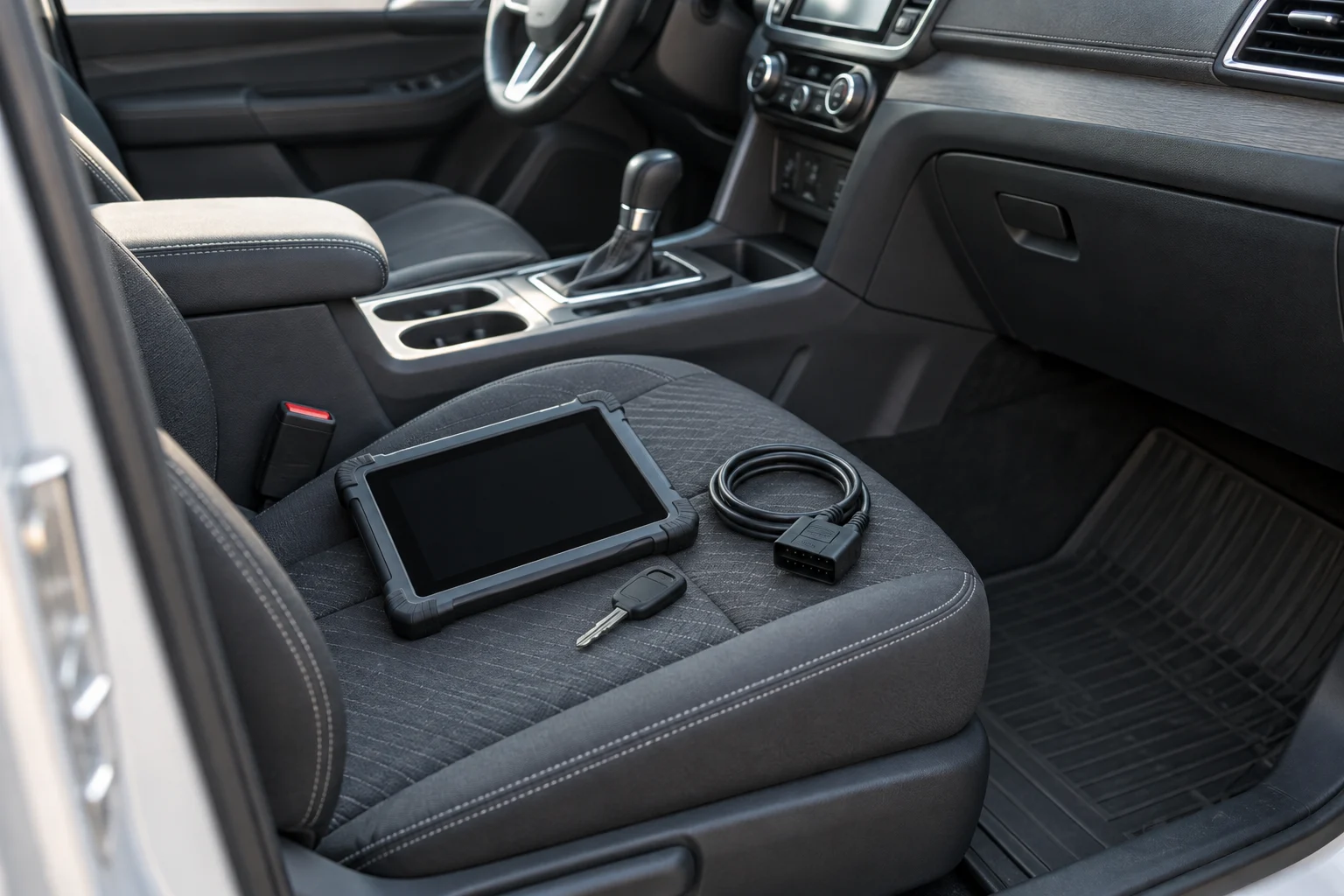
A cut blade and an electronically authorized starting key are different things. On a transponder-equipped vehicle, a blade may operate a mechanical lock without authorizing the engine to start. Give the year, make and model and whether a working key remains before buying a part or arranging programming.
In this guide
- 01What is a transponder key?
- 02Types of modern car keys
- 03Cutting, cloning and enrolling: what is the difference?
- 04Why an existing transponder stops working
- 05Adding a spare versus an all-keys-lost situation
- 06Revoking lost keys and managing credentials
- 07Getting a replacement key
- 08Phone keys are a separate compatibility question
- 09Check the result before relying on it
What is a transponder key?
A transponder is an electronic credential read by the vehicle's security system. A conventional keyed system may energize a passive chip near the ignition; other arrangements differ. Recognition is part of starting authorization, but a no-start symptom can have causes beyond the key. A blade that turns is not proof the electronic credential is accepted.
A cut key and a recognized key are different
The vehicle may require both mechanical fit and electronic authorization.
- Cut blade
- Electronic identity
- Vehicle response
Types of modern car keys
Vehicle manufacturers use several different key designs, but most incorporate some form of transponder technology to prevent theft.
Standard transponder keys
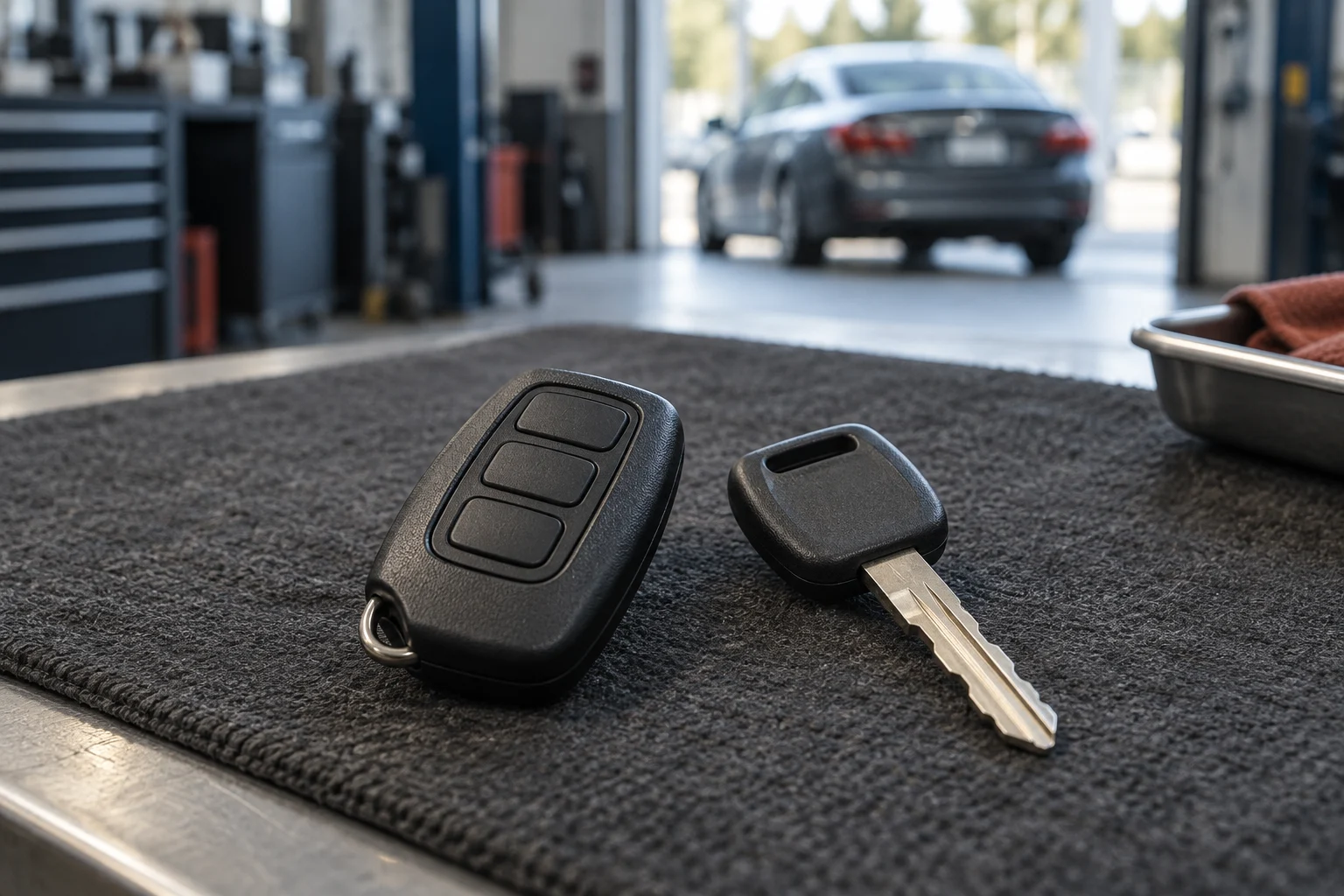
A conventional transponder key combines a blade with an electronic credential, sometimes without remote buttons. Its appearance does not identify the chip or enrollment procedure. Use the vehicle and part details rather than judging by the size of the plastic head.
Remote head keys
A remote-head key combines functions in one housing. The remote-button battery and starting credential may have separate power arrangements. A dead remote battery does not establish whether that vehicle can start; follow its manual and report which functions remain.
Flip keys
Also known as switchblade keys, these feature a metal blade that folds into the remote housing to save space in your pocket. The transponder chip sits inside the main housing alongside the remote circuitry. If the hinge breaks, the blade can become separated from the chip, preventing the car from starting even if the blade still turns the ignition.
Smart keys and proximity fobs
A proximity fob supports entry and starting functions on a compatible vehicle. Detection and backup arrangements vary. Check the owner manual for its supported procedure if the fob battery is depleted rather than applying a generic start-button or console-slot instruction.
Identify the key type
Cutting, cloning and enrolling: what is the difference?
Generating a working replacement key involves several distinct processes. Understanding the terminology helps clarify what you are actually paying for when you request a spare.
Cutting the blade
Cutting refers exclusively to shaping the metal blade to match your vehicle's physical lock tumblers. A cut key will turn the door lock and the ignition cylinder, but it will not start a transponder-equipped vehicle on its own.
Cloning a chip
Cloning creates a compatible copy of an existing credential where the key system supports it. It differs from enrolling a separately recognized key. Ask what method is proposed and how that affects future key removal; not every chip or vehicle supports cloning.
Enrolling a new key
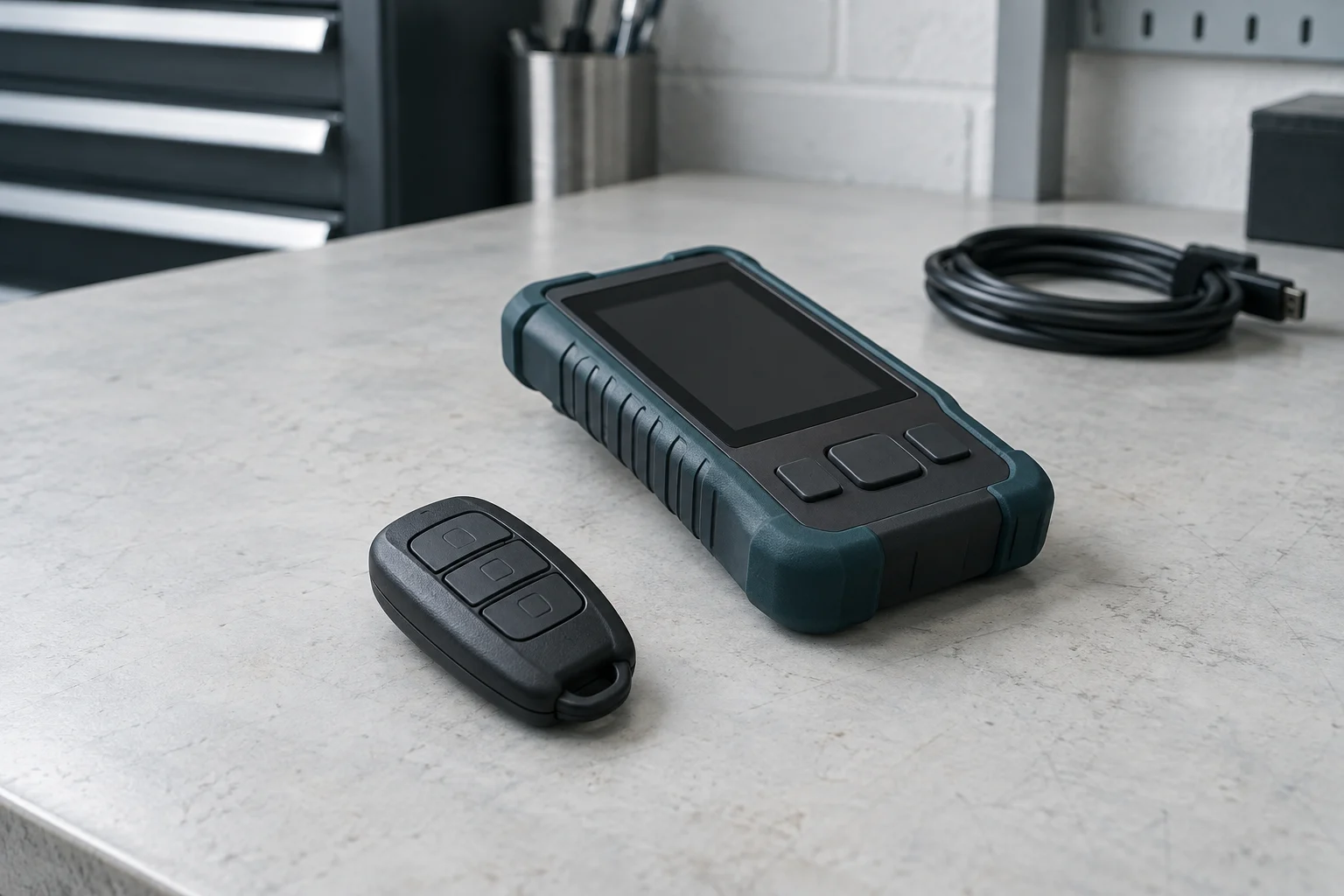
Enrollment authorizes a supported credential through the vehicle-specific process. Available methods depend on the model, existing keys and security system. Do not assume every key is added through the same diagnostic connection or that every all-keys-lost request is supported.
Key fob workbench
Why an existing transponder stops working
If a previously working key suddenly fails to start the car, note what still functions before assuming the key is dead. Does a spare key start the vehicle? Do the remote buttons work? Is a security warning flashing on the dashboard?
Report drops, water exposure, changing symptoms and whether a second authorized key works. Problems can involve the key, vehicle power, reader or other components. A warning light or a replacement coin battery alone does not establish whether programming is needed.
Adding a spare versus an all-keys-lost situation
The status of your current keys dictates the complexity of the job. A working spare and an all-keys-lost scenario require fundamentally different approaches.
Adding a spare
With a working key, ask about the supported spare procedure and bring the key if requested. Some vehicles provide owner procedures under specific conditions, while others require professional enrollment. Use the exact manual rather than a generic ignition-turn sequence.
All keys lost
With every key missing, the provider must establish a supported way to supply the correct mechanical and electronic access. Parts, authorization and vehicle-specific procedures determine whether mobile work is practical. Ask about transport or workshop requirements before booking.
Confirm what the new key must do
Access
Ask whether a mechanical blade is needed for the doors.
Start
Confirm electronic enrollment for the exact vehicle.
Test
Check every function in the quote before the provider leaves.
Revoking lost keys and managing credentials
If you lose a key somewhere in Austin, you may want to ensure it cannot be used to steal your car. During a programming session, a technician can often clear the vehicle's immobilizer memory, erasing all previously authorized keys. The keys currently in your possession are then re-enrolled.
Ask exactly which lost-key functions can be disabled. Immobilizer authorization, remote buttons and phone credentials may be separate. Revoking an electronic credential does not necessarily disable a physical blade. Review those mechanical locks separately if the missing key creates a concern.
Getting a replacement key
When seeking transponder key help, compare your options using exact vehicle details. A dealership may require the car to be towed to their lot, while an automotive locksmith can often perform the cutting and programming where the vehicle sits.
If you already have a replacement part, provide its exact details and ask whether it is accepted. Appearance or a broad online fitment claim is insufficient. Confirm the quote covers the required part, blade work, enrollment and visit, and what happens if the supplied part is unsuitable.
512 Locksmith has served Austin for more than a decade. Dispatch accepts calls 24/7. Texas license B07298601.
Confirm the replacement
Phone keys are a separate compatibility question
The Car Connectivity Consortium's certified-product directory is one reference for supported Digital Key products. A vehicle offering a phone key does not mean every phone, watch or model year is compatible. Adding or removing a phone credential can also differ from programming a replacement fob. Give the exact vehicle and device details when discussing key fob programming.
Check the result before relying on it
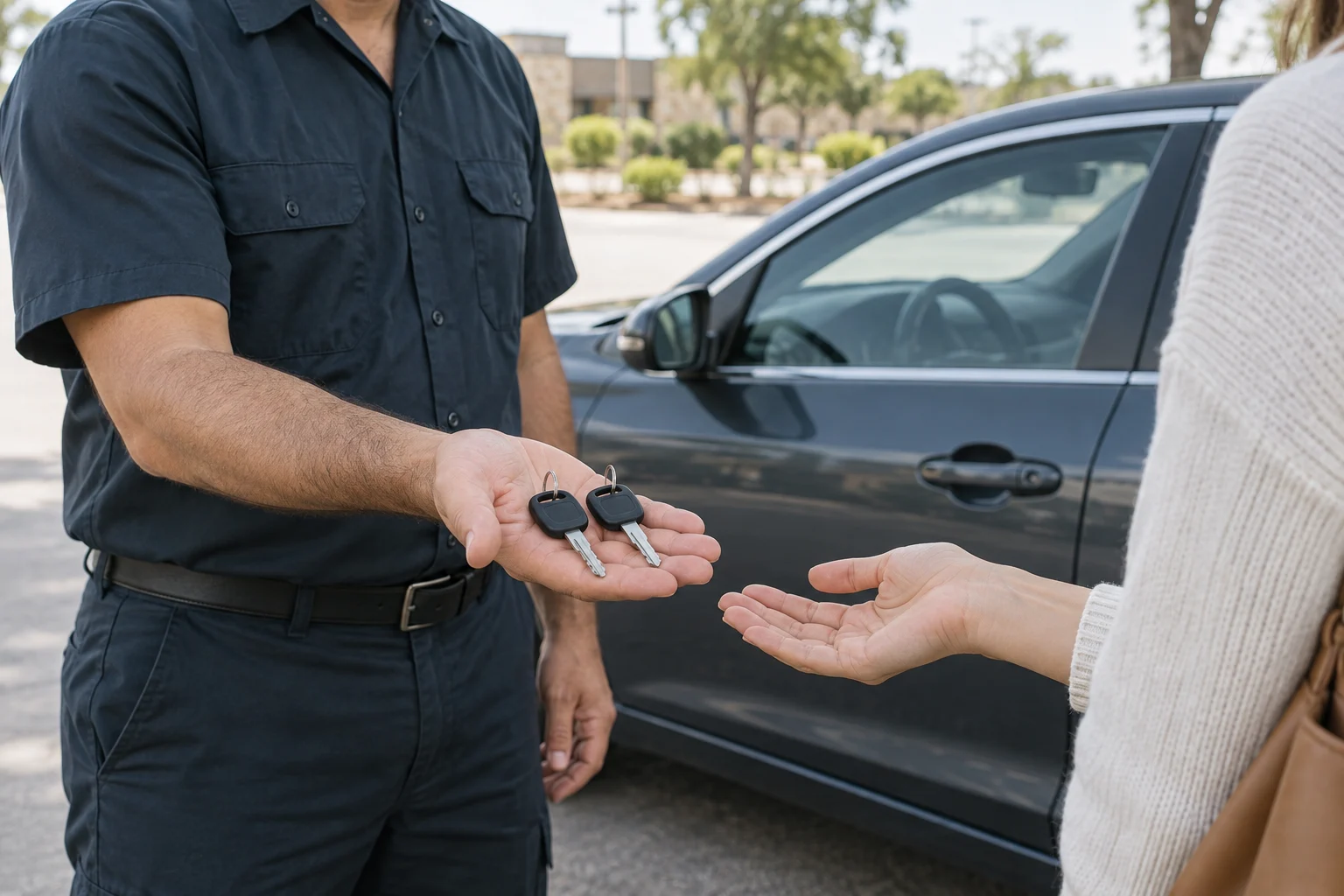
Before relying on the replacement, test the functions included in the quote using the vehicle's instructions: supported mechanical entry, remote buttons and starting. If an emergency blade is part of the package, confirm it is correctly supplied and tested. Keep a tested spare separately from the everyday key.
Sources and further reading
- Car Connectivity Consortium's certified-product directoryCar Connectivity Consortium