

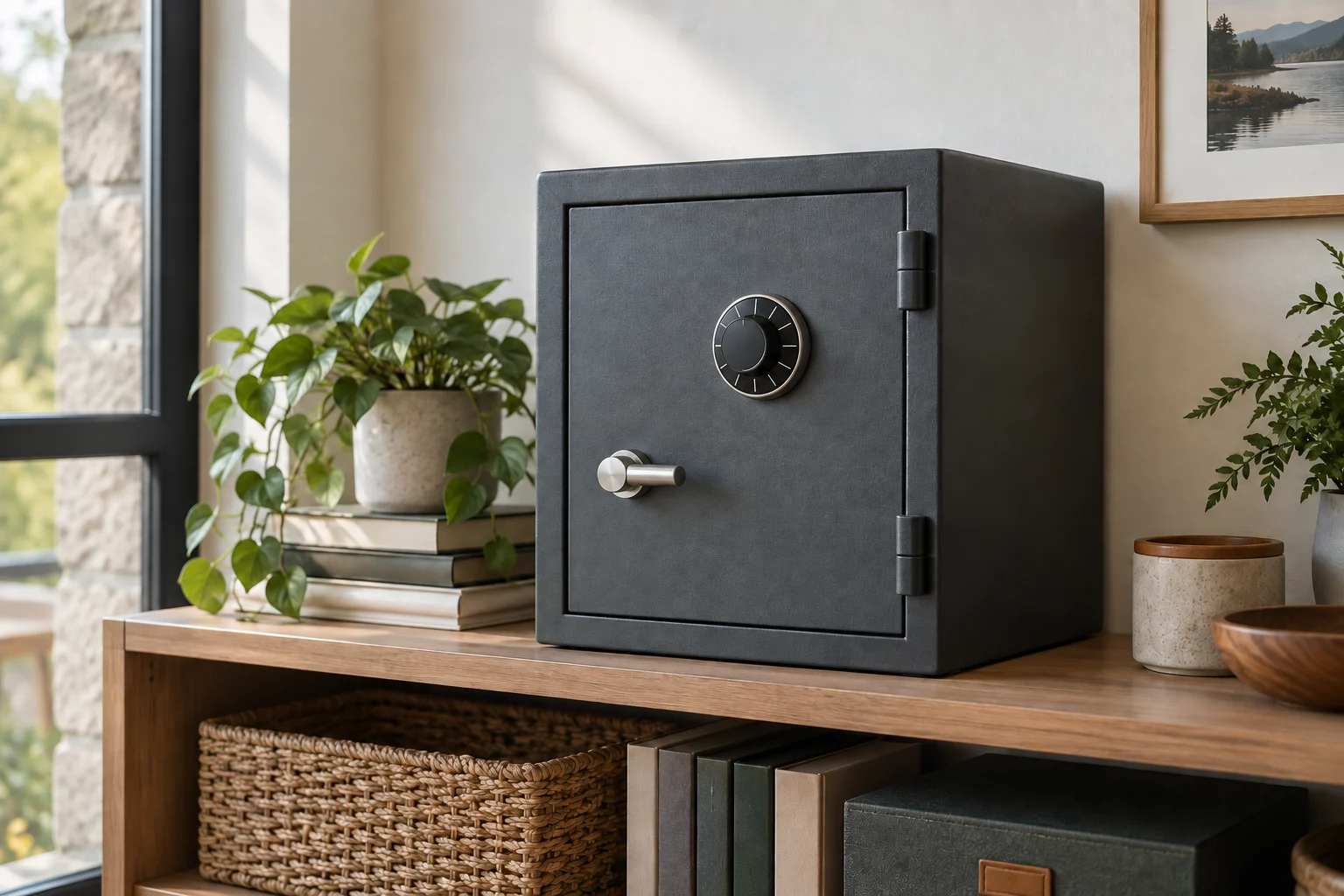
If a safe will not open, stop forcing the handle and identify the safe and lock. A lost combination, a depleted battery and a mechanical fault require entirely different checks. The original manufacturer instructions are a better starting point than a generic reset video or a destructive opening trick.
In this guide
Identifying the safe and the symptom
A document fire box and a burglary-resistant safe may have different protection goals, locks and repair options. The label and model matter more than weight or appearance. Identify the exact product before treating it like another safe.
Before trying to turn the dial or pry the door, observe what the safe is actually doing. The cause of a lockout often dictates the next step.
| Symptom | Possible issue to report | Next step |
|---|---|---|
| Keypad is dark and makes no sound | Depleted batteries or disconnected internal power | Check the manufacturer instructions for external battery replacement or a backup power terminal. |
| Keypad lights up and beeps, but the handle will not turn | Incorrect code entered, penalty lockout mode active, or boltwork binding | Follow the model instructions for any delay or approved check; stop repeated attempts and do not force the handle. |
| Mechanical dial stops abruptly or feels unusually loose | Internal component failure or slipped dial ring | Do not force the dial. A specialist needs to inspect the mechanism. |
| Key turns but the door remains locked | Worn key, damaged internal component, or secondary lock engaged | Check if a secondary electronic code or dial combination is also required. If not, the lock mechanism may need professional inspection. |
Start with the safe model and symptom
The manual and manufacturer are better first references than a guessed opening method.
- Reported issue
- Scope check
- Authorization
Further reading: SentrySafe: model-specific manuals, SentrySafe: battery guidance
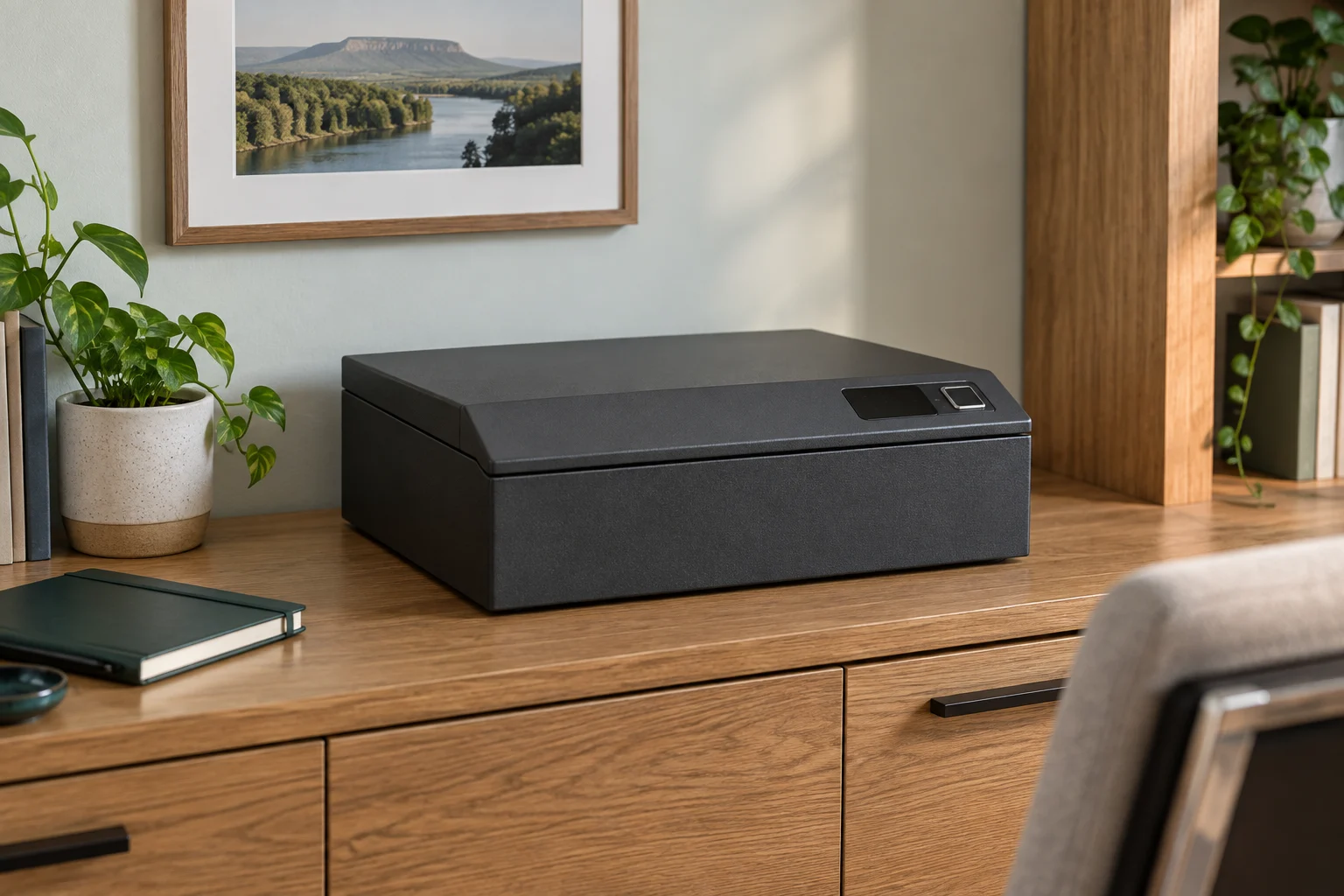
A safe with a fingerprint reader
Check the instructions for your model
Find the external model or serial label if it is accessible. These labels are usually on the side, back, or bottom of the container. Follow the maker's specific instructions for the correct dialing sequence or battery replacement.
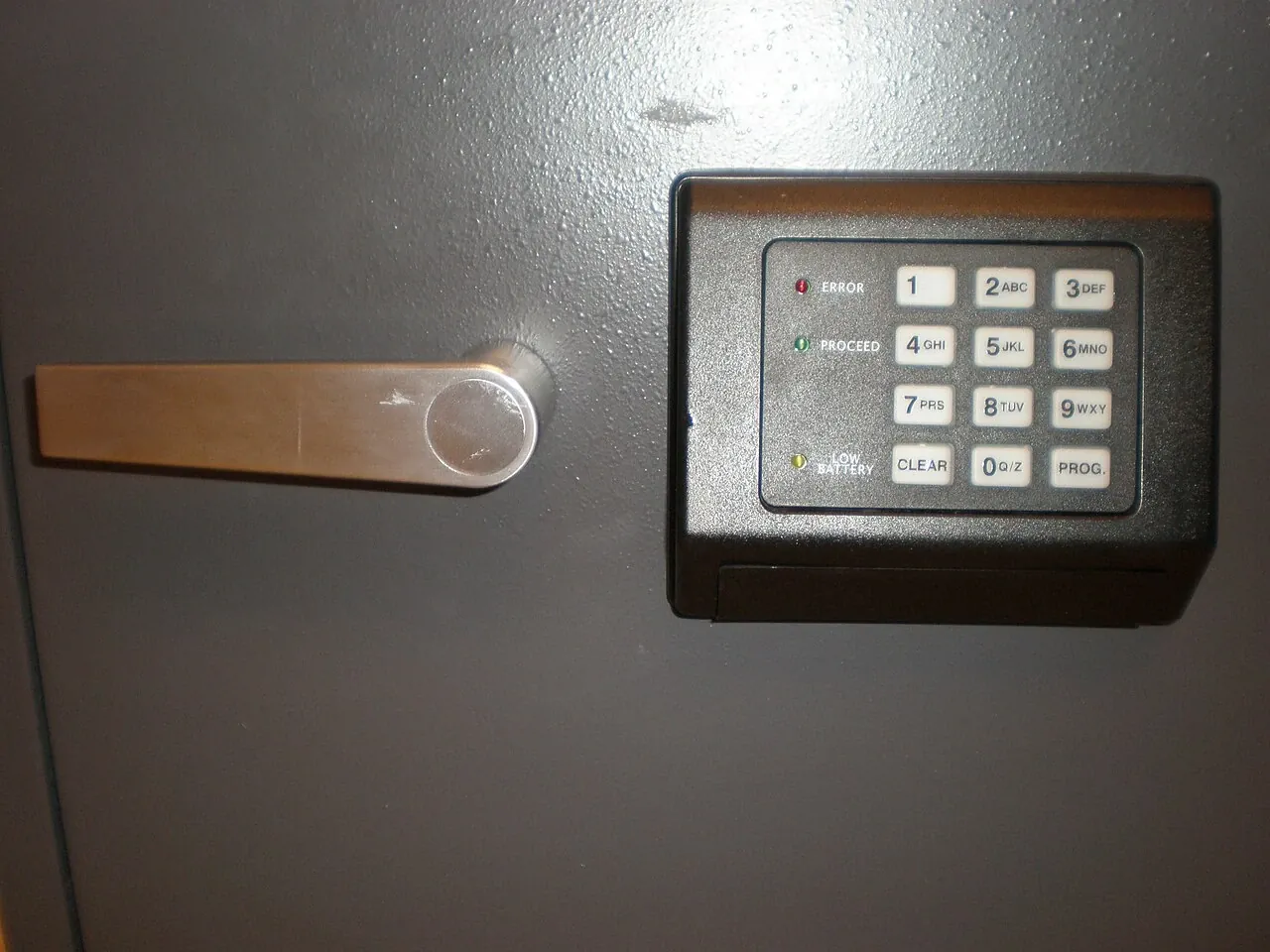
Many electronic safe locks require a name brand, heavy duty alkaline nine volt battery to supply the necessary peak voltage to retract the locking mechanism. A low battery might have enough power to light the keypad and beep, but not enough to pull the internal locking bolt. Battery compartments and approved backup-power arrangements vary widely. Do not attach power to an exposed contact or remove a keypad housing unless the original instructions explicitly say to do so.
For example, SentrySafe provides model-specific manuals and battery guidance. Those instructions apply only to the listed products, not to every electronic safe on the market.
If a code has been entered incorrectly several times, check whether the product imposes a time delay. Repeated guessing may keep you waiting longer by resetting the penalty timer. Use a backup key only if it is the intended key and the correct procedure for that specific safe.
Read the safe's own instructions
Ask the manufacturer about recovery
If the battery is fresh and the instructions do not help, the manufacturer may have a combination recovery process. Have the model number, serial number and proof of ownership ready, then ask their support team which documents are required.
Recovery requirements vary by manufacturer and product. Ask what identification, ownership proof and records are needed and whether any original code would still apply. A changed user code is a separate issue from recovering factory information.
Ask the manufacturer about the current process and expected timing. If access is urgent, explain that when requesting specialist assistance rather than assuming a recovery service can meet the deadline.
What to photograph before requesting help
If manufacturer recovery is not an option, you need to describe the safe to a specialist. Clear photographs help a technician determine the exact lock model and the container construction.
Photograph the outside, lock face and accessible brand or model labels without moving a heavy container. Those details help identify the product but may not establish every internal component. Share serial details privately with the chosen provider.
You do not need to list private contents to ask about a service. Simply explain whether the keypad responds, whether the handle moves and what happened right before the failure. Mention any prior attempt to force, pry, or drill the container.
Safe access without guessing
Identify
Find the accessible model or serial label and describe the symptom.
Recover
Check the manufacturer's instructions and authorized support process.
Scope
Ask a specialist about possible damage and testing before work begins.
Record the safe model
Agree on the opening and repair scope
A specialist should assess the likely method and explain possible damage before starting. Opening a safe and restoring it to full working order are two different tasks.
The opening method depends on the safe, lock and fault. Do not assume a particular symptom means manipulation or drilling is required. Have a qualified specialist explain the proposed method, potential damage and repair options before authorizing work.
Ask whether the quote covers access alone, replacement parts, and the labor to install a new lock and repair the safe wall.
If destructive work is necessary, ask how the safe will be repaired and whether the manufacturer or qualified specialist considers its required protection preserved. Filling an opening does not automatically restore a fire or security rating. Replacement may be worth comparing with the repair.
After access is restored
After access, follow the safe's instructions for testing the lock with the door open before securing it again. Do not assume every model uses the same handle or bolt-test sequence.
Follow the product instructions for changing a combination and storing recovery details. Keep backup keys or combination records somewhere secure outside the safe, and follow the specified battery and maintenance schedule. Use only the battery brand and type specified by the lock manufacturer, as voltage drops can cause electronic locks to malfunction.
For an Austin request, call (512) 777-0021 to confirm safe-opening assistance for the specific model involved. 512 Locksmith has served Austin for more than a decade. Availability and the appropriate specialist need to be checked before scheduling a visit.
Sources and further reading
- model-specific manualsSentrySafe
- battery guidanceSentrySafe
- FireKing safe keypad photograph by BrokenSphere (CC BY-SA 3.0)Wikimedia Commons
- Creative Commons Attribution-ShareAlike 3.0 licenseCreative Commons