

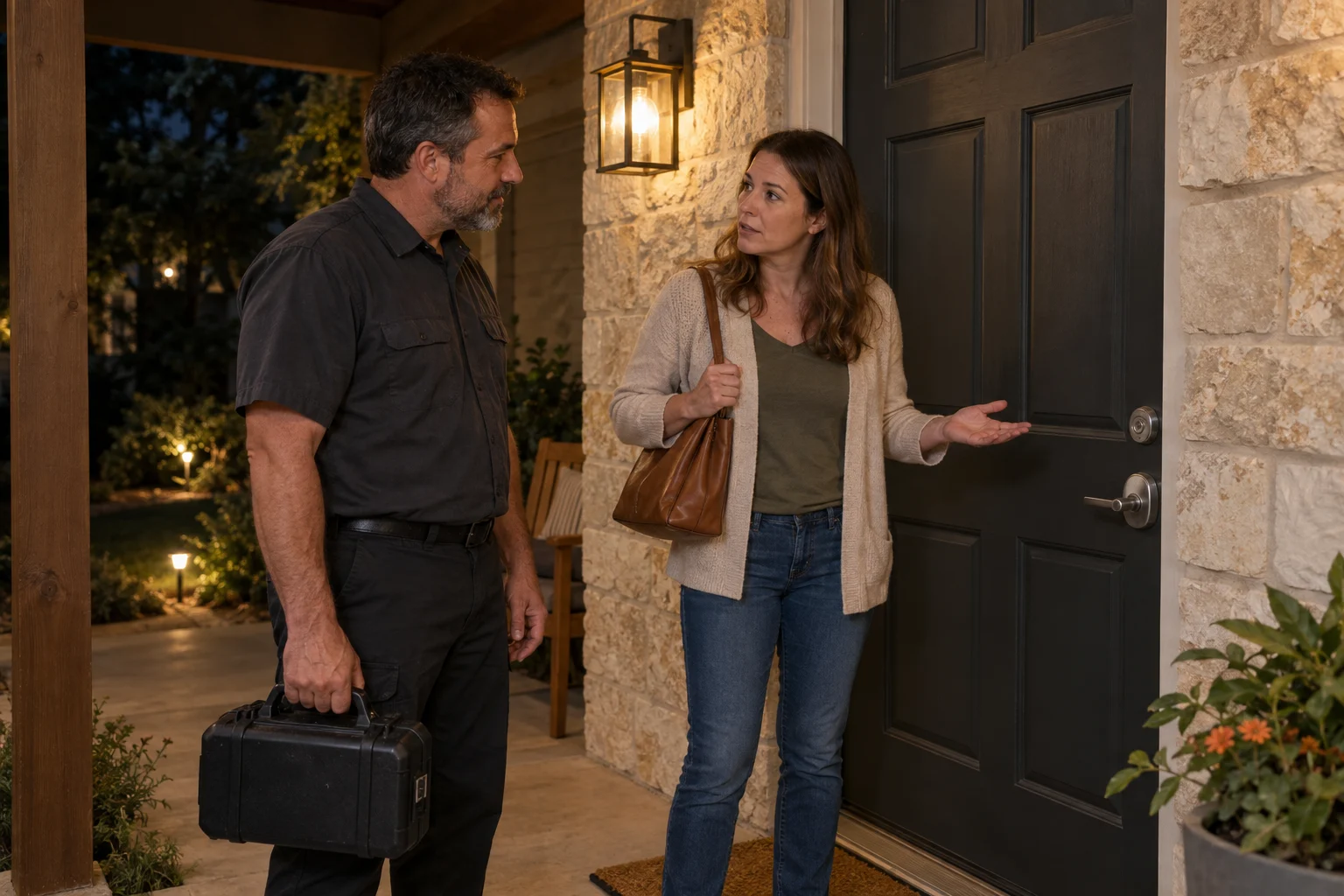
Check your property's lockout instructions and contact the landlord, leasing office or emergency maintenance line. A roommate or an authorized spare-key holder may also be able to help. If someone is in immediate danger, call emergency services first.
In this guide
Immediate options for an apartment lockout
When you realize you are locked out, you generally have a few distinct paths to get back inside. The best choice depends on the time of day and your property management structure.
Contact property management
Your first call should usually be to your landlord or the leasing office. Your lease or resident handbook may describe whom to contact. Large apartment complexes often employ on-site managers or dedicated maintenance staff who hold master keys to the building. During standard office hours, the leasing staff can typically let you in.
However, relying on property management has drawbacks. If you are locked out after hours or on a weekend, the availability and policy may differ from office hours. Ask for the current options and any fee. Many properties also charge a specific lockout fee for sending staff to your door. You should check your lease agreement to understand exactly what your property charges for this service.
Check alternative entry points
Before calling for help, confirm that you are truly locked out. Check another normally accessible door that you are authorized to use. Do not climb through windows, balconies or unsafe openings. Contact any roommates who might be on their way home, or reach out to friends or family members who hold a spare key.
Contact a licensed locksmith
A professional locksmith provides a direct way back inside when management is unavailable or too slow. Confirm the locksmith's availability and explain that it is a rental. The provider may need to coordinate with management and verify your authority before opening the unit.
To use this service, you must prove your residency. A legitimate locksmith will not open an apartment without confirming you live there. Ask which documents are acceptable, such as identification and evidence of residency or management authorization. Explain if your ID is locked inside or has an old address so the provider can tell you how verification will work.
Know who can authorize entry
Apartment access starts with the resident and the property rules.
- Reported issue
- Scope check
- Authorization
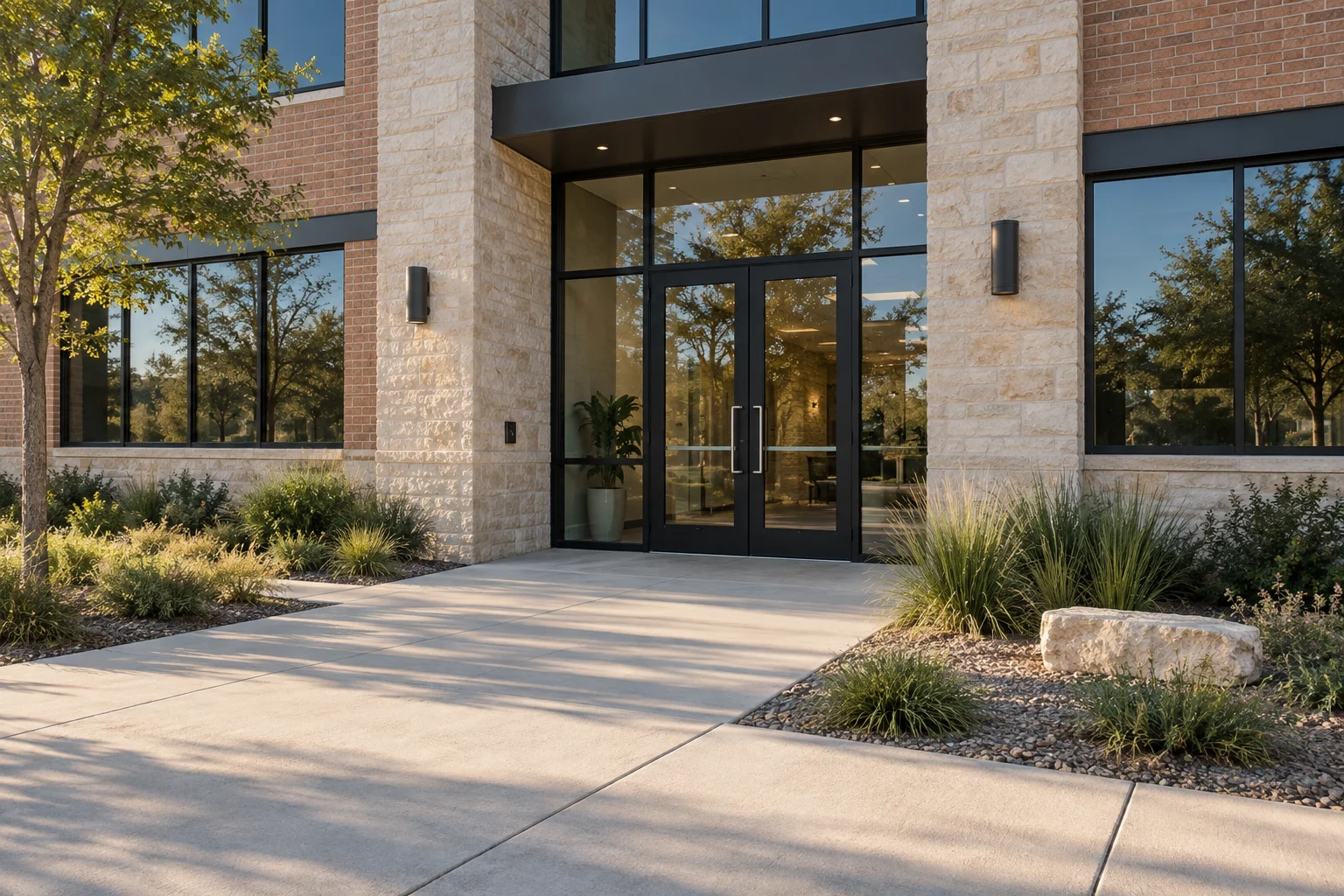
Shared building entrance
Rules regarding changing apartment locks
The rules for altering apartment locks are strict. In the vast majority of cases, you cannot change the locks, rekey the cylinders, or install additional deadbolts without explicit written permission from your landlord. Check the applicable lease terms and law rather than assuming every access arrangement is the same.
Under the Texas Property Code, landlords are required to provide functional locks and must rekey the exterior doors between tenant turnovers. Specifically, Chapter 92 generally requires the landlord to rekey the locks no later than the seventh day after the tenant turnover date, though specific exceptions apply. The official Chapter 92 text also addresses permission, requests and exceptions. Seek qualified legal advice for a dispute or unusual circumstances.
If you feel your current locks are inadequate, submit a formal written request to your landlord asking for an upgrade. Some management companies will permit you to install a smart lock or keypad provided you supply them with the master code or a physical override key, but you must negotiate this before modifying the door.
Confirm lock-change authority
Understanding the costs involved
Lockout expenses vary widely based on who performs the service and when it occurs. If you use your property management team, the cost might be waived during business hours, and a different fee may apply after hours. Confirm the actual policy before booking.
If you hire a professional locksmith, the total quote will depend on the time of day, your location, and the complexity of the lock. Different lock conditions call for different methods. Ask the technician to explain the proposed approach, particularly if it would damage or replace hardware. When you call, the dispatcher will ask for details about the lock to provide an accurate estimate.
How to prevent future lockouts
A few simple habits can prevent you from standing in the hallway again. If your lease allows it, have a spare key duplicated. Give this spare to a highly trusted friend or family member who lives nearby. You can also ask your landlord if they permit secure lockboxes on the property.
Build a routine where you physically touch your keys before pulling the door shut behind you. If your apartment uses a digital fob or keycard, attach it to a bright lanyard or heavy keychain that is difficult to leave behind unnoticed.
What to do during a late-night lockout
Being locked out late at night requires prioritizing your personal safety. Move to a well-lit, secure area such as a building lobby, a populated common area, or a nearby open business. Call a 24-hour locksmith and let a friend or family member know your location and situation while you wait. Do not wait in dark stairwells or parking garages.
If you need assistance getting back into your apartment, contact 512 Locksmith at (512) 777-0021 for home lockout service in Austin. Confirm the required authorization, availability, proposed work and quote when you call.
Who can restore access?
Manager reachable
Ask for the approved lockout procedure and any fee.
After hours
Use the emergency contact and wait somewhere safe.
Outside help needed
Confirm permission, identity requirements and the full quote.
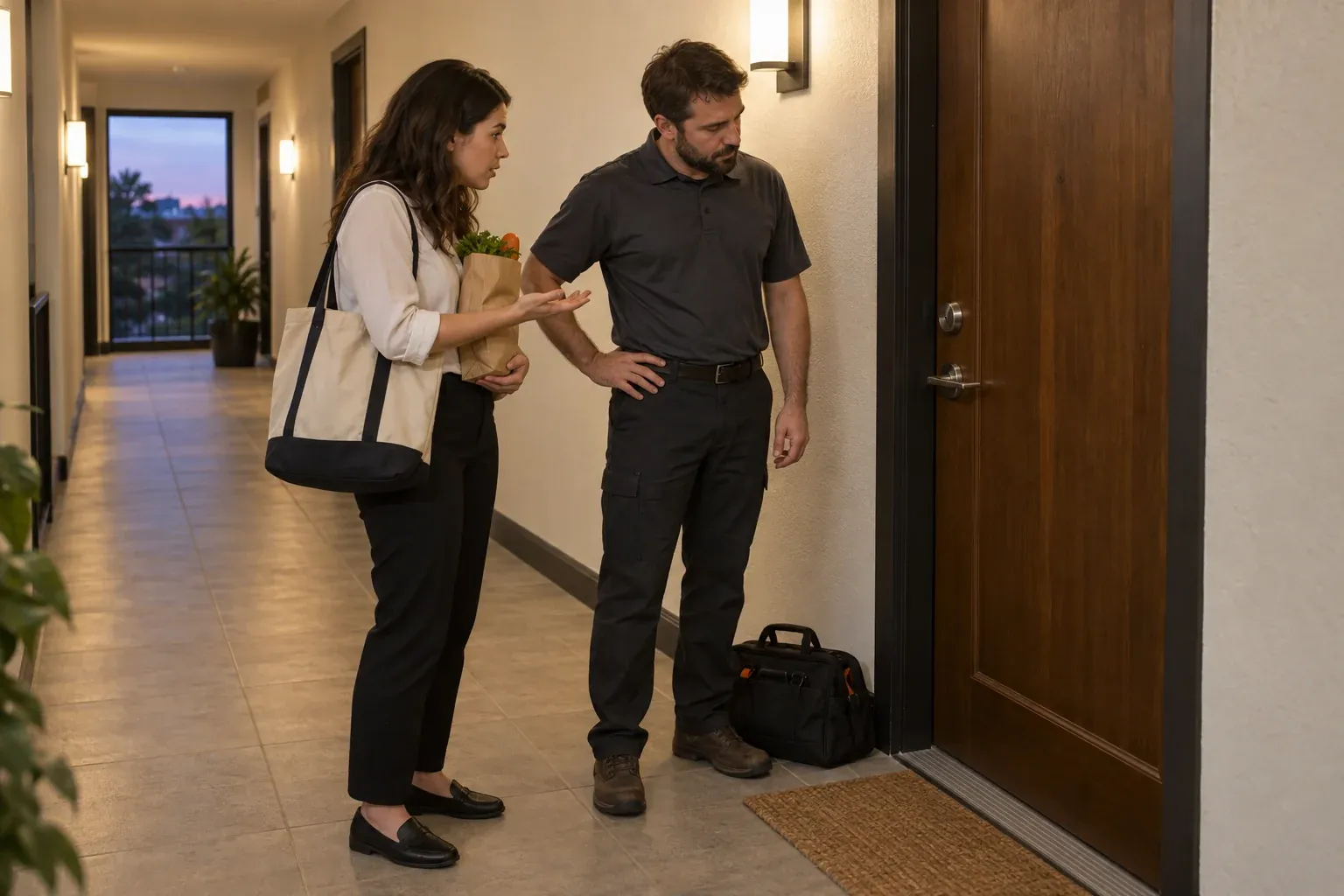
At the apartment door
Sources and further reading
- official Chapter 92 textTexas Legislature