

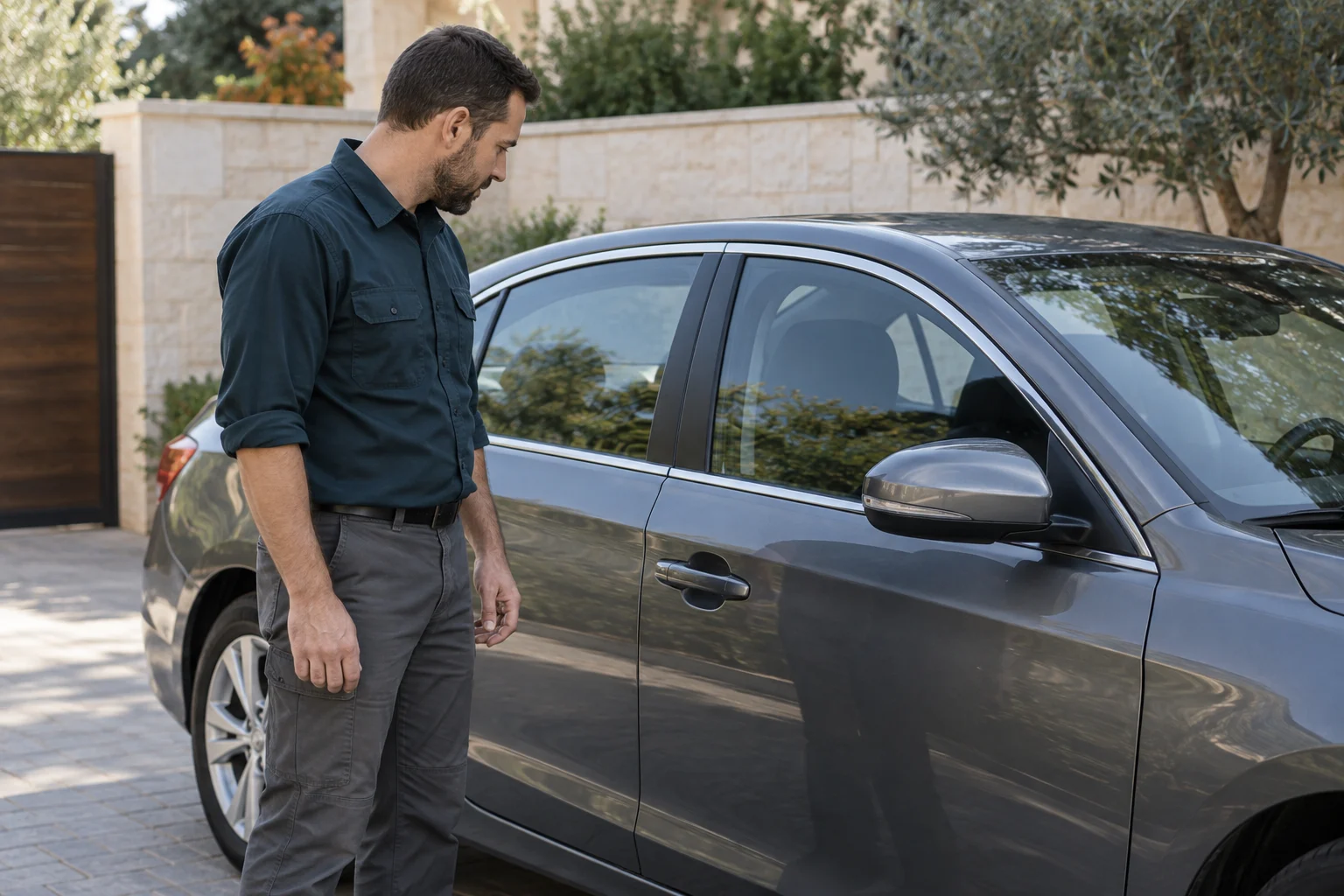
If a child is trapped in a hot vehicle or anyone is in immediate danger, call 911 first. For an ordinary lockout, check the safe access options already available to you before trying anything that could damage the car.
In this guide
Modern vehicle lock mechanisms
Door construction and locking systems vary by make, model and year. Improvised tools can damage seals, wiring, glass or lock components. A method shown on one vehicle is not a reliable guide to another.
Safe access methods to check first
Check accessible passenger doors without forcing them. Do not climb through a trunk or an unsafe opening. Try pressing the buttons on your key fob from multiple angles, as a weak battery might still transmit a faint signal. Check the manufacturer instructions for mechanical override keyholes, which are sometimes hidden beneath a plastic cap on the driver door handle. An open window is not a reason to insert tools or climb through it.
Start with approved access
Avoid turning a lockout into vehicle damage.
- Reported issue
- Scope check
- Authorization
Further reading: NHTSA: NHTSA's hot-car guidance
Vehicle keys seen inside a car
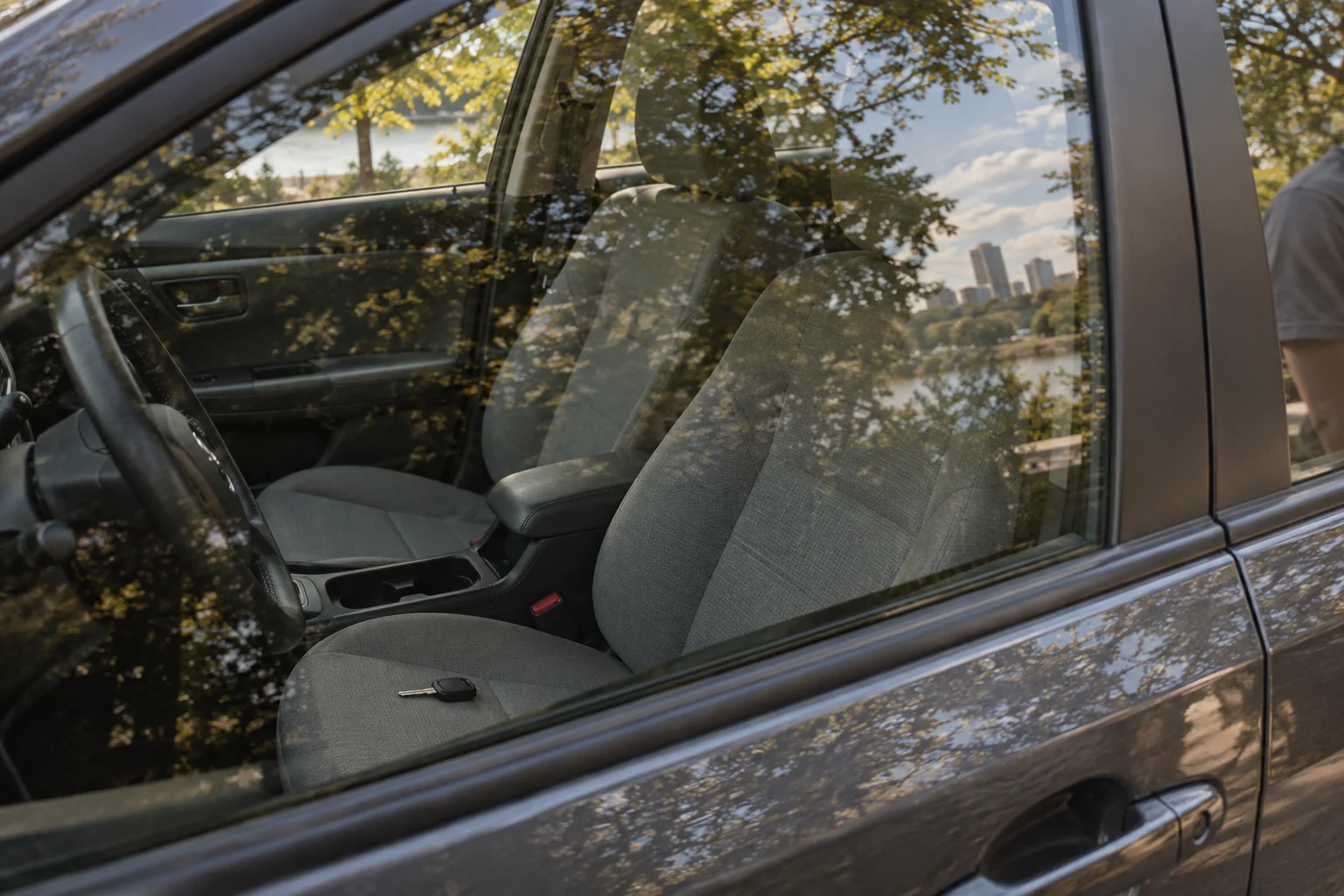
Remote and application based unlocking
Many vehicle manufacturers provide remote access applications. If you already set up the manufacturer's remote-access service, check whether your vehicle and subscription support unlocking. New enrollment may not be possible while locked out; contact the provider for the exact requirements. These services rely on an active cellular connection to the vehicle. If you are parked in an underground garage or a rural area with poor reception, remote unlocking may fail even if you have an active subscription.
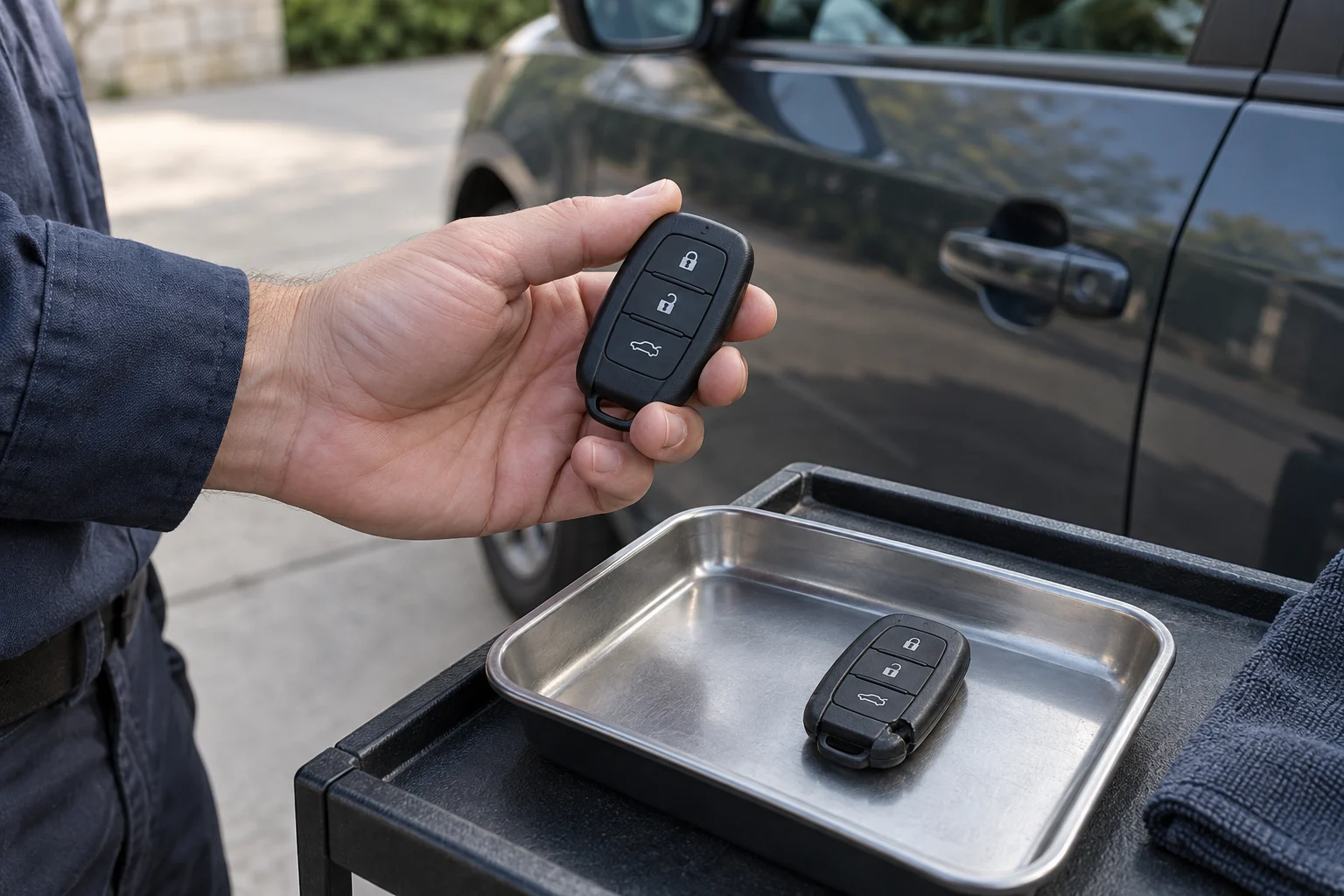
Check the remote
Assessing roadside assistance coverage
Review your insurance policy or credit card benefits. Many providers include roadside assistance programs that cover basic lockout services. Be prepared to wait, as dispatch times vary based on your location and driver availability.
Methods that risk vehicle damage
Using a coat hanger scratches glass and tears rubber seals. It rarely reaches the actuator on newer models. Forcing wedges into the door frame warps the metal and damages the exterior paint. Smashing a window requires professional replacement and creates a significant hazard from shattered glass inside the cabin.
Emergency situations and hot vehicles
Do not wait for visible distress when a child is trapped in a hot vehicle. Call 911 and follow the dispatcher's instructions. See NHTSA's hot-car guidance. Seek emergency help for an animal at risk as well.
Choose safe access
Immediate danger
Call 911 and follow the dispatcher's directions.
Existing access
Check normal passenger-door, manufacturer-app or spare-key options.
Help needed
Compare roadside coverage and a qualified locksmith for your vehicle.
Working with a professional locksmith
A technician should assess the vehicle and explain the proposed entry method and any risks. They evaluate the lock mechanism to determine the safest entry method. When comparing quotes, ask what the final price includes. A phone estimate should clarify the trip charge, the labor rate for your specific vehicle, and any potential surcharges for after hours service. Be cautious if a quoted price changes significantly upon arrival without a clear technical explanation.
If you need assistance in Central Texas, professional car lockout service is available. Contact 512 Locksmith at (512) 777-0021 to discuss your situation.
Professional vehicle access
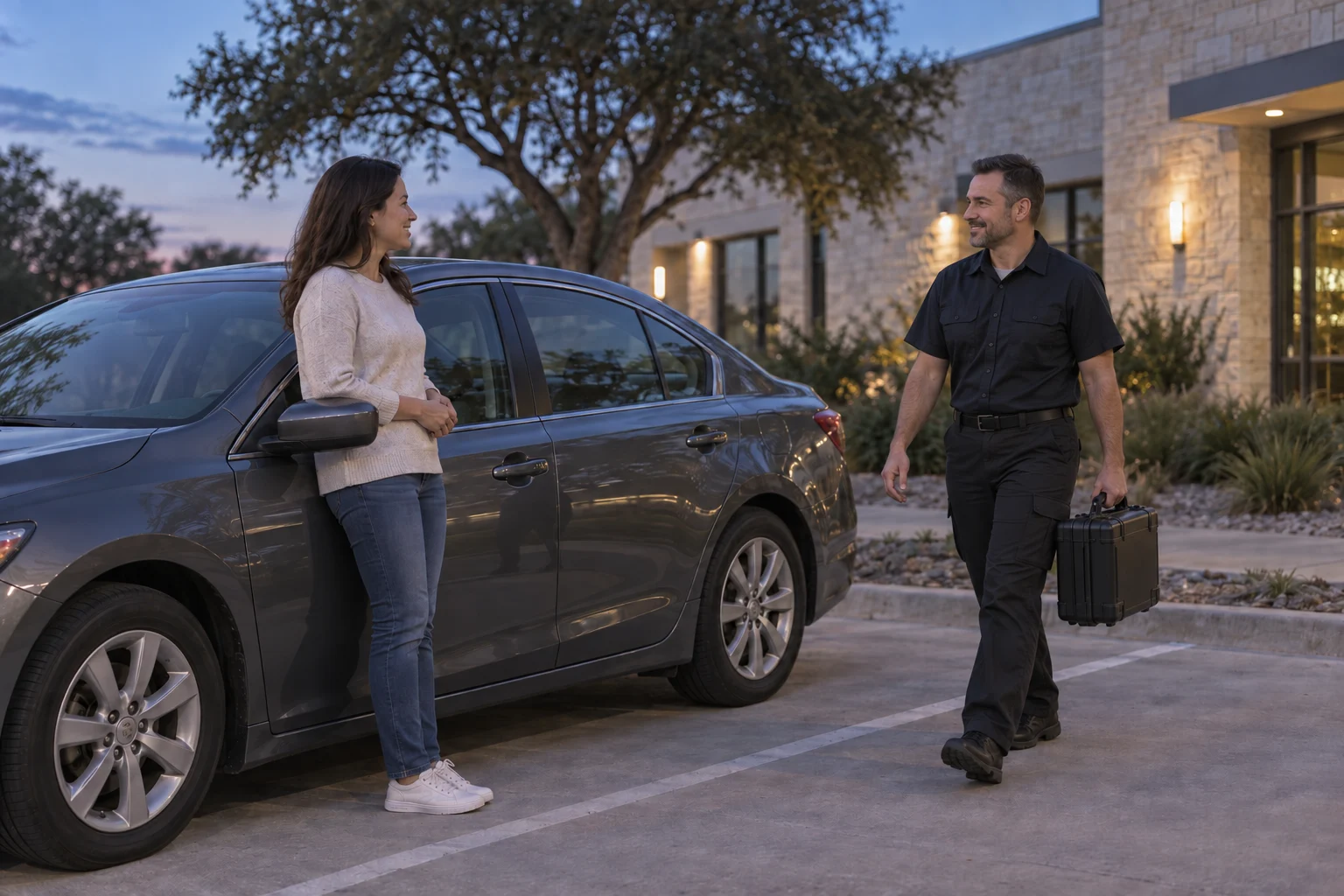
Have the right details ready
Tell the provider your exact location, vehicle make, model and year, and whether the key is inside or lost. Mention parking height restrictions or limited access to the vehicle. Ask what proof of ownership is needed and explain if your documents are locked inside.
If a key is missing, say so before booking. Opening the car and supplying a key that starts it are separate services. Confirm which one you need and whether the provider supports your vehicle.
Sources and further reading