

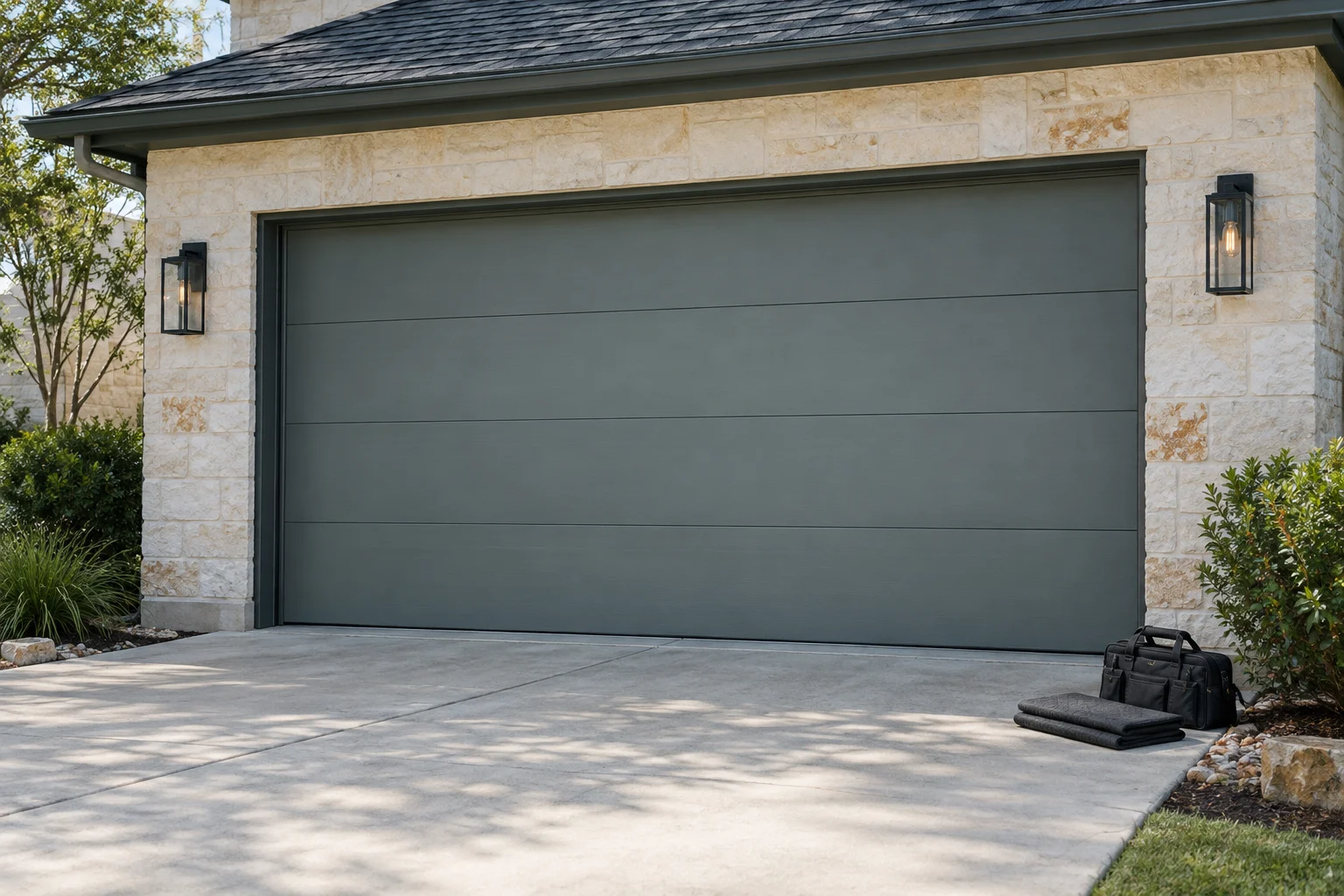
An attached garage offers a direct path into your home. Review the vehicle entrance, any side door and the door between the garage and the house separately. Many homeowners focus on their front doors while leaving the garage vulnerable to forced entry or unauthorized remote access.
In this guide
Common security vulnerabilities
Automatic garage doors rely on an emergency release mechanism that allows you to open the door manually during a power outage. Keep that safety function usable. Do not tie off, remove or modify the release as a security measure. Ask a garage-door professional about compatible protection for the exact door and opener.
Another common vulnerability involves remote controls left clipped to car visors. If someone accesses a vehicle parked in your driveway, they gain both your address from the vehicle registration and a direct remote to open your garage.
Garage access has more than one route
Review the overhead door, side entrance and door into the house separately.
- Entrance
- Access gap
- Separate controls
Garage-to-home door
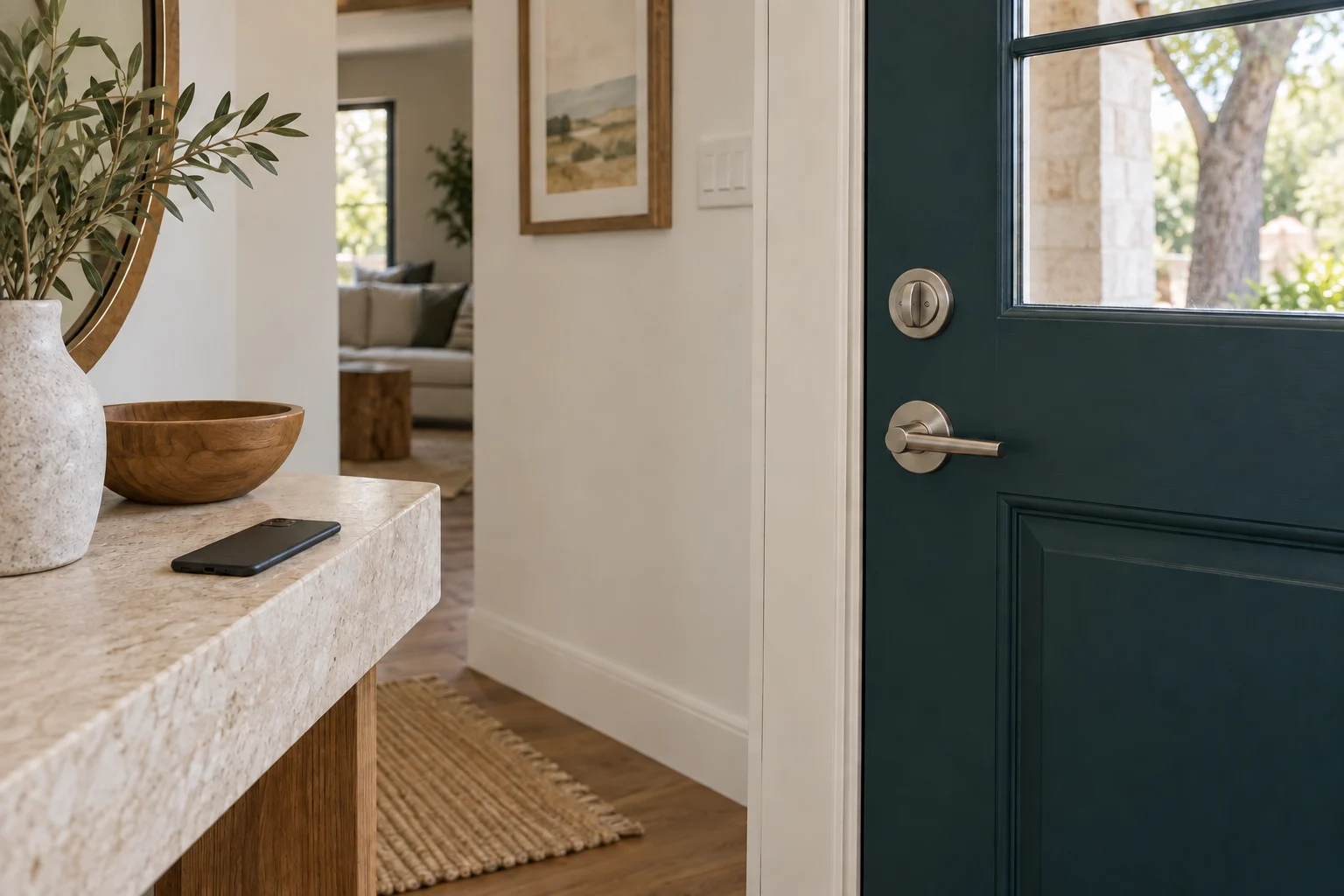
Securing the interior and side doors
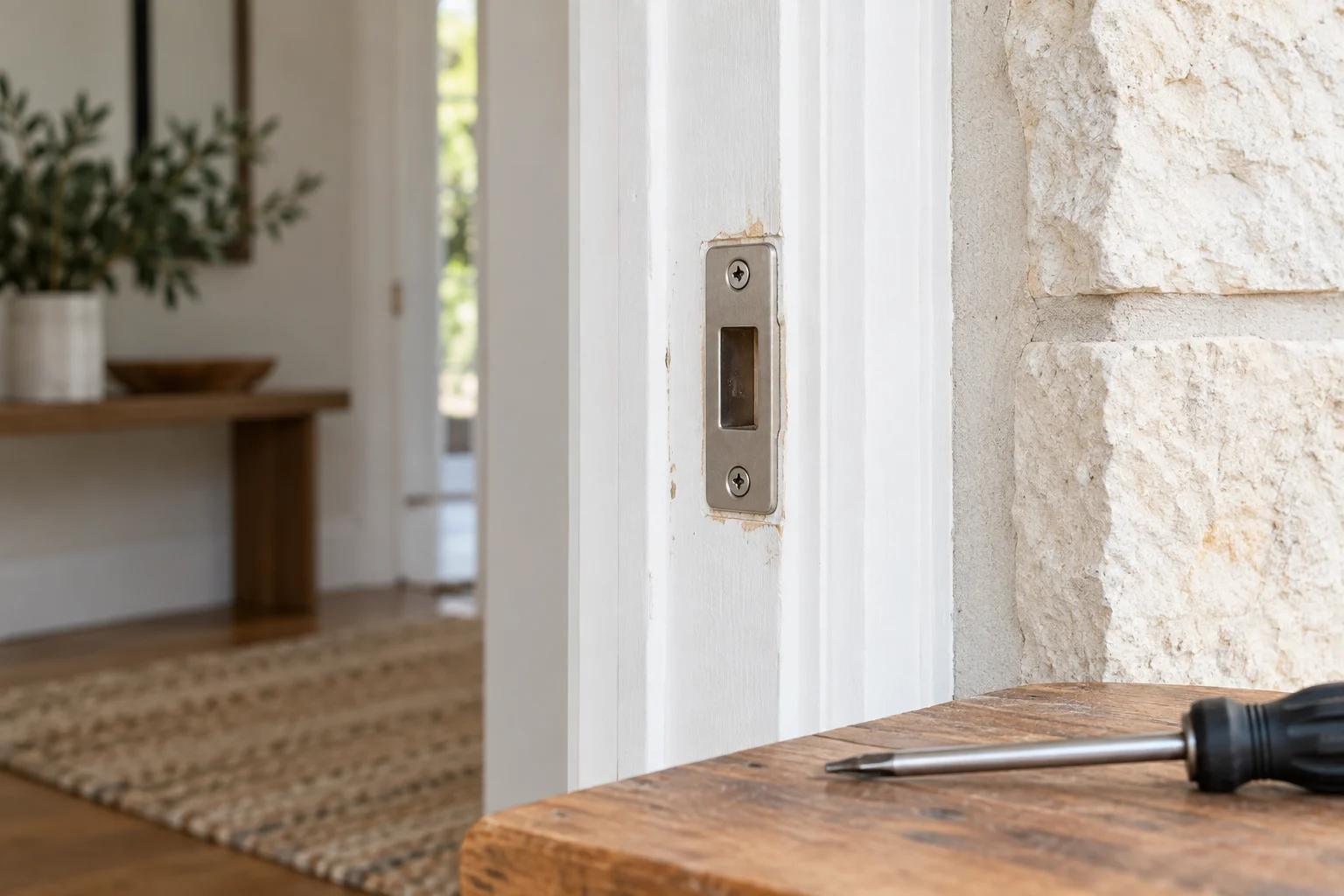
The door connecting your garage to your living space is an exterior boundary. Have its condition, locking hardware and any applicable fire-separation requirements checked. The door, frame, closer and lock need to work together; adding a lock is not a substitute for repairing a damaged assembly.
If your garage has a side pedestrian door, inspect its hardware. Check whether it closes and secures properly and whether the frame is damaged. Ask about suitable hardware while preserving safe exit from the garage.
Strike plate at the garage-to-home door
Evaluating your garage door opener
Older garage door openers often rely on fixed radio codes. Modern systems use rolling code technology, which generates a new code every time you press the button. This addresses some risks associated with older fixed-code systems, but no opener makes the whole property theft-proof.
If your opener is outdated, consider replacing it with a newer model that includes built-in security features. Many current systems allow you to monitor the door status through a smartphone application, sending an alert if the door remains open after a certain time.
If you are concerned about your current setup, ask about an assessment for garage door repairs, including whether your door and opener are supported. We also handle smart lock installations for the interior access door to help you monitor who enters your home.
Adding a lock to an automatic door
A manual slide lock can conflict with an automatic opener if the opener tries to move the door while the lock is engaged. Check the opener's instructions before fitting or using additional hardware. Use only an arrangement compatible with the complete system.
An integrated automatic garage lock is different from a manually operated lock. Do not assume the two can be substituted. You can find the exact opener instructions in the Chamberlain Group manual library for Chamberlain and LiftMaster products.
Lost remotes and a change of ownership
When you take over a property, inventory the remotes, wireless keypads and connected accounts. Follow the manufacturer instructions to remove old access and set up your own. Buying another remote does not necessarily disable one that is missing.
If you use an app, check who holds the administrator account and which other users still have permission. Confirm that the app reports the door's actual position before relying on a notification.
Garage access review
Main door
Check normal movement and the opener instructions.
House entry
Review the connecting door's latch, frame and applicable requirements.
Old access
Remove missing remotes or accounts using the manufacturer's process.
Separate access codes
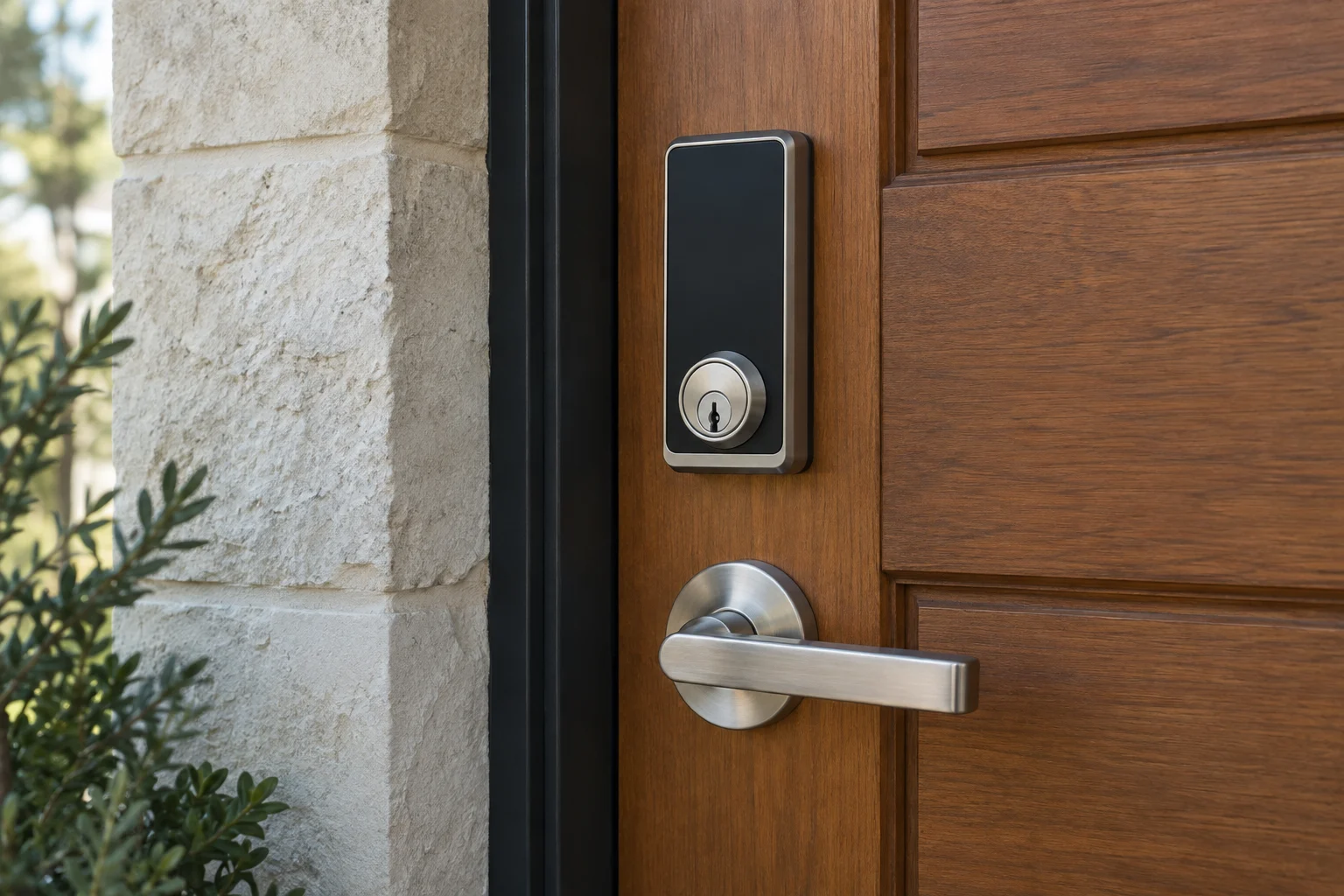
Checks you can make without adjusting the mechanism
Look for visible gaps, loose pedestrian-door hardware or damage around the frame. Test access controls only when the door is operating normally and the opening is clear. If the door is crooked, a cable is loose or a spring appears broken, stop using it and arrange an assessment. Do not adjust springs or cables yourself.
Sources and further reading
- Chamberlain Group manual libraryChamberlain Group