

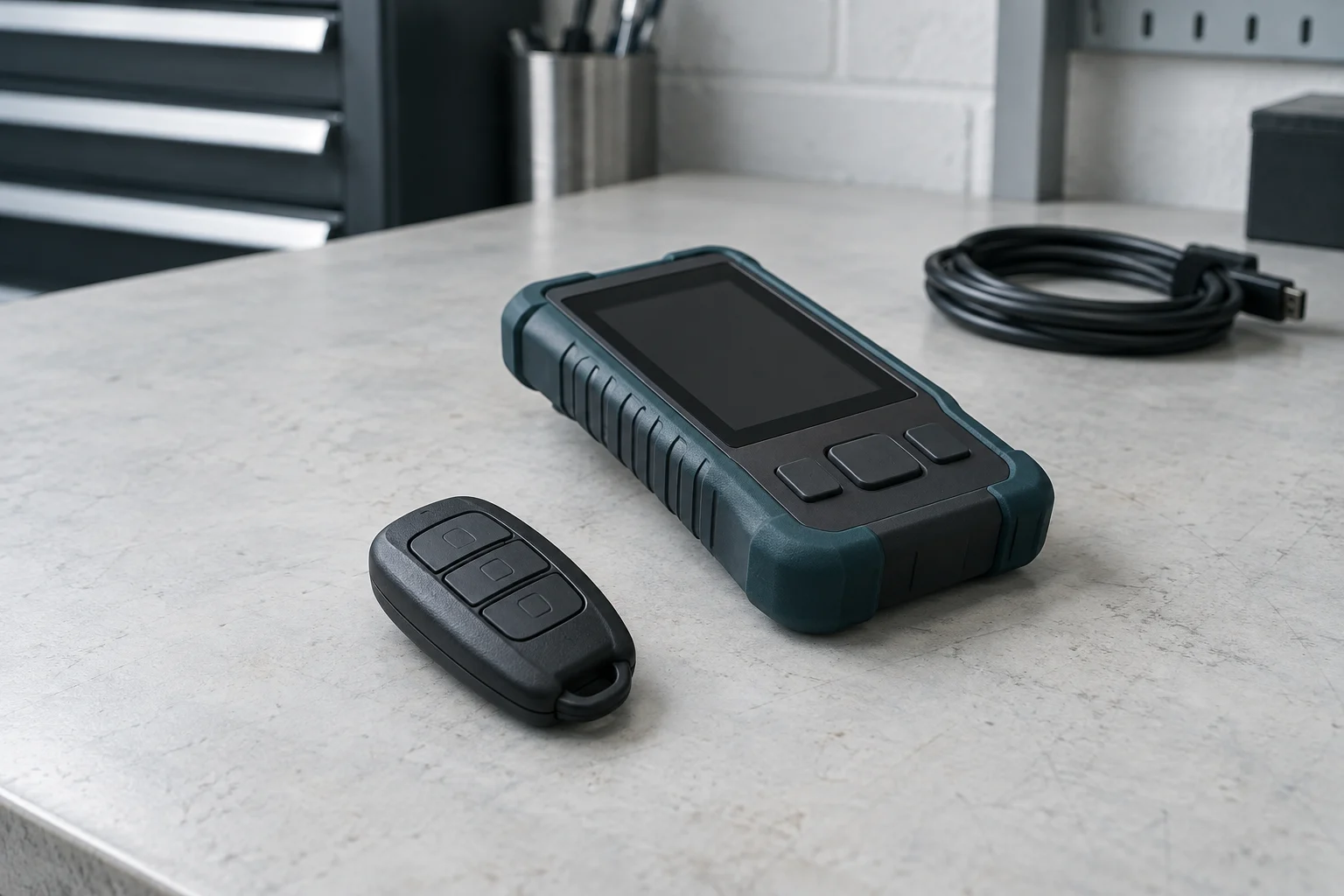
Some keyless vehicle systems can be targeted electronically, but the risks and available protections vary by model and software. A remote that stops working does not, by itself, show that someone hacked it. Start by separating an access problem from a suspected theft or missing key.
In this guide
Know which keyless feature you have
A button remote, a proximity key and starting authorization are not one function.
- Button command
- Proximity signal
- Vehicle response
Further reading: Thatcham Research: Thatcham Research's car-security guidance
Damaged vehicle key fob
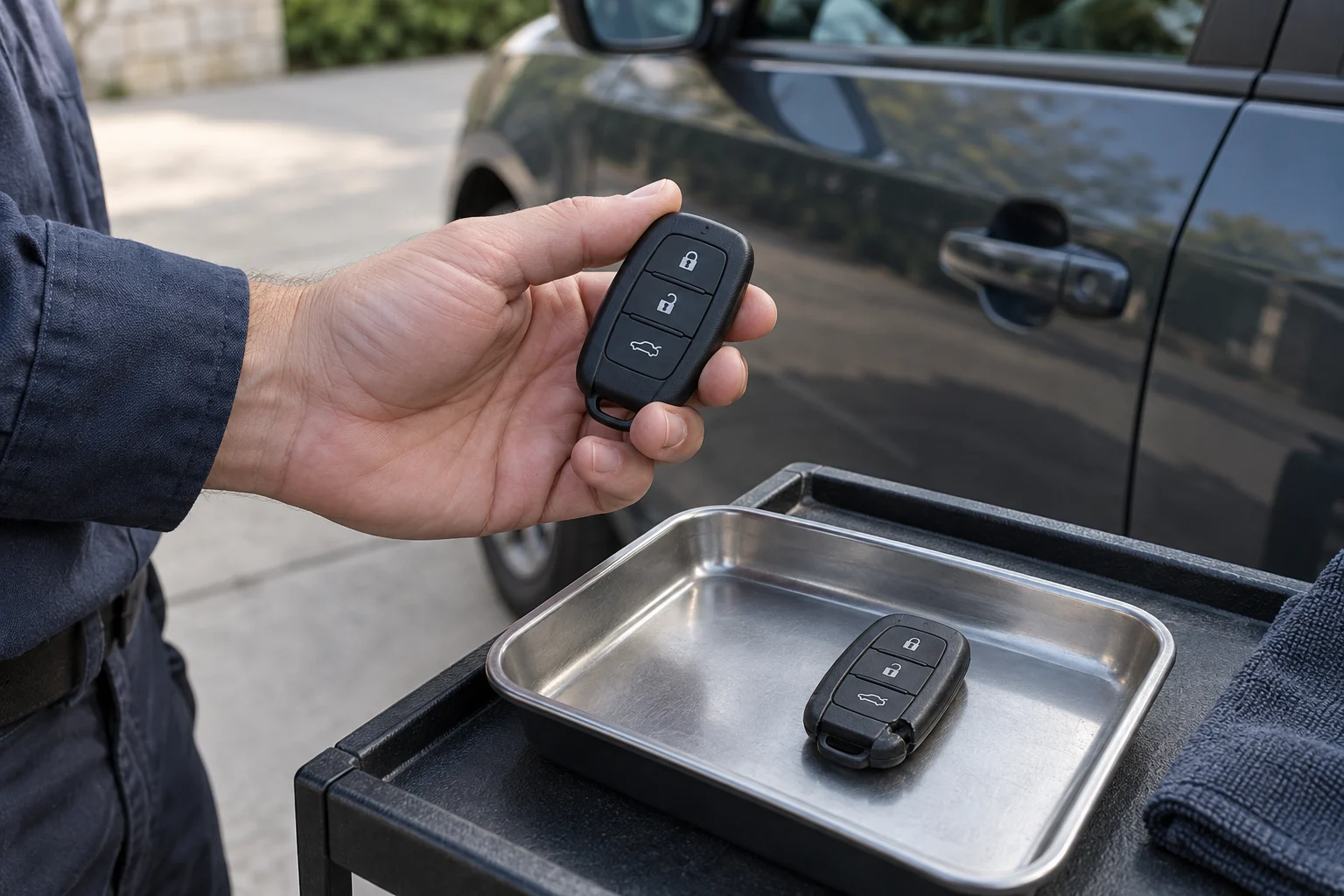
What is relay theft?
Relay theft involves extending communication between a vehicle and its authorized key so the vehicle treats the key as nearby. It does not require someone to take the physical fob first. The useful response is to reduce unwanted communication and follow protections suitable for the vehicle.
Thatcham Research's car-security guidance discusses steps owners can take. The advice is about reducing risk, not a guarantee that a particular accessory will prevent every kind of theft.
How can you reduce the risk?
- Keep the main and spare keys in a considered storage place, rather than beside an outside door.
- If you use a signal-blocking pouch, test it with your own vehicle and check it again as it wears. Close it as directed and keep other keys away during the test.
- Check whether the manufacturer supports disabling passive entry or using another security setting.
- Install applicable manufacturer security updates and protect any vehicle-app account.
- Check the doors are secured when you leave rather than assuming a button press completed the action.
West Yorkshire Police also recommends a signal-blocking pouch for appropriate keyless systems. Compatibility and testing matter: carrying a pouch that does not block your fob's signal adds little protection.
Check the actual keyless setup
Type
Confirm whether the car uses passive proximity entry.
Protection
Follow the manufacturer and trusted theft-prevention guidance for that system.
Lost key
Ask about removing its authorization on your exact vehicle.
Know the key system
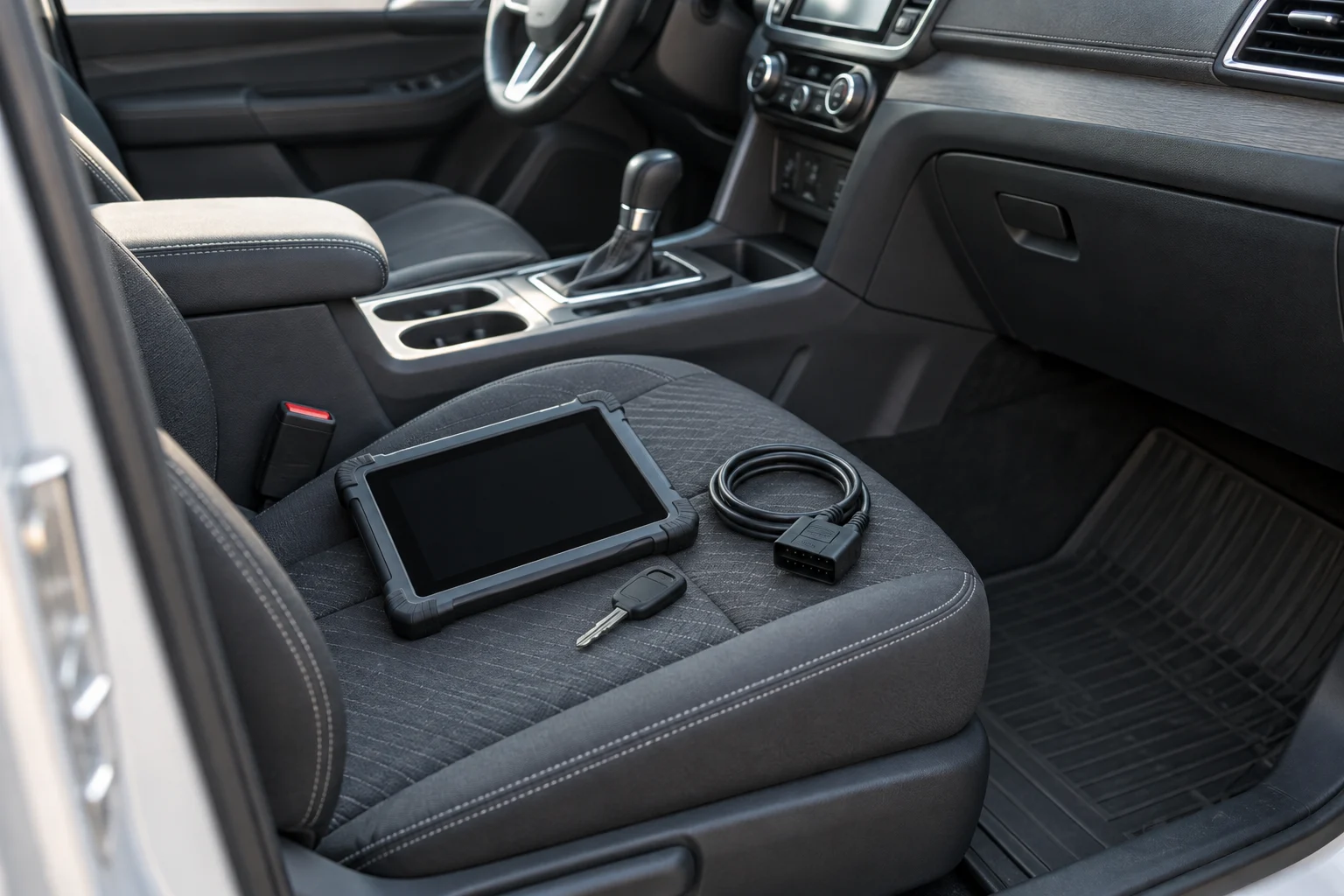
What if a key is lost or stolen?
Ask the vehicle manufacturer, dealer or a qualified automotive locksmith how to remove the missing key's electronic authorization on your model. The process and supported options vary. Bring all remaining keys if the provider requests them.
Removing electronic access does not necessarily stop a mechanical blade opening a door. It also does not by itself solve a relay risk involving a key you still own. Discuss the actual situation so the proposed work addresses it.
What if the fob simply stopped working?
A weak battery, damaged button, worn case or vehicle fault can produce a failed remote. Note whether the spare behaves differently and consult the owner manual for battery replacement and backup entry. Avoid assuming the key needs programming solely because the remote buttons failed.
If the vehicle shows signs of attempted theft, document what you can safely observe and contact the appropriate authorities or insurer. Do not disturb suspected damage simply to test a theory.
For replacement key options, call (512) 777-0021. Give the make, model, year and what the key does or fails to do. The team can confirm compatibility, the required ownership documents and the quote before arranging service.
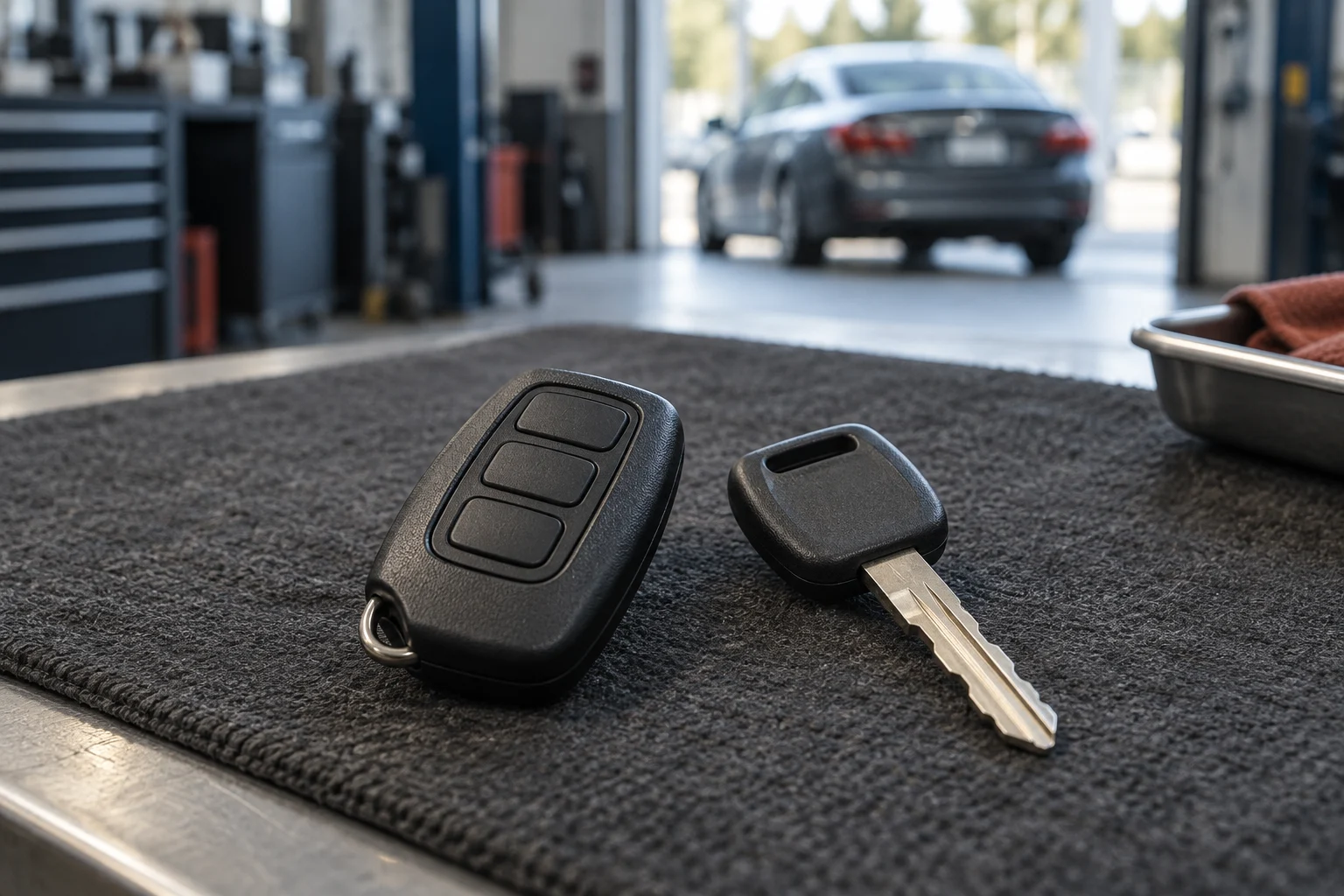
Remote and blade
Sources and further reading
- Thatcham Research's car-security guidanceThatcham Research
- signal-blocking pouch for appropriate keyless systemsWest Yorkshire Police