Where the resistance appears matters
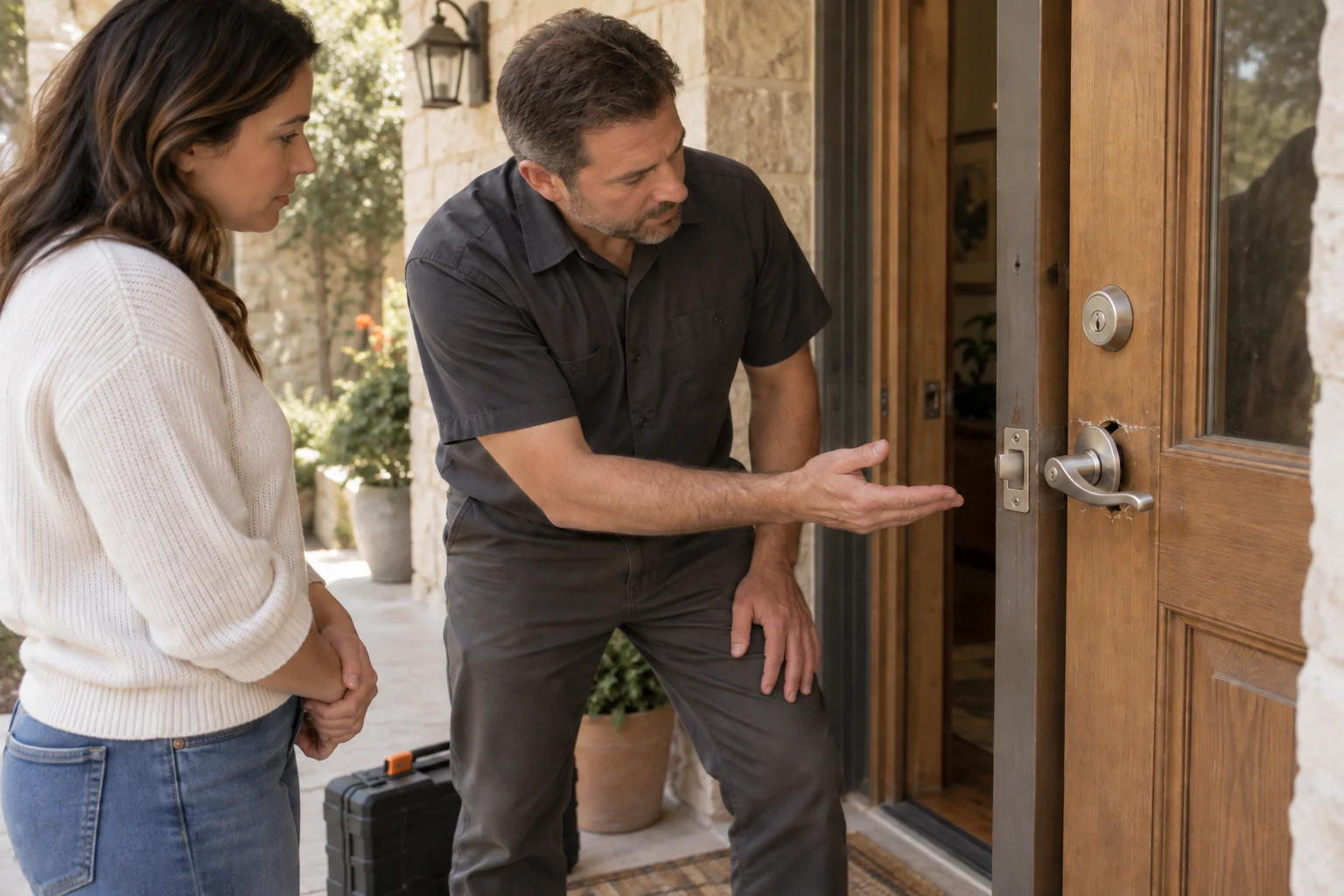
If the door rubs at one corner, the hinges, frame and door position need checking. If the door swings freely but the latch does not engage, the latch and strike relationship deserve attention. If the deadbolt only turns when the door is open, the lock may be meeting resistance in the closed position.
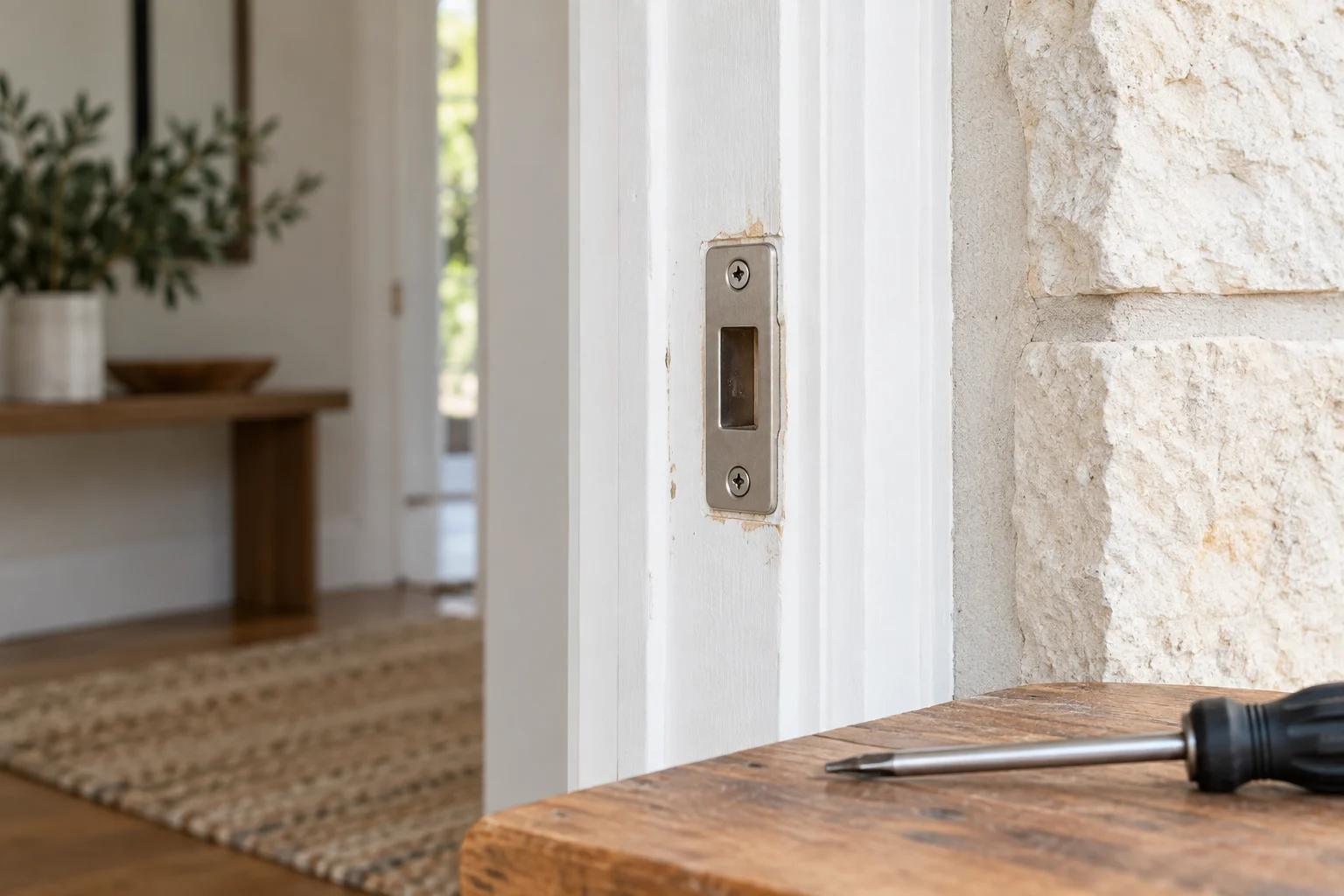
Manufacturer guidance points to the same checks. The Therma-Tru door troubleshooting guide links a door sagging out of square, with an uneven gap at the head, to the long top-hinge screws. It says to make sure those screws are "properly installed in the top hinge through the jamb to the stud." For a door that moves in and out when latched, it points to the strike plate.
These observations help define the repair, but they do not establish a single cause over the phone. Loose fixings, worn components, damaged material and movement in the opening can produce similar symptoms. We inspect the condition before recommending adjustment or replacement parts.
Stop forcing a binding key or repeatedly slamming the door to make it latch. That can add wear and damage without correcting the alignment. If the door cannot be secured, mention it immediately so we can discuss the urgent need.