

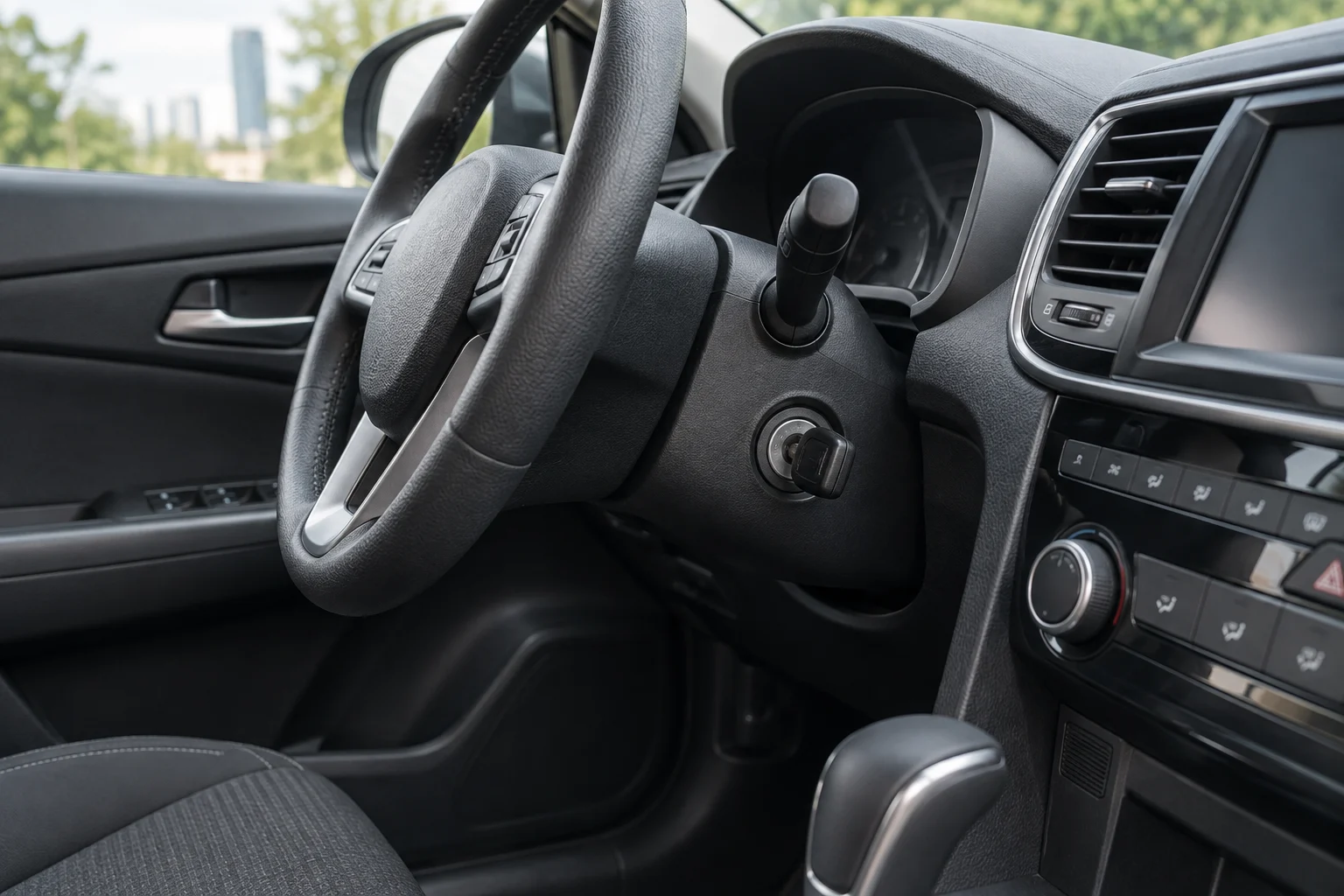
A key that resists turning needs a different assessment from an engine that cranks but will not start. Identify the exact fault before choosing between an ignition repair or a full replacement. Several different systems housed in the steering column can produce similar starting failures, and guessing the cause often leads to unnecessary part replacements.
In this guide
Diagnosing vehicle starting problems
Starting problems can involve the key, mechanical cylinder, electrical supply, starter, immobilizer or other vehicle systems. Describe the observation first rather than choosing a replacement part from the symptom alone.
| Observed symptom | Systems to assess | Assessment to discuss |
|---|---|---|
| Key binds, sticks, or requires jiggling to turn | Mechanical cylinder or key blade | Inspect key cuts and internal wafers for physical wear or damage. |
| Key turns smoothly, but dashboard stays dark and engine does not crank | Electrical ignition switch or battery | Check battery voltage, wiring continuity, and the switch behind the cylinder. |
| Engine cranks normally but will not start, or starts and stalls immediately | Immobilizer, fuel or other engine systems | Check dashboard security lights and scan for transponder communication errors. |
Component layouts vary by vehicle. A cylinder, electrical switch and key reader perform different jobs and are not always arranged together in one standard steering-column assembly.
Do not choose a part from one symptom
A no-start or stiff key can have more than one cause.
- Reported issue
- Scope check
- Authorization
Further reading: AAA: 14 reasons why your car will not start
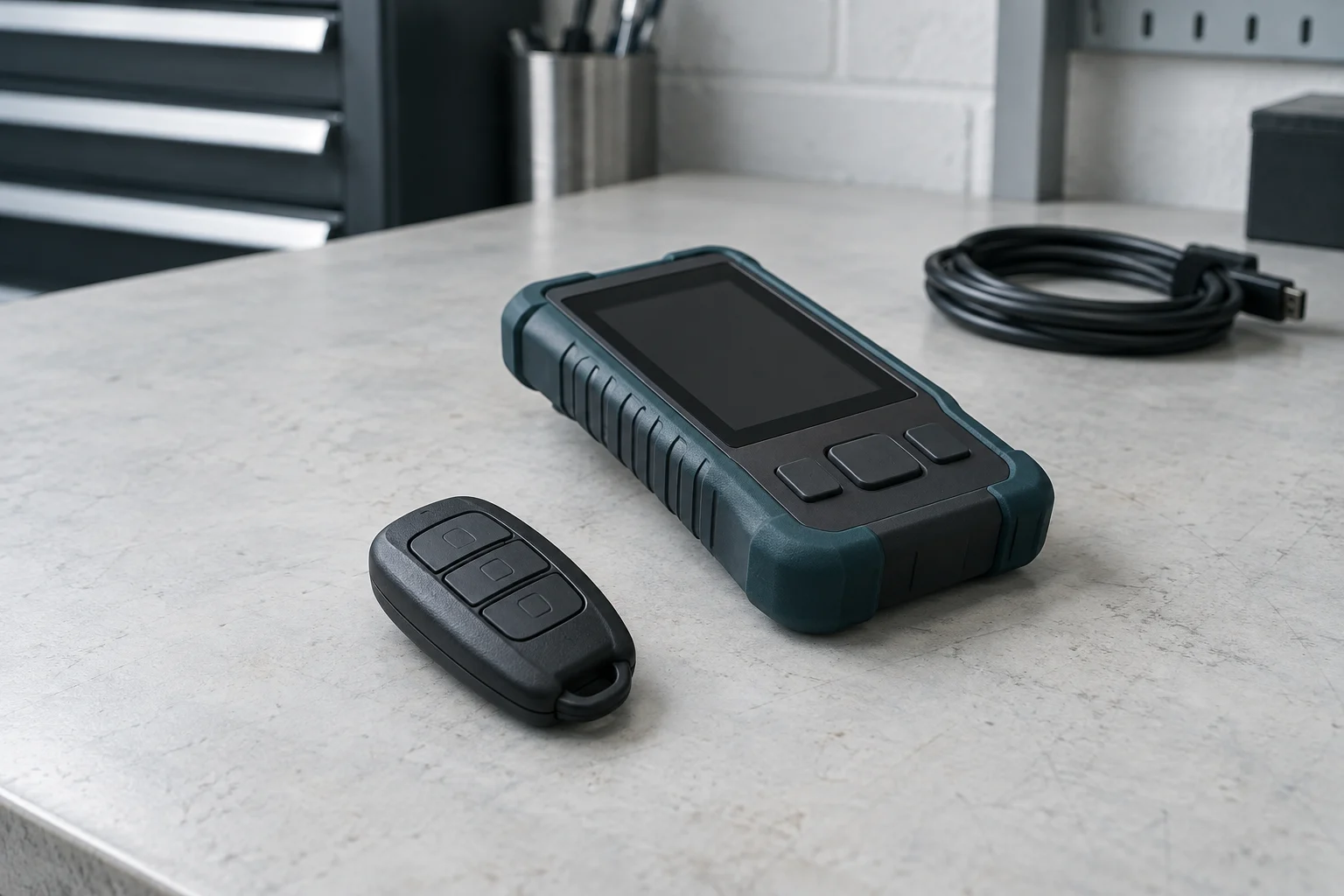
Key fob workbench
Mechanical cylinder wear and repair
A mechanical cylinder uses internal components matched to the key. Wear or damage can affect either one. A technician should assess the key and cylinder together rather than assuming every stiff key requires a complete ignition replacement.
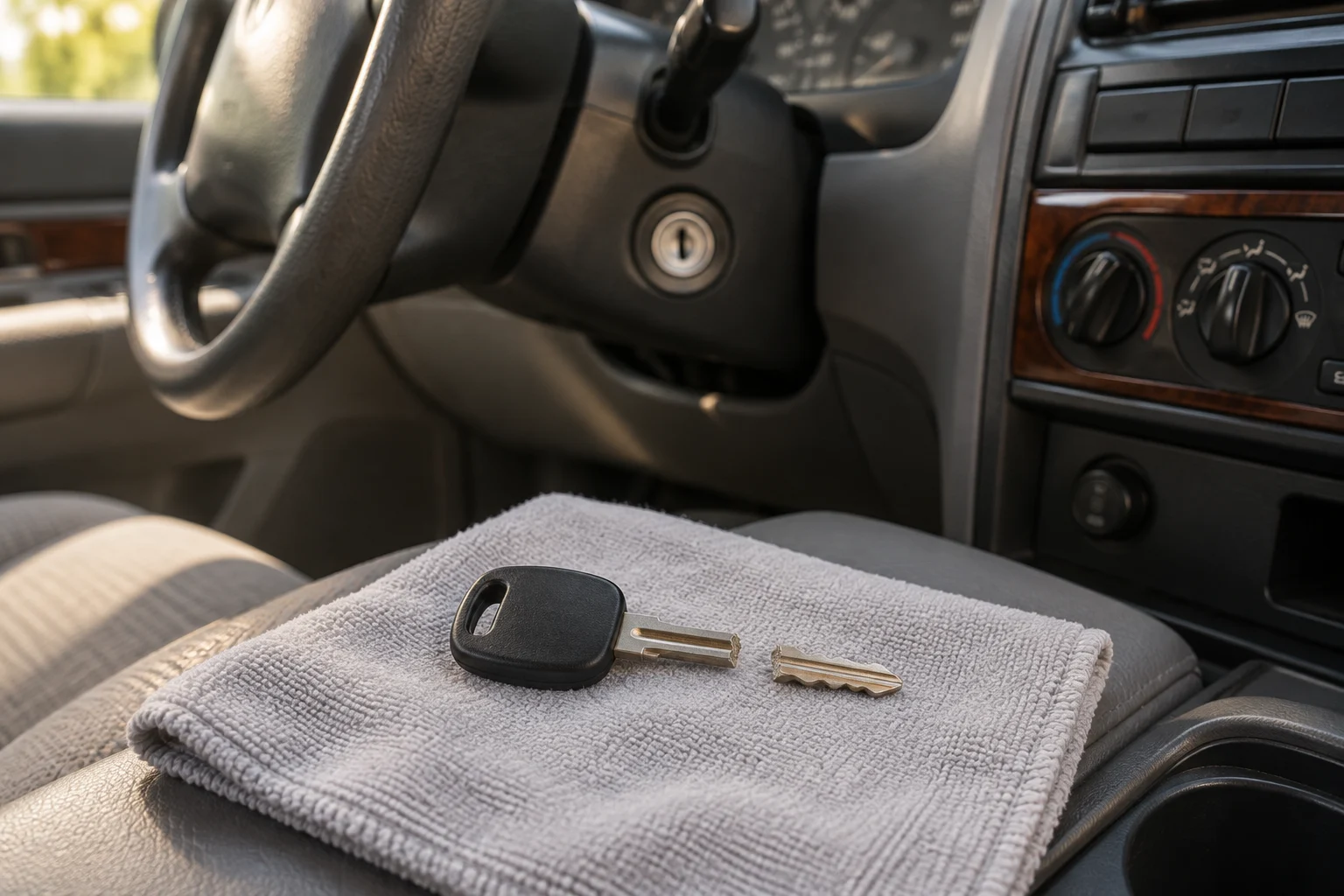
If you have to jiggle or force the key to turn it, stop. Applying heavy force can snap the key blade off inside the lock. Pumping heavy grease or oil into a sticking lock often traps dust and metal shavings, creating a thick paste that worsens the binding. Do not add lubricant unless your vehicle manufacturer explicitly specifies it for the ignition assembly. Lubricant cannot restore metal that has worn away.
Repairing a mechanical cylinder often involves removing the housing, cleaning out accumulated debris, and replacing the damaged wafers to match your existing key profile. A technician evaluates whether the cylinder can be successfully rebuilt or if the internal housing is too damaged, requiring a full replacement part.
Inspect the key as well
Electrical switch and wiring faults
Electrical starting components and their relationship to the mechanical lock differ by vehicle. Flickering lights, lost accessory power or a no-crank condition are useful symptoms to report, but they do not prove the ignition switch has failed.
Because starting-system designs differ heavily between manufacturers, a qualified technician may need to test the battery, relays, wiring harnesses, and the switch itself before recommending a replacement part. When discussing this repair, clarify whether the proposed work focuses on electrical diagnosis, mechanical cylinder repair, or key replacement.
Immobilizer and transponder issues
An immobilizer checks an authorized electronic credential. Key, reader and control-module arrangements vary, including conventional keyed and push-button systems. A warning light can be useful evidence, but the vehicle manual and diagnosis determine what it means.
A problem with the key's chip, the antenna ring, or the vehicle's computer can prevent starting even if the key turns perfectly. Often, a specific security light on the dashboard will flash rapidly or remain solid if the immobilizer is active. Resolving this requires ignition diagnostic tools to determine if the antenna has failed, if the key has lost its programming, or if a new component needs to be paired to the engine control module.
Consequences for your original keys
Ask how a replacement cylinder will affect your existing keys. Some parts or procedures may retain the current mechanical key pattern; others introduce a different one. Electronic starting authorization is a separate question.
Discuss whether compatible parts can preserve one-key operation for the doors and ignition. Reworking other cylinders may be an alternative, but it is not universally possible or necessary. Include the condition of the existing key and locks in that decision.
Repair quote boundaries
Mechanical fault
Ask what inspection found in the key or cylinder.
Electrical or immobilizer fault
Ask which provider can diagnose that system.
Replacement proposed
Confirm parts, programming, key matching and testing.
Keys after ignition work
Setting quote boundaries and booking a repair
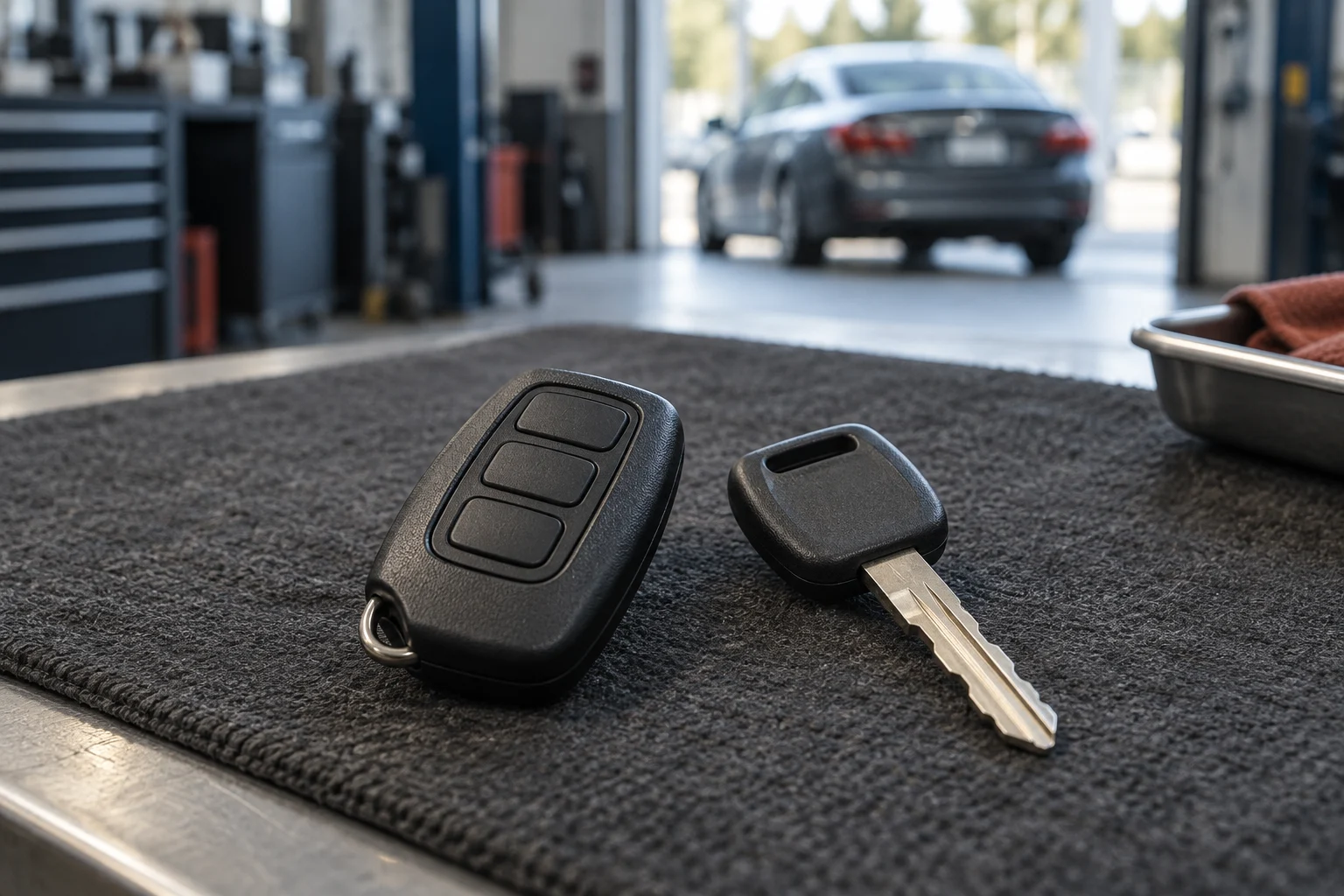
The cost to fix a starting problem depends entirely on the exact cause. When requesting an estimate, ask the provider to separate the quote into specific boundaries: the travel fee to reach your location, the cost of the physical parts, and the labor rate for installation and programming.
Clarify exactly what the quote covers. Does it include rebuilding your existing cylinder, or installing a new aftermarket unit? Does it include cutting and programming new transponder keys, or will you reuse your existing fob? Finally, ask whether your particular make and model can be serviced where it is parked, or if it requires dealership software, ordered parts, or a workshop environment. 512 Locksmith has been serving Austin for more than a decade (Texas license B07298601), and our dispatch is available 24/7 at (512) 777-0021 to discuss your vehicle's symptoms.
When to stop driving
If the engine stalls or the steering or ignition behaves abnormally while driving, stop safely and arrange appropriate roadside help. Do not continue driving to test whether it happens again. Describe the event so the provider can advise whether mobile locksmith work or a repair facility is appropriate.
Frequently asked questions
Can a worn ignition cylinder be repaired without replacing it?
Some serviceable cylinders can be repaired with suitable parts. Inspection determines whether that is appropriate and whether the existing key pattern can be retained. Ask what failed and which parts the repair will replace.
If i replace my ignition, do i have to reprogram my keys?
Mechanical key matching and electronic enrollment are different tasks. Ask whether the proposed repair retains the existing credential, supplies a new one or requires a vehicle-specific relearn. The answer depends on the parts and system involved.
Why does my car start for a second and then stall immediately?
Several faults can cause that symptom. Record any warning lights and describe exactly when the engine stops. Diagnosis may involve the immobilizer or other engine systems; it is not proof that a key needs programming.
Will graphite powder or penetrating oil fix a stuck key?
Do not apply an arbitrary lubricant to a sticking ignition. Follow the vehicle manufacturer's maintenance instructions and have persistent binding assessed. Lubricant is not a repair for worn or broken parts.
Sources and further reading