Door hardware

Door closer repair and installation in Austin

A door that slams, drifts shut without latching or needs a hard pull to open deserves a closer look. We assess the closer together with the door, frame and latch before recommending adjustment or replacement.

14+ years serving Austin
2,500+ Google reviews 4.9/5
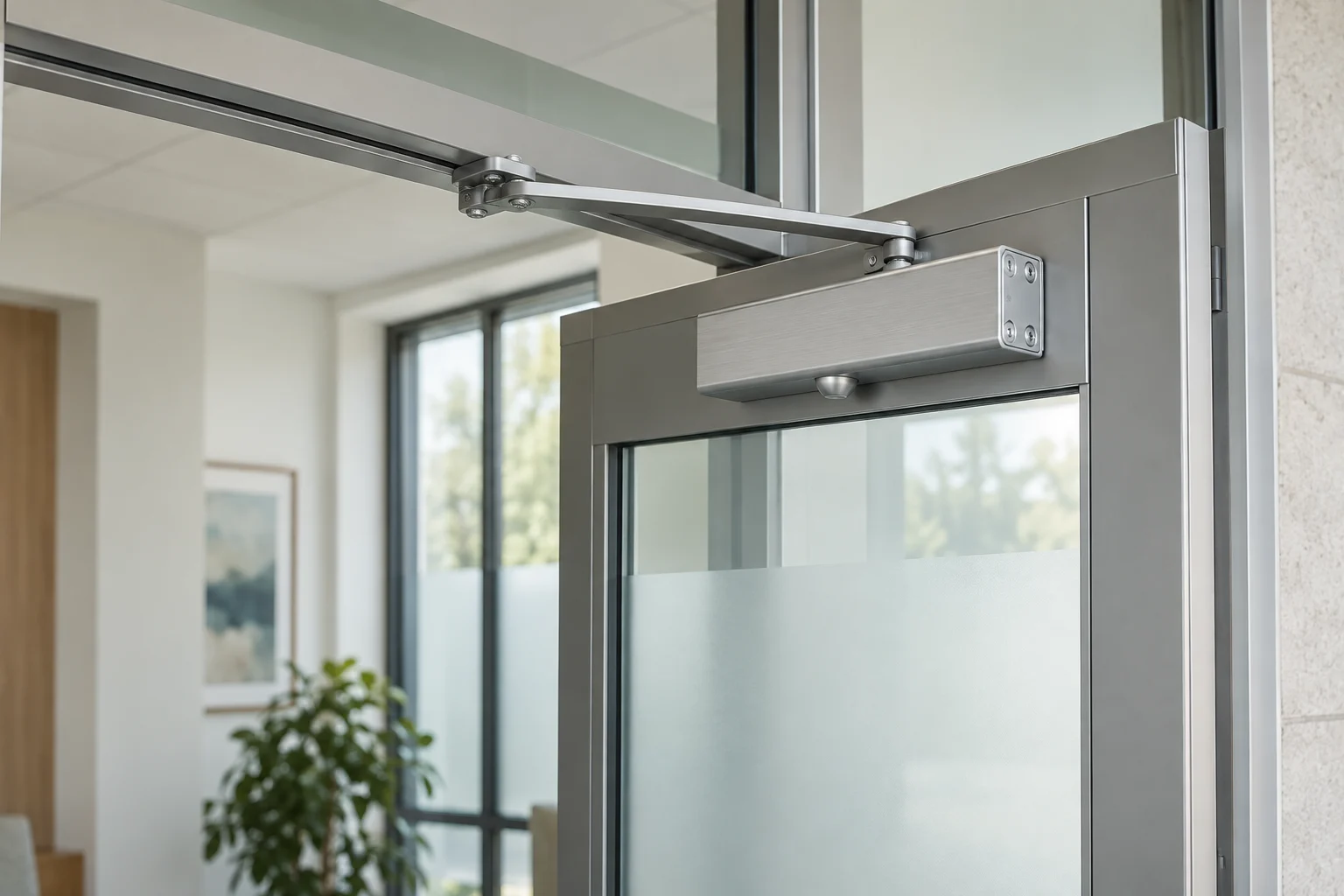
A door closer arm on a glass entry door.
01

Identify the system

Is it a closer or a powered door operator?

A conventional door closer controls the return of a door after someone opens it. A powered operator opens the door using a motor, often in response to an activation device. People use the phrase automatic door closer for both, but they are different systems. Tell us whether the door opens itself or simply closes itself after use.

For an Austin business, a poorly closing entrance affects daily access as well as security. Staff should not have to catch a slamming door or pull it into the frame after every customer. Describe the symptom and the opening, including whether it is a storefront, interior office door or another commercial entrance.

We assess the closing cycle with the rest of the opening before recommending adjustment or replacement. For a South Congress storefront, tell us which customer or service entrance needs attention and who can approve the work. Plan the visit around normal access so the technician can see how the door behaves in use.
A familiar closer name still needs an opening assessment

The LCN 4040XP is a heavy-duty surface-mounted closer family with different arm and mounting options. That makes the full configuration important when comparing a replacement. A recognizable cover does not establish which arm, mounting arrangement or function belongs on your door. For a rated opening, review the appropriate listed configuration rather than assuming a hold-open option is suitable because it exists in the product family.

02

Symptom and opening

What the symptom can tell us

A door that slams may have a closer fault, unsuitable adjustment or another problem at the opening. Leaking fluid is a particularly useful detail to report. Allegion's guidance on slamming closers identifies issues such as valve adjustment and lost hydraulic fluid; the correct response depends on the actual condition.

If the door closes most of the way and stops before latching, the closer is only one possibility. Alignment, the strike, hinges, seals and pressure across the opening may contribute. A door that behaves differently when nearby doors are open gives the technician useful information. Describe that pattern rather than increasing the spring force to compensate.

Check the opening before changing parts

The assessment should establish whether the door swings freely, whether hardware is loose and whether the latch meets the strike properly. A replacement closer mounted onto a door with worn hinges or damaged fixing points can inherit the same problem. The opening needs to be considered as a working assembly.

For a retail entrance, note when the behavior is worst: throughout the day, only during strong wind or when the building's ventilation is operating. You do not need to diagnose air pressure yourself. An observation about the timing can help distinguish a closer fault from conditions affecting the door.

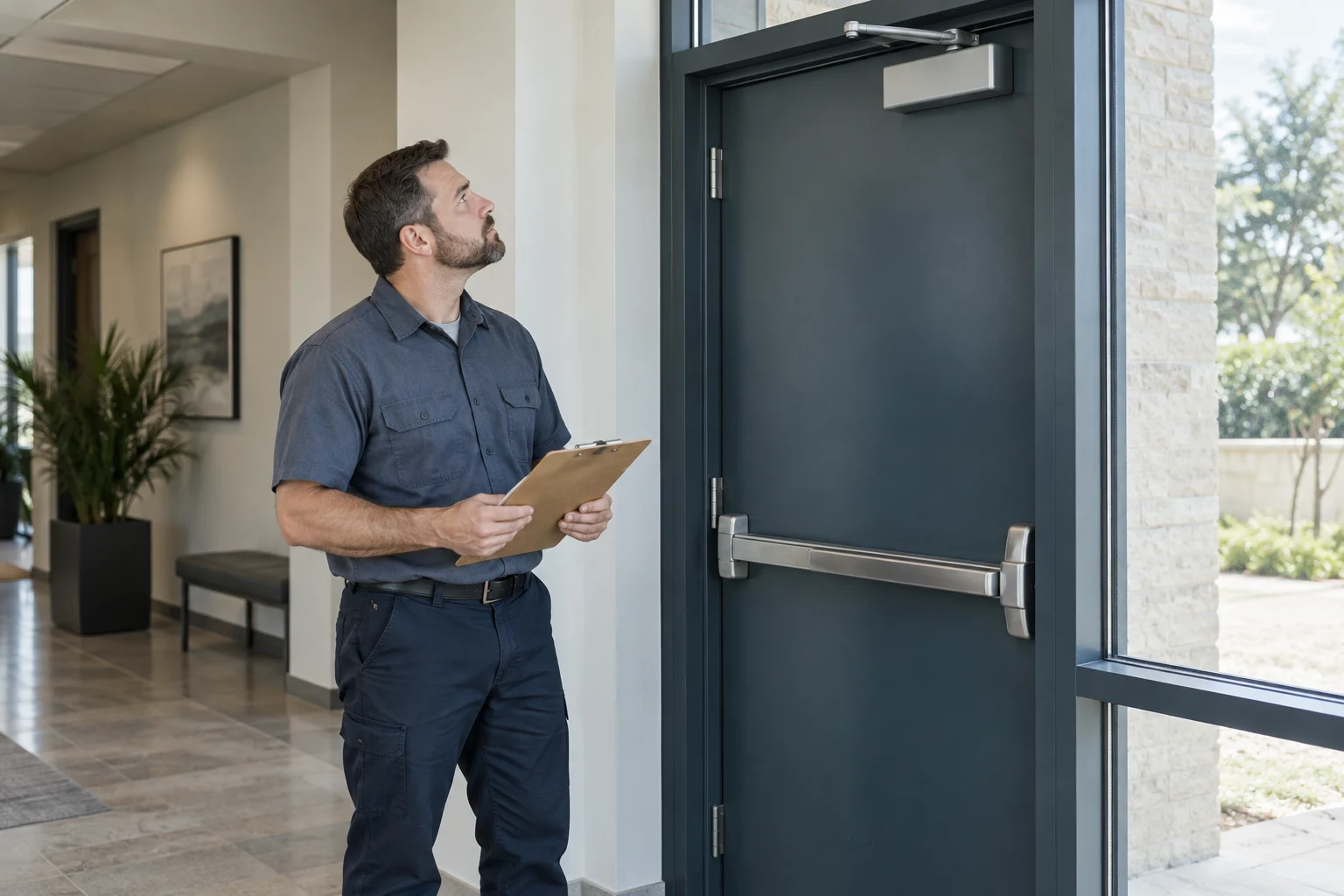
A person with a clipboard looking at a door closer and panic bar.

A closer look at your locks.

Tell us which brand you have and what you'd like to change. We can discuss options for your door.

  • Adams Rite
  • Alarm Lock
  • Allegion
  • AMSEC
  • ASSA ABLOY
  • Axis
  • Brivo
  • Corbin Russwin
  • dormakaba
  • Gardall
  • HES
  • HID
  • Kisi
  • LCN
  • LiftMaster
  • Medeco
  • Mul-T-Lock
  • Paxton
  • Salto
  • Sargent
  • Schlage
  • Securitron
  • SentrySafe
  • Suprema
  • Von Duprin
  • Yale
03

Work and requirements

Adjustment or replacement?

Adjustment is appropriate only when the closer and its mounting are suitable and serviceable. A unit that has lost fluid, has damaged components or is unsuitable for the opening may need replacement. More force is not a universal cure for a door that does not latch, and it can make the opening harder to use.

Replacement selection involves the door size and weight, mounting arrangement, usage and the requirements of the opening. Existing holes and arm clearance also matter. Ask whether the quote assumes a direct replacement or includes changes to the mounting and related hardware. A part that looks similar in a catalog may not be a suitable substitute.

Accessibility and rated openings

Opening effort, closing behavior and usable clearance matter to the people passing through the door. The U.S. Access Board's door guidance explains why accessibility is assessed at the opening. A closer adjustment alone is not proof that the entire entrance meets every applicable requirement.

Fire-rated doors and other regulated openings need compatible hardware and an appropriate repair plan. Do not disconnect the closer or prop the door open as a long-term response to a problem. Give the technician any available door label information, inspection note or building requirement so it can be considered before parts are selected.

04

Schedule and test

Coordinate the work with the business

Identify who can authorize the job and when the entrance can be assessed without putting customers or staff at risk. A busy receiving door may need a different work window from an office corridor. Tell us about a loading schedule, controlled lobby or building check-in procedure that affects access to the opening.

If an access-control system or panic device is involved, include that information. The closer helps return the door to the position where the other hardware can secure it. A complete check may need to confirm how the latch, outside trim and electronic lock behave after the door returns.

Compare the scope and check the result

The quote should distinguish diagnosis, adjustment, replacement hardware and repairs elsewhere on the opening. Ask whether damaged mounting points or a separate hinge fault are included. If the condition changes the recommended approach, review that change before work continues.

At handoff, observe the door through normal opening and closing cycles. It should perform the agreed function without staff applying a special push or pull. Ask what was adjusted, which components were changed and which remaining issue needs another trade or building authority. Keep that information with the door's maintenance record.

Call (512) 777-0021 with the opening and symptoms. For a latch or exit-device problem, see panic bar service. For a credential-controlled entrance, see access-control systems. Our commercial locksmith services helps you plan related work across the property.

From local customers.

4.9from 2,582 Google reviews

Common questions

Answers before you call.

Can you stop a door from slamming by turning one screw?

The cause needs checking first. Valve adjustment may be relevant, but leaking fluid, damaged parts or the wrong closer can require a different solution. Avoid experimenting with adjustment points or loosening them beyond the manufacturer limits.

Does a closer replace an automatic opener?

No. A conventional closer returns a manually opened door toward its closed position. A powered operator opens it using a motor. Describe which function you need so the proposed service matches the equipment.

Why does the door close but fail to latch?

The latch, strike, hinges, seals, pressure and closer can all affect the final movement. Tell us whether the latching problem changes during normal use with wind or ventilation. The whole opening needs assessment.

Can the entrance stay in use during repair?

That depends on the work and the available route for occupants. Coordinate a suitable work window and any temporary access arrangement with the responsible manager. The repair should not create an unsafe exit condition.

Mobile service

Across Austin. Along I-35.

We serve Travis, Williamson, Hays and Bastrop counties. Call with your exact address so dispatch can discuss current availability.

512 Locksmith dispatch

Call about the closer and the opening.

Tell us where you are and what needs attention. We can discuss current availability and the appropriate next step.

Call (512) 777-0021Explore Commercial locksmith