


During a lockout, it is easy to focus on getting inside and overlook who is taking the booking. Check the business identity, scope and total price before work begins. A suspicious signal is a reason to ask questions; it is not proof of fraud on its own.
In this guide
- 01Recognize the difference between a starting price and a total
- 02Clear booking checkpoints
- 03On-arrival identity signals
- 04The bait and switch at the door
- 05Work and invoice checkpoints
- 06Distinguishing suspicious signals from proof of fraud
- 07How to handle pressure and intimidation
- 08Documenting a dispute
- 09Prepare before the next urgent call
Recognize the difference between a starting price and a total
A low advertised starting price may cover only part of the job. Ask whether it includes the visit, the work you described, tax and expected parts. Keep that answer so you can compare it with the on-site quote.
If the provider cannot give a firm total before inspection, ask what variables will change it and how the technician will obtain your approval. A legitimate business can usually quote a narrow range for standard lockouts. A concerning pattern is a cheap advertised entry price followed by intense pressure to approve substantially different work on site without a clear explanation. Keep the booking details so you can compare them with the on-site assessment.
Clear booking checkpoints
A generic greeting does not tell you which business accepted the booking. Ask for its legal name, callback number and license details, then compare them with the person and invoice on arrival.
Ask for the company name, callback number, and license information. Check the current Texas Department of Public Safety record rather than relying only on a license number printed in a search advertisement. Ask for an estimate based on your specific situation. If the operator refuses to provide an estimate and insists the technician must see the lock first for a standard residential lockout, consider calling a different provider.
Keep control of the service visit
A quote, technician identity and invoice should tell the same story.
- Reported issue
- Scope check
- Authorization
Mobile automotive service at a vehicle

On-arrival identity signals
Confirm the arriving person represents the booked business and ask how to verify the relevant individual credential. Check the business and individual records separately through Texas DPS rather than treating a company license number as the technician's identity.
A generic greeting, an unmarked personal vehicle, a subcontractor arrangement, or a cash payment option does not automatically prove fraud. Many legitimate independent contractors use unmarked vans. However, an unexplained identity mismatch between the company you called and the person who arrived, a refusal to show state identification, or a refusal to describe the work process are strong warning signs.
The bait and switch at the door
A concerning situation is an unexplained shift from entry to destroying and replacing the lock. Ask what the inspection found and why the proposed method suits that hardware. The method needs an explanation; using a drill alone does not establish wrongdoing.
If a technician proposes drilling or replacing the lock, ask what they found and whether another method is practical for that hardware and condition. Some faults do require destructive work. A lock with failed internal mechanics, severely corroded pins, or a broken tailpiece might not respond to standard entry tools. It is reasonable to ask why a simple entry problem has become a replacement job.
Agree on the proposed method, parts and total before authorizing work. Some faults require destructive work, and damage-free entry cannot be guaranteed for every lock. Pause if the explanation or revised quote is unclear.
Discuss work before it starts

Work and invoice checkpoints
Keep control of scope changes. Ask for a written estimate or a clear written record of what you approved before the technician begins. If inspection reveals a different problem halfway through the job, have the provider explain the change before proceeding. Ask whether a callout or cancellation charge was agreed when you booked.
When the job is complete, demand an itemized invoice. Fraudulent operators often present a blank invoice or a generic receipt with a single inflated total. The document should list the service call fee, the labor charge, the cost of any parts provided, the specific business name, the state license number, and contact information.
Keep control of the visit
Booking
Record the legal name, callback number and quoted scope.
Arrival
Check who came and what work they propose.
Change
Ask for an explanation and written approval before the work expands.
Distinguishing suspicious signals from proof of fraud
An unmarked vehicle, subcontractor arrangement or cash option does not establish deception. Concentrate on verifiable issues: who accepted the booking, what was promised, what changed and what you authorized.
Separate concerns about service quality from specific statements or charges you dispute. Document the advertised terms, inspection findings, written approval and invoice. A regulator or payment provider can explain the process for reviewing the evidence; this guide does not determine whether a particular dispute is fraud.
How to handle pressure and intimidation
If a demand or threat makes you feel unsafe, prioritize distance and appropriate help. Avoid a physical confrontation over a bill. Keep documentation where it is safe to do so and use the relevant complaint process afterward.
If you are uncomfortable, pause the job while you clarify the terms. Do not allow a technician to begin drilling if you have not agreed to a replacement cost. If someone threatens you, blocks your vehicle, or attempts to prevent you from entering your home, prioritize your safety. Lock yourself inside or move to a safe distance and contact the appropriate emergency or law-enforcement service. Do not escalate a physical confrontation to argue about a bill.
Documenting a dispute
Keep the advertisement, text messages, written estimate, final invoice, and photographs of the work where it is safe to do so. Ask the business to explain disputed charges and the proposed resolution in writing. If you believe there was fraud, contact your payment provider and the relevant consumer-protection or licensing authority to learn the applicable complaint process.
A payment dispute does not automatically establish that a charge is fraudulent. Describe the facts accurately. State what you requested on the phone, what was quoted, what you authorized on site, and what was ultimately charged. File complaints with the Texas Department of Public Safety, which regulates the locksmith industry, and the Texas Attorney General.
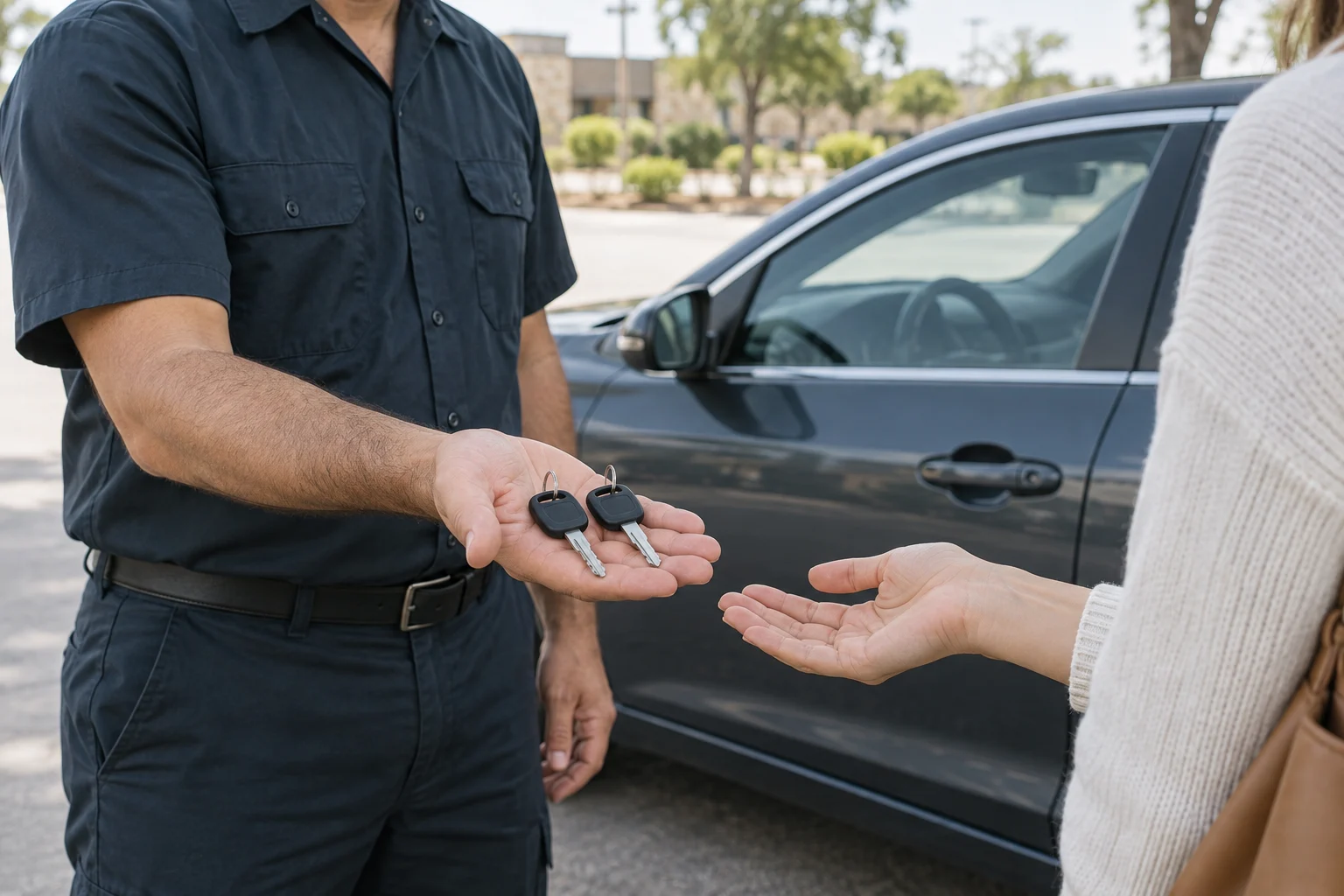
Confirm the handover
Prepare before the next urgent call
The most effective way to avoid a scam is to find a reliable locksmith before an emergency happens. Save the contact details of a provider whose identity and services you have checked in advance. Ask about the kind of job you are likely to need, such as car lockout help or rekeying your home. Read reviews for specific experiences and dates, not just an overall star score.
The Texas DPS record for 512 Locksmith lists business license B07298601 as active. We have been serving Austin for more than a decade. Call (512) 777-0021 to discuss the work, coverage, and quote. Our pricing guidance explains useful questions to ask before booking any service.
Sources and further reading
- Texas DPS record for 512 LocksmithTexas Department of Public Safety